
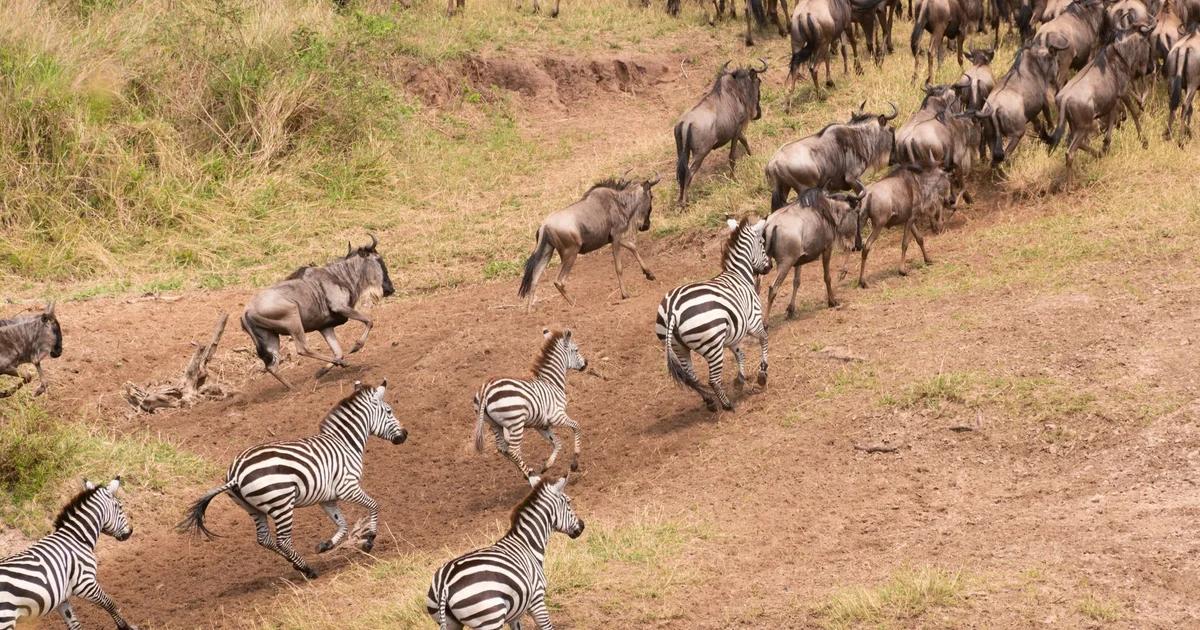
The Convergence of Biology and Computing
The natural world is undergoing a period of rapid, anthropogenically driven change. As species struggle to adapt to shifting climates, habitat fragmentation, and dwindling resources, the ability to monitor their survival is more critical than ever. Traditionally, wildlife biologists relied on invasive radio collars and manual sightings, methods that were both labor-intensive and geographically constrained. Today, we stand on the precipice of a revolution: AI-augmented wildlife migration tracking.
The Shift to Autonomous Monitoring
Modern conservation science has moved toward a model of 'passive sensing.' By leveraging high-resolution satellite imagery, acoustic sensors, and network-connected camera traps, researchers are now gathering petabytes of data on a daily basis. However, the sheer volume of this data renders manual analysis impossible. Enter Deep Learning and neural networks, which provide the computational muscle to extract meaningful signals from the noise of the wilderness.
- Automated Feature Extraction: Neural networks trained on millions of animal images can now identify individual tigers by their stripe patterns with over 98 percent accuracy.
- Predictive Pathfinding: Using historical data, algorithms predict the most likely migratory routes, allowing rangers to intercept poachers before they encounter endangered herds.
- Acoustic Pattern Recognition: Microphones placed in remote jungles utilize AI to isolate the specific calls of migratory birds or elephants, tracking their movement across dense canopies where visual capture is impossible.
Enhancing Data Density with Smart Systems
By integrating Smart Systems into protected areas, scientists can create a 'digital twin' of an ecosystem. This is not merely about tracking where an animal is, but understanding why it moved. Is the migration shifted due to drought? Are predators following new paths created by road construction? AI allows us to correlate environmental variables—such as vegetation index, temperature, and human proximity—with movement data in near real-time.
'The integration of artificial intelligence into conservation efforts is not just a luxury; it is an urgent necessity in an age where the pace of extinction outstrips the pace of human data collection,' notes a leading conservationist.
Challenges in Scalability and Ethics
While the technological potential is vast, deploying AI in remote environments presents unique challenges. The hardware must be robust, energy-efficient, and capable of operating offline. Furthermore, the ethical implications of data privacy—specifically, the risk that anti-poaching data could be intercepted by malicious actors—requires a high level of Cybersecurity to ensure that tracking information remains secure.
The Future of Connected Conservation
As we look toward the next decade, the convergence of edge computing and bio-logging will likely dominate the field. AI-enabled 'smart tags' will process data directly on the animal, transmitting only critical insights back to the cloud, thereby extending battery life and reducing the frequency of human interaction with wildlife.
We are moving toward a 'Global Biodiversity Observing System' where AI provides a constant pulse on the health of our planet. This level of transparency ensures that policies are based on empirical evidence rather than estimations, ultimately fostering a more resilient relationship between humanity and the natural world.
Through the rigorous application of algorithms and data science, we are effectively giving nature a voice—one that is interpreted, understood, and protected by the very technology that once threatened its habitat. The transition from reactive conservation to proactive, AI-driven stewardship represents the most significant breakthrough in environmental science of the 21st century.