The Convergence of Ancient History and Modern Intelligence
Cemeteries are more than final resting places; they are outdoor museums that house the collective narrative of human history. As decades turn into centuries, the ravages of weather, vegetation, and structural shifting threaten these markers. Enter AI-driven adaptive cemetery maintenance—a transformative paradigm that marries the sanctity of tradition with the precision of machine learning. By utilizing high-fidelity sensors and autonomous robotic platforms, site managers can now treat heritage preservation as a dynamic, data-backed process rather than a reactive struggle against time.
The Role of Predictive Analytics in Erosion Mitigation
Traditional maintenance often waits for obvious damage to occur before intervening. This is a critical error in heritage conservation, where the loss of an inscription is permanent. AI algorithms, trained on vast datasets of material science and local climate patterns, can predict the rate of stone degradation with uncanny accuracy. By analyzing variables such as humidity, mineral composition of grave markers, and localized precipitation, these systems provide a maintenance roadmap that stops erosion before it becomes visible to the human eye.
'Preservation is not about freezing time, but managing the inevitable flow of entropy through intelligent, calculated intervention.'
Robotics and Autonomous Structural Support
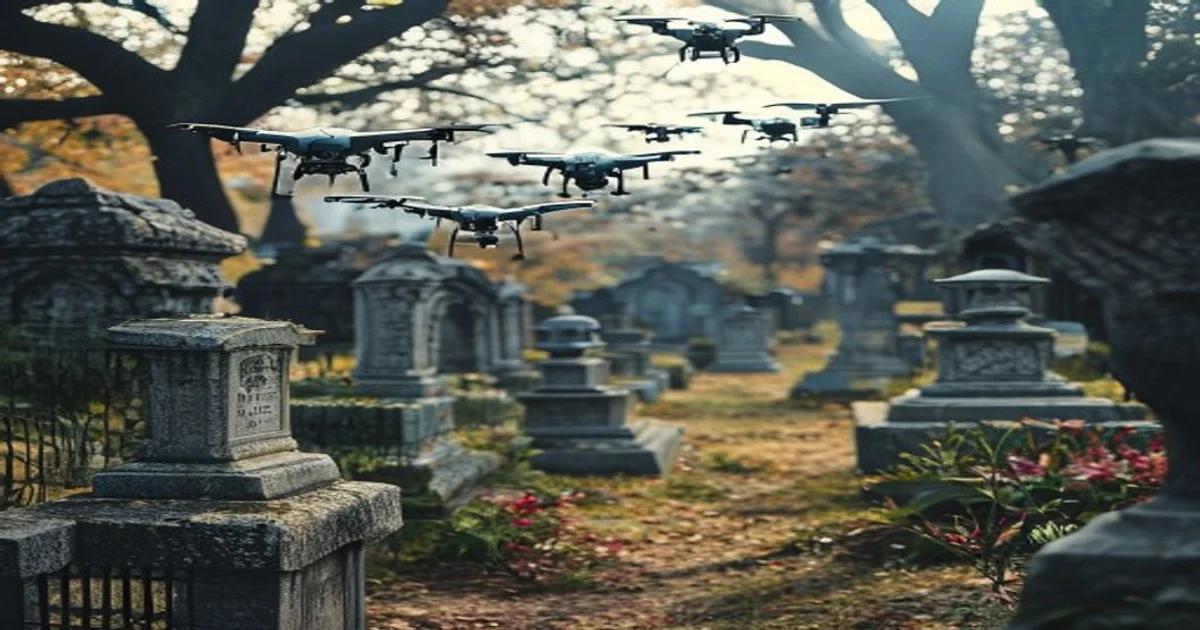
In larger cemeteries, the sheer scale of the grounds makes manual inspection a gargantuan task. Autonomous ground vehicles and drones equipped with LIDAR and multispectral imaging can conduct comprehensive site surveys in hours rather than months. These robots identify structural instabilities, such as ground subsidence or tilting markers, and can perform precision cleaning using non-abrasive techniques. This automation removes the risk of human-caused damage, which is a frequent byproduct of traditional maintenance tools.
Digital Transformation of Historical Archives
As these systems interact with the environment, they generate a 'digital twin' of the cemetery. This is a 3D, high-definition repository that records every detail of a site's current state. This transformation allows researchers and genealogists to study records without ever touching the fragile physical markers. Furthermore, the AI can correlate these archives with historical census data, uncovering lost stories and correcting inaccuracies in family lineages.
Addressing the Ethics of Automated Heritage Care
Critics often argue that replacing human groundskeepers with machine intelligence strips away the soulful nature of these sites. However, the future is not a binary choice between human or machine; it is a collaborative effort. AI handles the grueling analytical and physical labor, allowing human preservationists to focus on the curation and ethical stewardship of the grounds. This synergy ensures that the site remains respectful, safe, and historically accurate.
Scaling the Technology for Global Heritage Sites
Implementation of these technologies is not limited to high-budget metropolitan cemeteries. Modular AI systems can be deployed in smaller, rural graveyards, provided the data infrastructure is present. Cloud-based machine learning platforms allow site managers to upload raw sensory data from low-cost drone flights and receive actionable insights from globally trained models. This democratization of technology is the cornerstone of protecting global human heritage.
Future-Proofing the Last Frontier
As we look ahead, the integration of AI will expand to include interactive augmented reality overlays for visitors, allowing them to visualize the life of the person buried beneath them through their mobile devices. The intersection of memorialization and technology provides a conduit for storytelling that transcends the limitations of granite and marble. Ultimately, the goal is to create a living archive, one that learns and adapts, ensuring that the legacy of those who came before us remains etched in the fabric of the digital future.