
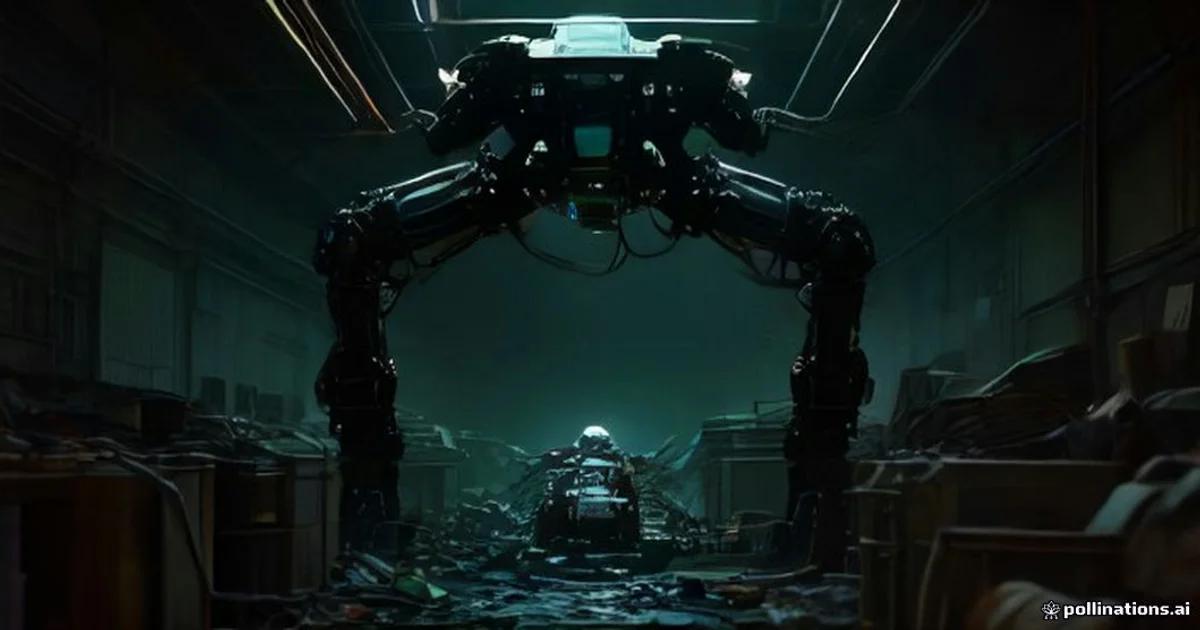
The Growing Crisis of Electronic Waste
The digital age has brought unprecedented convenience, but it has also triggered a global crisis: electronic waste, or e-waste. As the lifecycle of consumer electronics shrinks, billions of tons of discarded devices—containing hazardous materials and precious metals—accumulate in landfills. Traditional recycling methods struggle to keep pace with the sheer volume and the architectural complexity of modern gadgets. This is where AI-driven adaptive e-waste mitigation shifts the paradigm.
The Role of Machine Learning in Sorting
At the core of modern mitigation efforts is the integration of advanced computer vision and deep learning models. Sorting facilities are no longer manual, error-prone environments. Instead, they are becoming automated hubs where neural networks identify and categorize disparate components in real-time.
The transition from manual dismantling to robotic precision allows for a significantly higher recovery rate of gold, silver, and rare earth elements that are otherwise lost in conventional shredding processes.
By leveraging large-scale datasets, these systems recognize diverse hardware iterations, even those that have been damaged or oxidized. This adaptive capability ensures that as new product designs enter the market, the AI algorithms continue to learn and refine their categorization protocols.
Robotic Disassembly and Circular Economies
One of the most significant challenges in e-waste is the sheer physical complexity of modern smartphones and laptops. Components are glued, soldered, and tightly integrated, making manual disassembly slow and labor-intensive. Automation via robotic arms, guided by high-speed AI processing, offers a scalable solution. These systems are programmed to adapt to the physical orientation of a device, identifying connection points and screw layouts autonomously.
Scaling the Circular Economy
Beyond simple recycling, these AI systems facilitate a true circular economy. When the AI determines that specific components—such as processors or display modules—are still functional, it can reroute them for refurbishment rather than raw material extraction. This reduction in the demand for virgin resources is perhaps the greatest ecological contribution of the AI-driven approach.
Predictive Analytics for Waste Flow
Effective mitigation is not just about processing what is already in the bin; it is about predicting the flow of waste. Using historical sales data, market trends, and product lifecycle analysis, AI models can forecast exactly when and where specific types of e-waste will hit the recycling stream. This intelligence allows municipalities and private enterprises to optimize their logistical infrastructure, reducing the carbon footprint of transport and ensuring that processing plants are never overwhelmed.
Overcoming Challenges in Implementation
While the technological potential is vast, the implementation of these systems faces several hurdles:
- High initial capital expenditure for robotic and sensor arrays
- Need for global standardization in device architecture to simplify automated dismantling
- Integration of cross-border data privacy protocols for tracked devices
- Ensuring fair labor transitions for workers displaced by automation
Addressing these challenges requires a concerted effort between policymakers, hardware manufacturers, and tech developers. The ultimate goal is to create an ecosystem where sustainability is 'baked in' at the design level, guided by the very AI tools that will eventually dismantle the device at the end of its life.
The Future of Global E-Waste Standards
We are moving toward a future where hardware is designed with a 'Digital Twin'—a virtual representation that includes its entire bill of materials and disassembly instructions. AI systems will utilize these twins to make perfect decisions regarding the fate of every component. This is the ultimate fruition of innovation in the field, turning waste management from a burdensome necessity into an efficient, value-driven industry. The synergy between human ingenuity and artificial intelligence is not just solving a waste crisis; it is building a cleaner, more resilient global infrastructure.