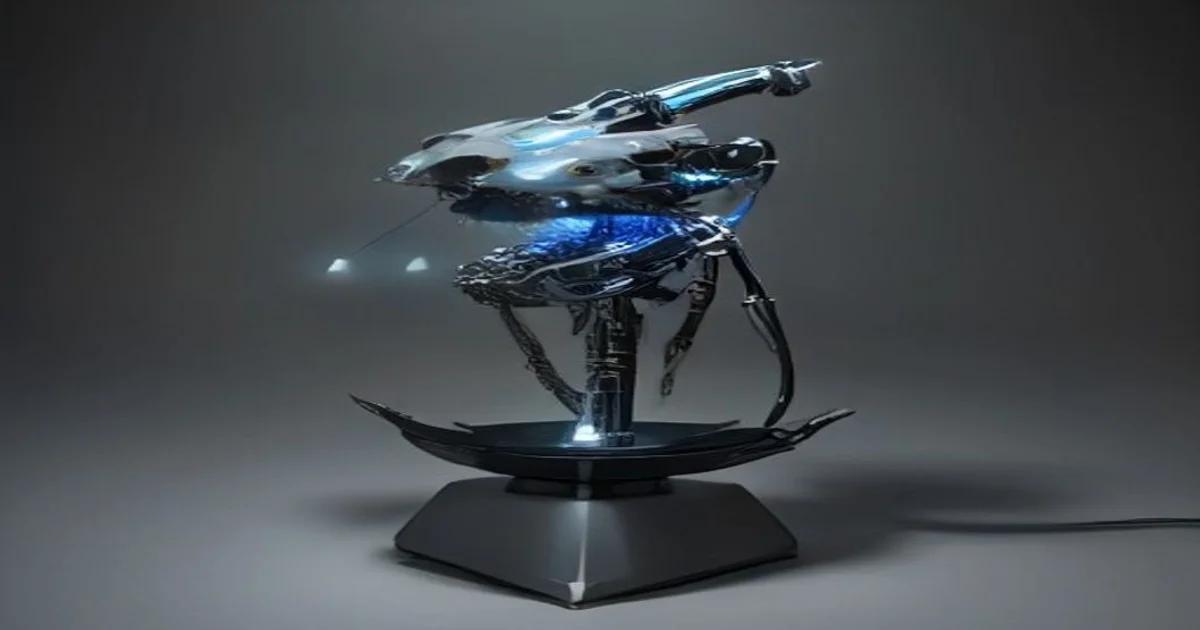
The Intersection of Digital Intelligence and Natural Preservation
Artificial Intelligence is no longer confined to the digital realm; its influence is extending into the physical sciences, specifically in the specialized field of forensic taxidermy. AI-Driven Adaptive Forensic Taxidermy represents a paradigm shift in how law enforcement and biological researchers preserve evidence, reconstruct past events, and maintain the integrity of organic materials for scientific study. By integrating Deep Learning algorithms with robotic precision, we are witnessing the dawn of a new era in biological archiving.
The Mechanics of Adaptive Reconstruction
Traditional taxidermy relies on the subjective skill of the artisan, often leading to anatomical inaccuracies or accelerated degradation. In contrast, AI-driven adaptive systems utilize 3D scanning, hyperspectral imaging, and Generative AI to analyze the precise skeletal and muscular structure of a specimen. Once the data is captured, the system employs predictive modeling to determine the optimal chemical and physical environment required to stabilize the tissue.
'The integration of machine learning allows us to account for microscopic variables in tissue density that were previously invisible to the human eye, ensuring long-term structural integrity.'
Automating the Preservation Workflow
- Data Acquisition: Using high-resolution LiDAR and MRI, the system builds a digital twin of the biological subject.
- Predictive Simulation: Algorithms run thousands of iterations to determine the ideal preservation fluid composition.
- Robotic Application: Precision actuators apply stabilizers and synthetic polymers at a cellular level.
- Constant Monitoring: Embedded sensor networks track decay vectors in real-time, adjusting preservation parameters autonomously.
Implications for Forensic Science
In the context of criminal investigation, this technology allows for the nearly perfect preservation of soft tissue evidence. When traditional photography and DNA sampling are insufficient, AI-reconstructed specimens provide a physical touchstone for investigators to re-examine evidence years after a crime has been committed. This creates a permanent 'living' archive that remains resistant to the typical entropy of organic storage.
Ethics and Technological Boundaries
As with all transformative technologies, the adoption of AI in forensic taxidermy raises significant questions regarding the sanctity of biological remains. The industry is currently moving toward a framework that emphasizes transparency, ensuring that digital reconstructions are clearly distinguished from raw biological evidence. Furthermore, the use of Neural Networks in this field must be balanced with human oversight to prevent the 'hallucination' of anatomical details that could compromise a legal case.
Scaling the Technology
Looking toward the future, the integration of AI-Driven Adaptive Forensic Taxidermy into standard police forensics labs will likely become a necessity. As these systems become more modular and affordable, smaller jurisdictions will gain access to tools that were once restricted to high-tier academic research institutions. This democratization of technology will drastically improve the rate at which cold cases are solved, providing new avenues for justice that were previously locked away behind the barrier of biological decay.
Advanced Data Integration
By leveraging large-scale datasets, these systems do not operate in a vacuum. Each specimen preserved adds to a global database, training newer models to recognize the unique decay signatures of specific environments. This constant feedback loop ensures that the 'intelligence' in our AI-driven systems grows exponentially. Whether it is reconstructing a damaged fossil for a museum or preserving a crucial piece of forensic evidence for a high-profile trial, the capability of these machines to adapt to the unknown is what sets them apart from any prior methodology.
The Final Frontier: Synthesis and Integration
We are approaching a point where the barrier between the organic and the synthetic is effectively erased. Forensic experts can now work in concert with AI partners to ensure that even the most fragile remains survive the test of time. This isn't just about saving physical remnants; it is about saving the data held within them, ensuring that the stories of the past are never lost to the inevitable process of biological erasure. The future of forensic science is adaptive, digital, and undeniably precise.