
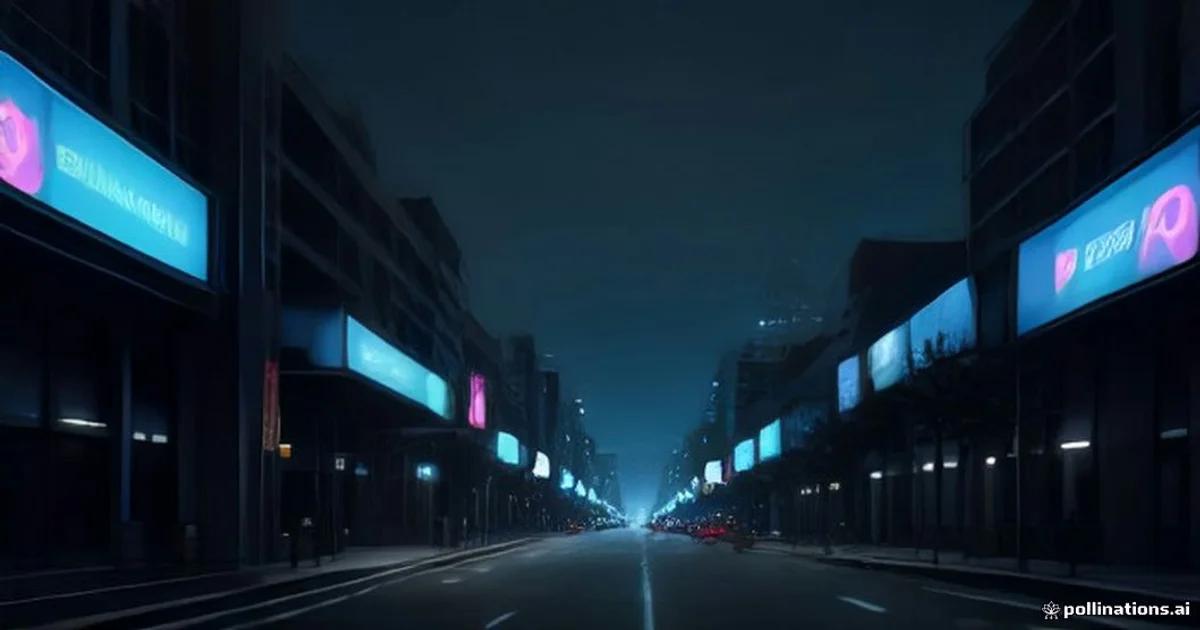
The Dawn of Responsive Illumination
Artificial light at night (ALAN) has long been a double-edged sword of modernity. While it provides essential safety and security for urban populations, the uncontrolled sprawl of light pollution has eroded our connection to the cosmos and disrupted fragile ecosystems. Enter AI-driven adaptive light pollution management—a transformative intersection of machine learning and urban planning that promises to reclaim the darkness without compromising the light.
Understanding the Mechanism of Adaptive Lighting
At its core, AI-driven adaptive lighting utilizes a dense network of IoT sensors coupled with centralized deep learning algorithms. Unlike traditional 'dusk-to-dawn' timers that force infrastructure to remain at 100% intensity regardless of demand, these smart systems analyze pedestrian density, vehicular traffic, and ambient weather conditions in real-time. By leveraging computer vision and edge computing, these systems can lower the lux output of a streetlamp when no one is present, only to brighten it as a human approaches.
'The integration of predictive modeling allows our cities to breathe with the light, rather than choking under a constant, inefficient glare,' notes urban strategist Dr. Elena Vance.
The Environmental Mandate
Beyond mere energy savings, the environmental impact of this technology is profound. Many migratory birds and nocturnal insects are disoriented by high-intensity blue light spectra commonly found in current LED setups. AI systems are now being programmed to modulate color temperatures as well. During peak migration seasons, these systems can shift to 'wildlife-safe' amber hues, which have been proven to minimize the ecological disruption caused by urban sprawl.
Engineering the Future of the Grid
Implementing such massive systems requires a robust digital backbone. The current trajectory points toward 'digital twins' of cities, where AI models simulate the impact of every individual luminaire on the collective skyglow. By utilizing these simulations, city planners can optimize light shielding and beam directionality, ensuring that illumination reaches the pavement rather than scattering into the upper atmosphere.
Security and Public Perception
One of the most persistent hurdles to reducing light pollution is the public perception that 'more light equals more safety.' Modern AI systems address this through behavioral psychology integration. By utilizing motion-sensing arrays, these lights can create a 'halo' effect, following the path of a pedestrian. This creates a psychological sense of safety that is arguably more effective than static, harsh, and omnipresent glare.
Scalability and Global Adoption
As hardware costs for AI chips decrease, the transition to intelligent outdoor lighting becomes an inevitable step in smart city development. We are already seeing successful pilots in major metropolitan centers across Europe and Asia, where energy consumption related to public lighting has dropped by over 40% in just two years. This is not just a triumph of engineering; it is a fundamental shift in how we perceive the utility of light.
The Data Privacy Component
One critical conversation that must occur alongside technological rollout is privacy. Because these systems rely on sensors that track movement, they must be designed with 'privacy-by-design' principles. Modern frameworks utilize on-device processing, meaning that no raw video footage is ever stored or transmitted to a central server—only metadata regarding the presence or absence of objects is utilized to trigger lighting adjustments.
Challenges in Retrofitting
While new infrastructure is easily designed for intelligence, the real challenge lies in the massive backlog of existing, outdated lighting systems. Retrofitting these lamps requires significant capital expenditure and a transition toward modular components that can accept AI-ready hardware modules. Policymakers are encouraged to provide subsidies for cities that shift to these smart architectures to accelerate the transition.
Looking Toward the Starry Horizon
If we successfully deploy AI-driven adaptive lighting, the return of the Milky Way to our city centers is not a fantasy, but a technical possibility. By curbing light trespass and skyglow, we preserve the astronomical heritage of our species while simultaneously lowering our carbon footprint. The path forward is one where artificial light works in harmony with the natural environment, rather than against it.
Final Thoughts on Responsible Innovation
As we look ahead, the collaboration between ecologists, urban engineers, and software architects will define the success of this initiative. We are no longer limited to the binary of 'on' or 'off.' We are entering an era of nuance, where our cities can be illuminated with the precision of a scalpel, leaving the rest of the night to its natural, quiet splendor. The future of light is not simply about being brighter; it is about being smarter, cleaner, and ultimately, more respectful of the world we inhabit.