
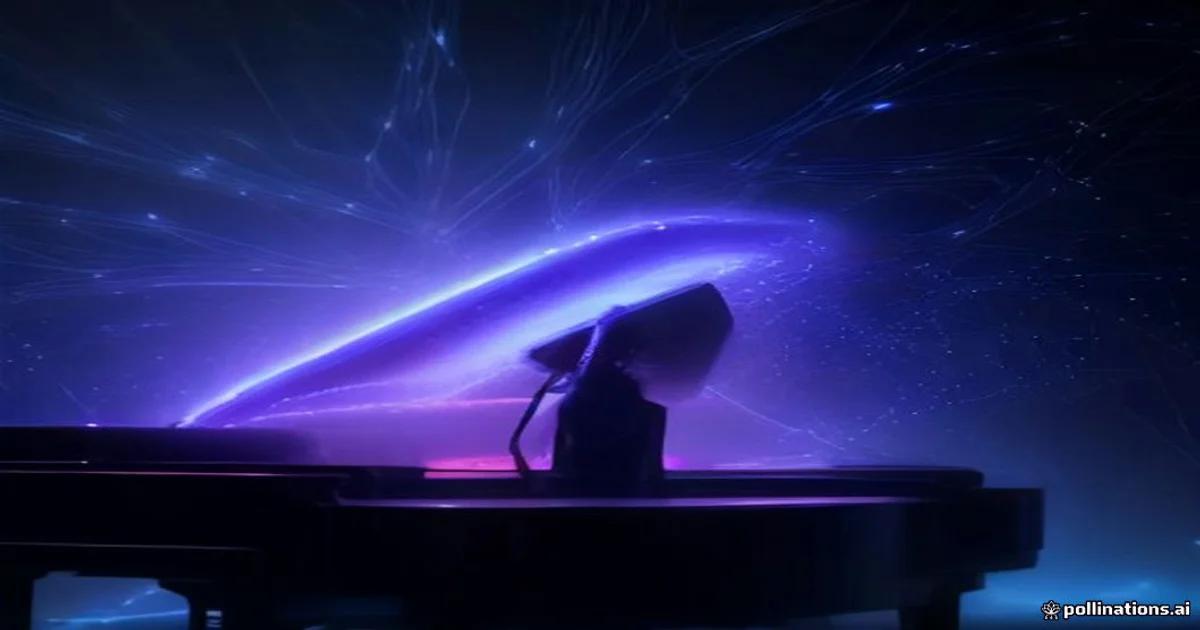
The Convergence of Cognition and Composition
The landscape of modern music is undergoing a radical shift, driven by the emergence of AI-driven adaptive musical improvisation. For decades, improvisation was considered the final fortress of human cognitive expression, a spontaneous biological phenomenon defined by intuition, experience, and emotional depth. Today, high-dimensional neural networks are not merely mimicking these processes but are actively participating in them, shifting the paradigm from 'human-only' creation to 'co-creative' intelligence.
The Mechanics of Real-Time Adaptation
At the core of adaptive improvisation lies the transition from static sequence generation to dynamic, state-aware systems. Traditional generative models often struggled with the 'cold start' problem or the inability to pivot mid-measure. Modern architectures, utilizing transformer-based sequence modeling combined with reinforcement learning from human feedback (RLHF), allow the AI to track a musician's rhythmic and melodic trajectory with sub-millisecond latency.
The beauty of AI improvisation is not in its ability to replace the virtuoso, but in its capacity to act as a mirror that reflects and refracts the performer’s intent back at them in ways they had not yet conceived.
When a performer plays a specific cadence, the adaptive model analyzes the underlying harmonic structure—the frequency, the amplitude envelope, and the micro-timing deviations—to predict the most musically congruent 'answer' within the specified style. This is facilitated by:
- Low-Latency Neural Buffers: Allowing the model to process audio tokens in near-real-time.
- Reinforcement Learning (RL): Training agents on centuries of improvisational archives to optimize for musical tension and resolution.
- Multi-modal Input Processing: Integrating gaze, gesture, and audio data to understand the intent behind the notes.
Challenging the Boundaries of Creativity
The question of whether an algorithm can possess 'creativity' is now being superseded by a more practical inquiry: how does the machine change the way humans improvise? When a system like an adaptive AI accompanies a jazz saxophonist, it often suggests counter-melodies that deviate from traditional Western music theory, pushing the performer into experimental territories. This creates a feedback loop of innovation where the human performer learns from the machine, and the machine learns from the human.
Ethical Implications and Creative Agency
As we embrace these technologies, we must confront the shifting nature of creative agency. If an AI generates a unique melodic run during an improvised set, to whom does the intellectual property belong? Furthermore, there is the existential concern of 'de-skilling.' If improvisational systems become too accessible, will the traditional rigor of learning jazz harmony or classical counterpoint fade? Proponents argue that these tools are merely extensions of the instrument—much like a pedal board or a synthesizer—and that the core requirement of the artist remains their ability to make aesthetic choices.
Scaling Complexity in AI Models
Deep learning architectures have evolved significantly to handle the temporal complexities of music. Unlike text generation, where the timeline is linear, music requires the management of polyphony, dynamic timbre, and long-term structure. Models are now being trained on 'Graph Neural Networks' (GNNs) that treat musical notes as interconnected nodes, allowing the AI to perceive the 'web' of harmonic relationships rather than just a linear string of data. This holistic view is what makes adaptive improvisation feel 'alive' rather than 'pre-programmed.'
The Technical Future of Improvisation
Looking toward the next five years, we anticipate the integration of edge computing into performance hardware. This will remove the need for cloud-based processing entirely, allowing performers to take their adaptive AI 'bandmates' onto stages in remote locations where internet connectivity is unavailable. Imagine a violinist performing in an acoustic space, supported by a localized, high-speed neural engine that evolves its improvisational style based on the unique acoustics of the room. This is the synthesis of physical space and digital cognition.
Redefining the 'Jam Session'
The traditional jam session is being transformed into a data-sharing event. Developers are building protocols where an AI can ingest a performer's 'improvisational signature'—the specific tendencies, syncopations, and motifs they favor—and use that profile to curate a personalized accompaniment style. This is the pinnacle of personalized technology: a machine that knows your musical soul better than you do.
Final Perspectives on Artistic Evolution
The marriage of artificial intelligence and musical improvisation is not a signal of the end of human artistry. Rather, it is a testament to our ongoing desire to push the boundaries of what is audible and expressible. By delegating the rote elements of harmonic generation to adaptive algorithms, musicians are freed to focus on the philosophical and emotional dimensions of their performance. In this new era, the AI is not the protagonist; it is the most sophisticated instrument ever crafted, capable of listening, responding, and evolving alongside the human artist in a relentless pursuit of the next perfect note.