
The Convergence of Intelligence and Earth Science
Soil is the silent foundation of our civilization. It sustains our food systems, regulates our climate, and anchors our terrestrial ecosystems. Yet, decades of intensive industrial agriculture and climate change have pushed global soil health to a tipping point of degradation. Enter the era of AI-Driven Adaptive Soil Restoration—a paradigm shift where machine learning and robotics move beyond simple observation to active, intelligent stewardship of the planet's skin.
Understanding the Data-Driven Substrate
At the heart of this revolution lies the ability to synthesize complex, multi-layered data. Traditional soil testing is slow, expensive, and spatially sparse. By contrast, AI-driven systems leverage a 'digital twin' approach, creating high-resolution models of soil composition, microbial activity, and moisture retention.
'We are moving from a reactive model of adding fertilizer to a predictive model of ecological healing, where every milligram of input is determined by microscopic data points analyzed in milliseconds.'
The Role of Machine Learning in Restoration
Machine learning algorithms serve as the brain of the restoration process. By analyzing multispectral satellite imagery, ground-penetrating radar, and localized IoT sensor arrays, these systems identify 'biological dead zones' that require immediate attention.
- Predictive Nutrient Mapping: Algorithms analyze nitrogen, phosphorus, and potassium levels to determine optimal remediation strategies.
- Microbial Pattern Recognition: Neural networks decode the complex relationship between subterranean microbes and plant growth.
- Climate Adaptation Modeling: AI predicts how shifts in temperature and rainfall will affect soil moisture content over decades.
Robotics and Precision Intervention
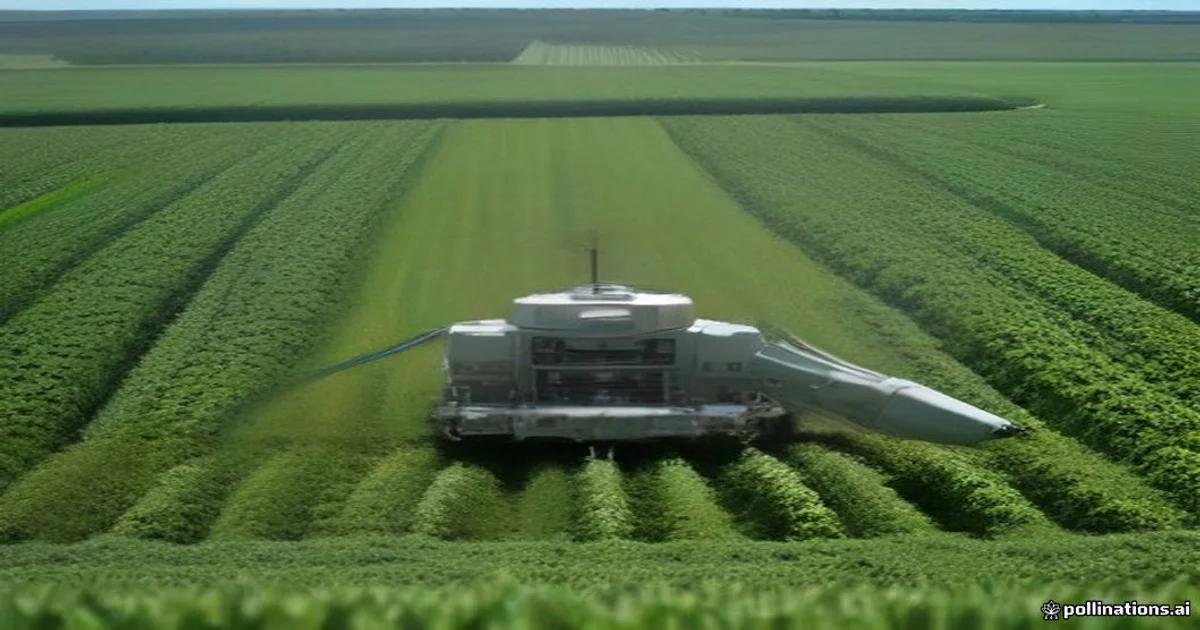
Once the AI determines the required intervention, the next layer of the stack—robotics—takes action. Autonomous vehicles equipped with precision delivery systems can inject biological amendments, fungi, or micronutrients into the soil with surgical accuracy. This minimizes chemical waste and prevents the leaching that occurs with broadcast application methods.
Consider the impact on desertification. In semi-arid regions, AI-driven drones can map the ideal topography for water retention, then automate the planting of hyper-resilient vegetative cover. The system monitors the success of these plants, adjusting its strategy based on survival rates and growth patterns. This is not static planting; it is a dynamic, evolving strategy that shifts based on the environment's response.
Scaling the Solution: Digital Transformation
To achieve global restoration, we must move toward an open-access data culture. The digital transformation of soil science involves creating a decentralized network where farmers, scientists, and policy-makers share insights. AI-driven platforms act as the connective tissue, enabling a level of collaboration that was impossible even a decade ago.
When we apply deep learning to genomic data of soil bacteria, we unlock a new frontier in bio-engineering. We are beginning to see the emergence of 'designer soils'—substrates that have been remediated to a state of peak productivity, specifically tailored to withstand the stressors of a changing climate.
Overcoming Hurdles and Ethical Considerations
While the potential is vast, the path forward is not without challenges. Data privacy regarding agricultural land and the intellectual property of proprietary soil algorithms remain contentious topics. Furthermore, there is the risk of over-relying on algorithmic solutions to the detriment of traditional ecological knowledge. True restoration must integrate high-tech data with indigenous wisdom and conservation practices.
The Future of Soil Health
As we look toward the next century, the synthesis of AI and soil science will become the cornerstone of food security. We are no longer just farming the surface; we are engineering the entire soil microbiome to be a robust, self-sustaining biological engine. This is the ultimate goal of the current technological wave: to return to a state of balance through the intelligent application of digital power.
In conclusion, the marriage of AI and ecology is the most promising path to reversing the environmental damage of the past century. By treating the soil as a dynamic, intelligent system, we can restore the earth one acre at a time, ensuring that the legacy we leave is one of abundance rather than depletion. The tools are ready, the data is flowing, and the process of restorative engineering has only just begun. The earth is waiting for us to speak its language, and AI has finally provided us with the dictionary.