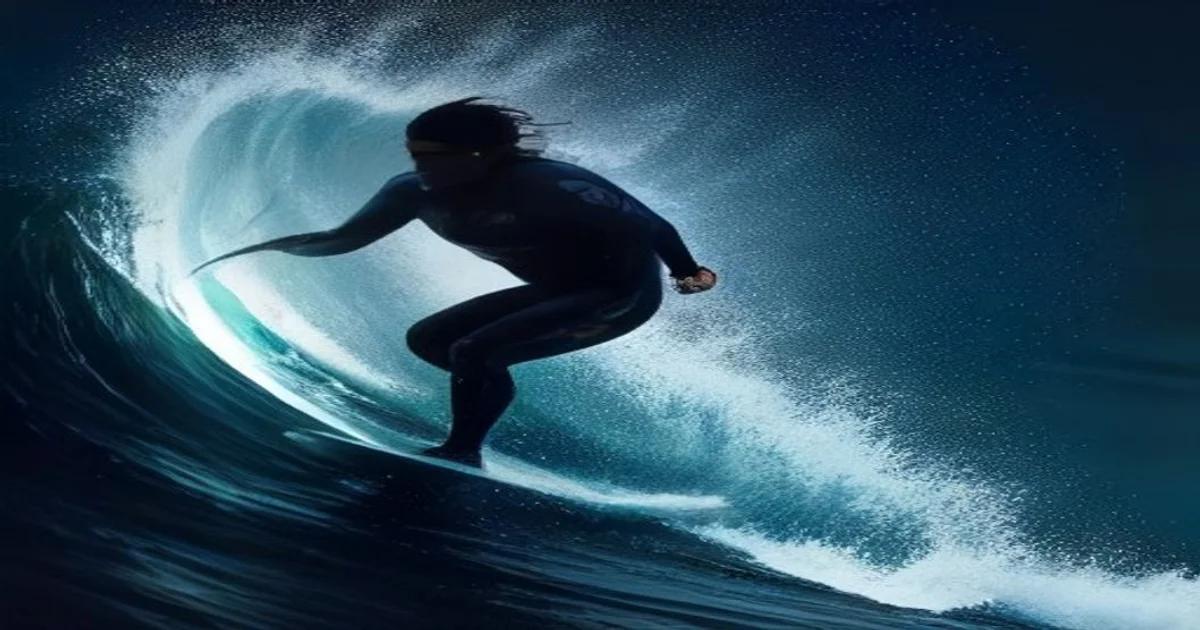
The Convergence of Fluid Dynamics and Digital Intelligence
Surfing has long been considered an art form, a dance between human instinct and the raw, chaotic energy of the ocean. For decades, the path to mastery was limited by the availability of high-level mentors and the subjective nature of human observation. Today, that paradigm is shifting. The introduction of AI-driven adaptive surf coaching marks a significant milestone in athletic performance, blending fluid dynamics with sophisticated data science. By analyzing every arc, pivot, and trim, artificial intelligence is providing a level of granular insight previously reserved for top-tier professional leagues.
Breaking Down the Biomechanics of the Turn
At the core of this technological evolution is the use of deep learning models to process video input. Modern platforms can isolate a surfer's skeleton in real-time, mapping body positioning against ideal biomechanical models. When a surfer executes a bottom turn, the AI tracks the distribution of pressure, the angle of the knee, and the tilt of the torso, comparing these metrics against a vast database of professional performances. This is not just about watching video playback; it is about quantifying the invisible physics that separate a novice from an expert.
'The ocean is the most dynamic field of play in existence. To master it, one must be as adaptable as the water itself. AI provides the objective lens necessary to bridge the gap between feeling a movement and executing it with perfect precision.'
The Feedback Loop: Moving Beyond Static Training
Traditional coaching often relies on delayed feedback, where a surfer reviews footage hours or even days after a session. AI-driven platforms are shrinking this window significantly. Through integrated audio feedback systems—often delivered via waterproof earplugs—surfers can receive real-time alerts when their stance deviates from the intended technique. This immediate correction loop facilitates faster muscle memory development, allowing athletes to 'feel' the correct alignment in the moment.
Customization Through Algorithmic Learning
Every surfer is unique, and a one-size-fits-all approach to coaching is rarely effective. Adaptive AI systems account for board volume, wave size, wind velocity, and individual physical constraints. By ingesting environmental data from local buoy reports and personal performance metrics, the software generates a customized training roadmap. If a surfer struggles with backside aerials, the system shifts focus to weight distribution on the rail and pop mechanics, creating a structured path for improvement that evolves alongside the user.
The Role of Wearable Technology
While visual AI is powerful, it is augmented by the rise of smart sensors. Micro-IMUs (Inertial Measurement Units) attached to boards or wetsuits provide high-frequency telemetry that cameras cannot capture alone. These sensors measure:
- Board velocity and acceleration vectors
- Peak gravitational force during carving maneuvers
- Duration of time spent in the pocket vs. on the face
- Frequency and efficiency of paddle strokes
When combined with computer vision, this data creates a holistic portrait of the surfing experience. It moves the conversation from 'you look shaky' to 'you are losing 15% of your momentum during the transition phase of your cutback.'
Democratizing Elite Coaching
One of the most profound impacts of this technology is the democratization of knowledge. Previously, high-performance coaching was gated by geography and financial resources. An athlete living in a remote coastal town might never get access to world-class feedback. AI changes this. By uploading a single video session to a cloud-based coaching platform, a user can receive a comprehensive report that matches or exceeds the quality of a private hour-long session with a human instructor. This opens the door for thousands of amateur surfers to level up their craft safely and efficiently.
Addressing the Ethics of Digital Performance
As with any technology that tracks human performance, there are valid questions regarding data privacy and the 'commodification' of sport. How much data is too much? Will the obsession with metrics detract from the spiritual connection to the ocean that many surfers cherish? The industry must ensure that AI remains a tool for enrichment rather than a replacement for the intuitive soul of the sport. It should be used to clear away the clutter, allowing the surfer to focus on the pure joy of the ride.
The Future: Predictive Analytics and Wave Forecasting
Looking ahead, the next generation of surf AI will likely incorporate predictive modeling. By analyzing current swell patterns and applying them to a user’s specific style, an AI coach could suggest which break to visit for the best outcome for that individual's skill development. If you are training for speed, the AI might recommend a fast, pitching wave that tests your limits. If you are focused on flow, it might guide you toward a point break that offers longer, cleaner faces. This level of synergy between environmental forecasting and personal coaching will turn the entire coastline into an interactive laboratory.
Final Thoughts
We are witnessing the end of the 'guesswork' era in surfing. Through the integration of machine learning and biomechanical analytics, the sport is being elevated to a new scientific standard. As we refine these tools, the focus must remain on the surfer's empowerment. Whether you are a professional chasing a world title or a weekend warrior looking to catch your first green wave, the digital wave is rising, and it is a powerful ride indeed.