
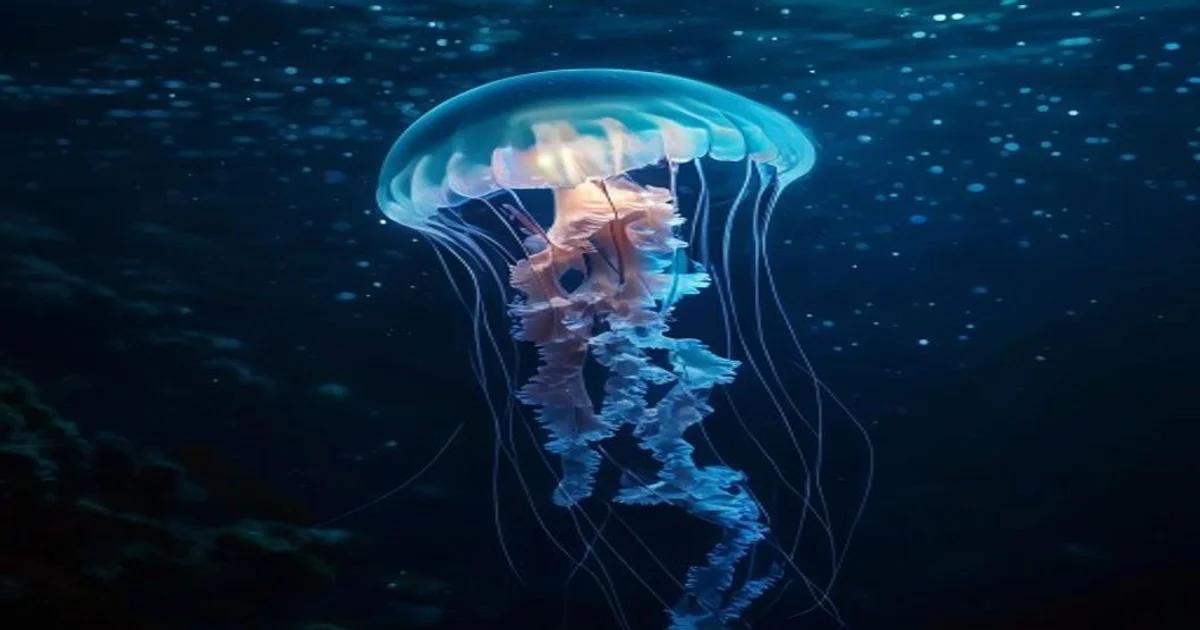
The Hidden Light of the Ocean
The deep ocean, representing the largest habitat on Earth, remains one of the least explored frontiers of our planet. For decades, scientists have relied on cumbersome, manual methods to observe life at crushing depths. However, the emergence of AI-driven bioluminescence mapping is transforming our understanding of the midnight zone. By leveraging sophisticated neural networks, researchers are now capable of documenting the 'living lights' of the deep sea with unprecedented precision.
The Challenge of Data Density
Deep sea exploration generates terabytes of raw visual data. Historically, marine biologists spent years manually reviewing footage to identify single organisms. This bottleneck has been shattered by machine learning. Using convolutional neural networks (CNNs), these systems can now scan thousands of hours of high-definition video to detect, categorize, and track bioluminescent flickers that would otherwise be missed by the human eye.
'The integration of AI into oceanic observation represents a paradigm shift equivalent to the invention of the sonar, allowing us to see through the eternal darkness of the deep.'
How Algorithms Decode Bioluminescence
AI models are trained on vast datasets of spectral signatures captured by specialized submersibles. These systems analyze the duration, pulse frequency, and color spectrum of bioluminescent flashes. By distinguishing between natural photonic displays and mechanical noise caused by underwater currents or equipment interference, these algorithms create accurate spatial maps of where life congregates.
Key Components of the AI Pipeline
- Preprocessing: Cleaning seismic and aquatic noise from video streams.
- Detection: Locating bioluminescent signatures using real-time object detection models.
- Classification: Identifying species based on characteristic light patterns.
- Mapping: Integrating GPS and pressure data to create a 3D visualization of biodiversity.
Scaling Autonomous Research
One of the most exciting aspects of this technology is its implementation in autonomous underwater vehicles (AUVs). These drones operate independently for months, navigating the complex topography of ocean trenches. Because they carry onboard AI processing units, they do not need to transmit all raw data to the surface. Instead, they transmit optimized insights about species distribution, saving energy and bandwidth while expanding our geographical reach.
Environmental Impact and Climate Monitoring
Bioluminescent mapping is not just about cataloging species; it is about tracking the health of the entire oceanic ecosystem. Many bioluminescent organisms, such as various species of plankton, play a crucial role in the biological carbon pump. By mapping their distribution and abundance, scientists can track how climate change affects deep sea carbon sequestration. AI provides the necessary speed to observe these fluctuations in real-time, offering data points that were previously impossible to collect.
The Path Forward
As AI models become more lightweight and efficient, we can expect a new generation of micro-AUVs equipped with advanced sensor arrays. These machines will form 'swarms' of observers, collectively creating a living, breathing, and glowing map of the deep ocean. This technology does more than observe; it democratizes the deep sea for researchers around the world. By utilizing open-source libraries and cloud-based processing, even smaller institutions can now contribute to global marine monitoring projects.
Addressing Computational Complexity
The sheer complexity of oceanic environments presents a significant challenge for existing algorithms. Water turbulence, suspended particulate matter, and low-light conditions require AI models that are robust against sensory degradation. Current research is heavily focused on 'robust feature extraction,' which allows AI to maintain high accuracy even when visual data is compromised by marine snow or murky water. Through the use of transformer-based models, we are seeing breakthroughs in long-range temporal analysis, where the AI can connect events that happen seconds or minutes apart in the dark abyss.
Ethics and Ocean Stewardship
With increased surveillance of the deep sea comes the responsibility of ethical exploration. We must ensure that our autonomous systems do not disturb the fragile habitats they are studying. Furthermore, as we map resources and biological hubs, international cooperation is necessary to prevent the exploitation of these sensitive ecosystems. AI-driven mapping should serve as a tool for conservation, acting as an early warning system for ecological shifts caused by deep-sea mining or pollution. The potential for discovery is immense, but the commitment to preservation must remain our primary guiding principle as we illuminate the final, darkest corners of our home world.