
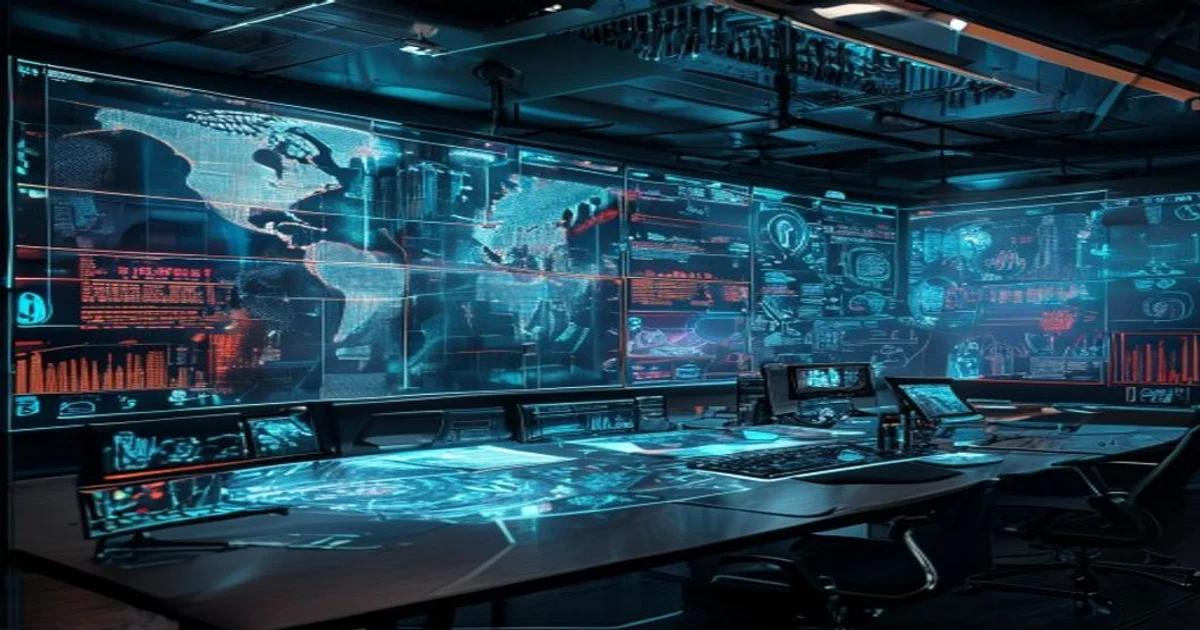
The New Frontier of International Relations
In the traditional corridors of power, diplomatic crisis management has historically relied on the intuition, historical memory, and often fallible judgment of human policymakers. However, the emergence of AI-driven diplomatic crisis simulations is fundamentally altering how nations approach brinkmanship, negotiation, and conflict resolution. By leveraging large-scale data sets and sophisticated multi-agent modeling, these systems are transforming the way we perceive global instability.
The Mechanics of Algorithmic Diplomacy
At the core of these simulations are advanced LLMs trained on centuries of diplomatic cables, treaty history, and game theory models. Unlike linear forecasting, these AI systems can simulate thousands of possible 'what-if' scenarios in seconds. By inputting specific variables—such as regional trade tensions, military posture, or energy supply fluctuations—leaders can observe how various diplomatic responses might trigger a cascade of events.
'The integration of AI into statecraft represents a transition from reactive firefighting to predictive diplomacy, allowing leaders to see the ripples of their decisions before they become tidal waves.'
Simulating Adversarial Behavior
One of the most critical applications involves creating high-fidelity digital twins of geopolitical rivals. By training AI agents on the specific historical decision-making patterns of certain governments, simulations can mimic how a state might respond to sanctions, military exercises, or humanitarian aid efforts. This process provides an invaluable sandbox for stress-testing policy before committing to real-world actions.
Key features of modern crisis platforms:
- Multi-Variable Modeling: Incorporating economic, social, and military data points simultaneously
- Real-time Sensitivity Analysis: Measuring how slight changes in communication tone impact regional stability
- Synthetic Stakeholder Analysis: Assessing the impact of policies on non-state actors and internal populations
Enhancing Decision Support Systems
While AI cannot replace the moral weight of a human leader, it acts as an essential cognitive crutch. Cognitive bias, fatigue, and groupthink are perennial threats in a crisis room. AI systems mitigate these by providing an objective counter-perspective, often challenging the dominant narrative within a diplomatic team. This friction ensures that all plausible outcomes—even the most unlikely ones—are considered by stakeholders.
Challenges: The Ethics of Automated Statecraft
Despite the clear advantages, the rapid adoption of these systems raises significant ethical questions. Who is responsible if an AI-led simulation suggests a path that leads to unintended escalation? Furthermore, the potential for 'algorithmic capture,' where leaders become overly reliant on machine-generated recommendations, risks eroding human agency in critical moments. Transparency and explainability in these models are not just technical requirements; they are geopolitical imperatives. We must ensure that the 'black box' of AI does not become the 'hidden hand' of international chaos.
Future Outlook: The Global Simulation Network
The vision for the next decade is the development of a secure, collaborative network where democratic nations can run joint simulations. By aligning intelligence and sharing simulation parameters, states can work together to prevent conflicts rather than merely reacting to them. This shift toward cooperative simulation technology could signify the birth of a new era of global stability, grounded in data, shared intelligence, and rigorous, systematic foresight.
*Self-Correction and Learning Mechanisms:* Current systems are increasingly utilizing reinforcement learning from human feedback (RLHF) to ensure that the simulation outputs align with democratic norms and international law. As these models iterate, they grow more sophisticated, learning from the successes and failures of past diplomatic engagements to refine their predictive capabilities. We are moving toward a future where statecraft is as much an analytical discipline as it is a political art.

