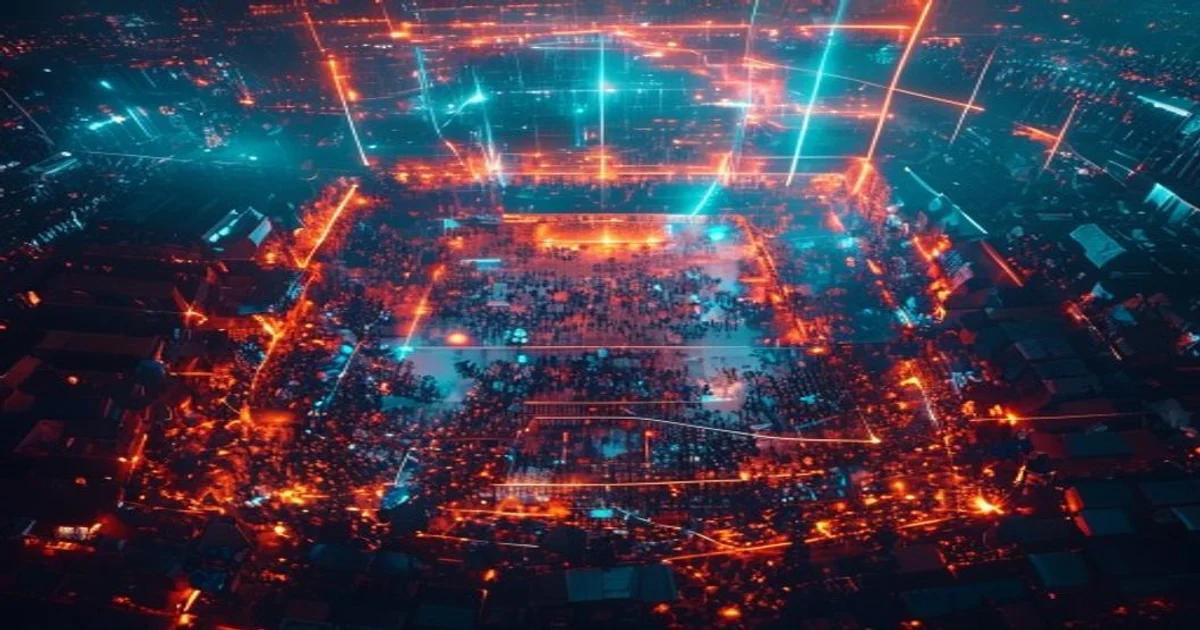
The New Era of Crowd Dynamics
The management of ephemeral events—temporary, high-density gatherings like music festivals, pop-up markets, and spontaneous protests—has long been a complex challenge for security professionals and logistics planners. Historically, human observation and static capacity planning were the only tools available. Today, however, the integration of AI and Smart Systems is creating a paradigm shift in how we monitor, influence, and secure large gatherings. By leveraging high-fidelity sensor data and advanced analytical models, organizers can now manage crowd flow with surgical precision.
Predictive Modeling and Real-Time Insights
Traditional crowd management relies on reactive measures: if a corridor becomes too full, personnel are dispatched to redirect traffic. Modern AI-driven platforms flip this model. Using historical data and real-time feeds from CCTV and IoT sensors, machine learning algorithms can predict bottleneck formation before it happens.
'Predictive crowd management is not just about counting heads; it is about understanding the intent and velocity of thousands of individuals simultaneously in a fluid environment.'
This capability allows organizers to proactively adjust physical barriers, signages, and gate openings. By mitigating congestion points before they escalate, AI effectively lowers the 'density risk' associated with overcrowding.
Core Technologies in Action
To manage ephemeral spaces, several layers of technological infrastructure must work in tandem. These include:
- Computer Vision: Deep learning models trained to detect 'swarming' behavior or individuals falling, without compromising personal privacy through de-identification protocols.
- Edge Computing: Processing data locally at the site to reduce latency, ensuring that emergency triggers act in milliseconds rather than seconds.
- Digital Twins: Creating a virtual replica of the venue that simulates thousands of scenarios based on current crowd density, allowing security heads to test 'what-if' strategies.
Ethics and Privacy Concerns
With great power comes the requirement for stringent ethical guardrails. The deployment of surveillance AI in public spaces is a subject of intense debate. It is essential for organizers to employ 'Privacy by Design' principles. This involves processing metadata only—such as movement vectors and density estimates—rather than storing personally identifiable information like facial recognition data unless explicitly required for high-security incidents. Automation must be balanced with human oversight to ensure that bias in algorithms does not lead to unfair profiling of certain groups within the crowd.
Operational Efficiency and Logistics
Beyond safety, AI enhances the overall experience of attendees. For ephemeral events, the 'guest journey' is often marred by long wait times and poor wayfinding. By analyzing crowd density, AI-powered mobile apps can push real-time notifications to users, suggesting less crowded paths to concessions or stages. This distributed flow not only keeps guests happy but also ensures that critical infrastructure is never overwhelmed, reducing the burden on maintenance and cleaning crews.
The Future of Crowd Resilience
As we look forward, the synergy between 5G connectivity and AI will allow for hyper-local load balancing. Imagine an event space where audio-visual equipment, lighting, and stage configurations dynamically adapt to the crowd's energy. If a specific zone becomes overcrowded, the AI could trigger a 'pull' effect by activating lights or entertainment in a less congested area, subconsciously guiding the crowd to balance itself.
Challenges in Implementation
Despite the clear benefits, integrating these systems remains difficult for small-scale ephemeral events. High costs of sensor deployment and the need for standardized data protocols often present barriers. Furthermore, the variability of event environments—from dusty fields to urban concrete squares—means that AI models must be highly adaptable to function without constant recalibration.
Conclusion
As we move toward a future where large-scale human gatherings are more common and more complex, the role of AI in crowd management will evolve from a luxury to a baseline safety requirement. By prioritizing data-driven decision making, organizers can turn chaotic gatherings into safe, predictable, and highly efficient experiences. The goal is to create environments where technology acts as an invisible hand, guiding the crowd safely and gracefully through the event's duration.