The Convergence of Ancient History and Modern Intelligence
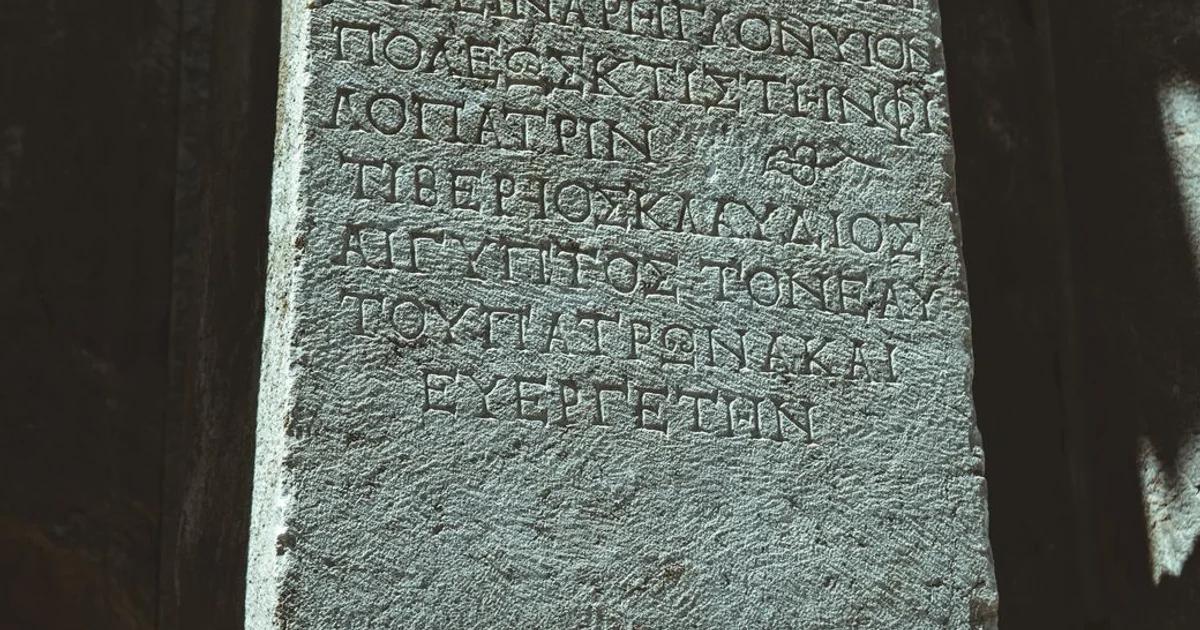
The study of epigraphy—the analysis of ancient inscriptions—has long been a painstaking labor of human intuition and fragmented evidence. For centuries, scholars have attempted to piece together the shattered remains of history, often filling in the gaps of eroding stone with educated guesses that remain subject to debate. Today, however, we are witnessing a paradigm shift as AI-driven epigraphic linguistic reconstruction moves from experimental research to a standardized methodology in archaeology and philology.
The Mechanics of Computational Epigraphy
At the core of this transformation are sophisticated neural networks designed to process orthographic and linguistic data at speeds unreachable by human specialists. By training on vast datasets of historical inscriptions—ranging from Phoenician scripts to Roman monumental stone carvings—these models learn the intricate patterns of grammar, syntax, and character placement characteristic of extinct dialects.
'The machine does not merely fill in gaps; it evaluates the statistical probability of every potential character based on the syntactical structure of surrounding, legible text.'
Unlike simple pattern matching, modern deep learning architectures utilize attention mechanisms to maintain coherence across long strings of text. If a limestone slab is missing a central section of a treaty, the AI considers the dialect, the era, and the cultural context, suggesting reconstructions that adhere to the linguistic standards of the time.
Overcoming the Challenges of Fragmentary Data
One of the most persistent hurdles in epigraphy is the inherent 'noise' of the physical world. Weathered surfaces, cracks, and deliberate vandalism create corrupted data. Standard OCR (Optical Character Recognition) often fails when faced with worn edges or non-standard lettering.
- Feature Extraction: Deep convolutional layers identify subtle grooves that the human eye might overlook in low light.
- Probabilistic Output: Rather than offering a single answer, the AI provides a ranked list of likely characters with confidence scores.
- Multi-Modal Integration: By incorporating metadata such as the location of the find and the physical dimensions of the stone, the system refines its guesses to fit historical feasibility.
The Future of Linguistic Preservation
As these models advance, they are increasingly capable of identifying authorship and tracking the migration of linguistic traits between neighboring civilizations. This capability effectively bridges the gap between archaeology and data science. We are moving toward a 'Global Epigraphic Map' where every known inscription is connected through a neural network that understands how ancient cultures communicated, traded, and governed.
Ethical Considerations and Human Oversight
While the utility of AI in this field is undeniable, it is not without controversy. There is a valid concern regarding the risk of 'hallucination' where an algorithm might suggest a grammatically correct but historically inaccurate reconstruction. Consequently, the consensus among leading philologists is that AI must act as a 'decision-support system' rather than an autonomous oracle.
The human expert remains the ultimate arbiter, providing the qualitative nuance that only a lifetime of historical immersion can offer. AI acts as the tireless apprentice, handling the rote analysis and surfacing hidden relationships that allow the expert to make an informed, authoritative decision. This symbiotic relationship ensures that we do not lose the human element in our quest to understand the past.
Technological Integration and Scaling
The deployment of this technology requires significant computing power. The integration of high-performance GPUs and cloud-based data repositories has enabled research teams to process thousands of inscriptions simultaneously. This scalability is a turning point for the discipline, transforming what was once a decades-long project into a task that can be completed in months.
Looking ahead, we expect to see the development of specialized transformer models tailored specifically for dead languages. These models, potentially trained on 'foundation corpus' datasets, will set new standards for linguistic reconstruction, allowing for a more complete understanding of ancient human consciousness and societal structure. The marriage of machine learning and epigraphy is not just about cleaning up old stones; it is about reclaiming the lost voices of history and ensuring that the stories of our ancestors are preserved for future generations with the highest possible level of integrity and scholarly rigor.