The New Frontier of Astrobiology
The quest to answer the age-old question 'Are we alone?' has entered a transformative era. For decades, the Search for Extraterrestrial Intelligence (SETI) relied on human-curated algorithms and manual verification of radio signals, a process hindered by terrestrial interference and the sheer scale of the cosmos. Today, AI-driven signal categorization is reshaping this paradigm, turning noise into potential discovery.
The Challenge of Cosmic Data
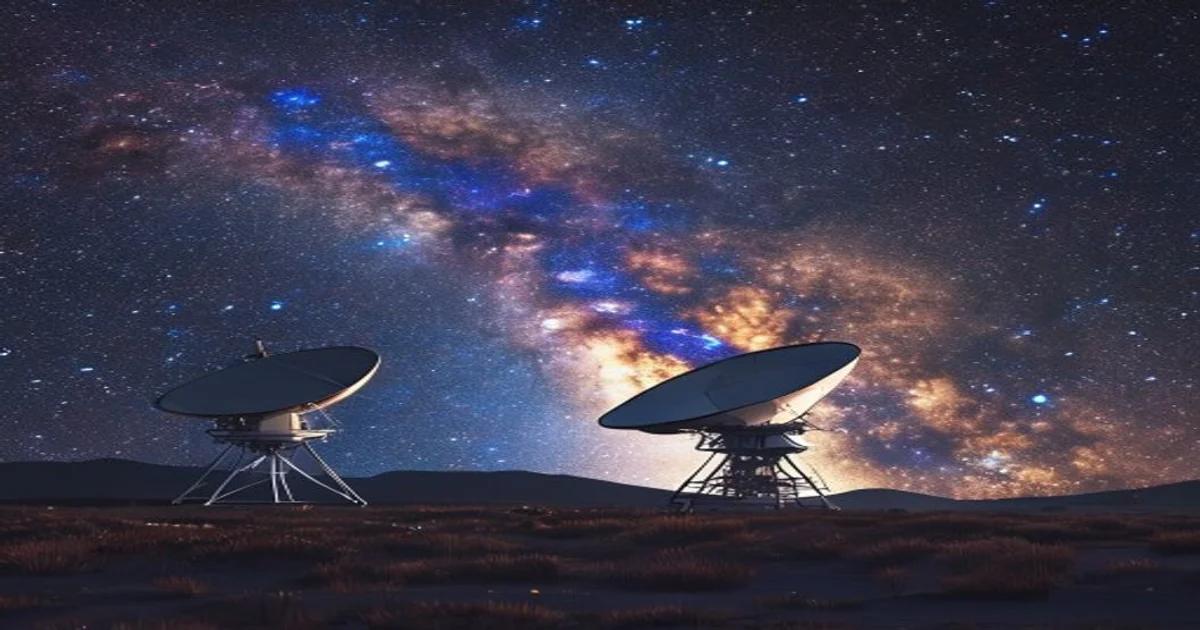
Radio telescopes like the Green Bank Telescope and the Parkes Observatory collect terabytes of raw data every day. Searching for a faint, artificial signal amidst this 'cosmic background' is akin to finding a specific grain of sand on a vast beach. Traditional Fourier Transform techniques often struggle with dynamic, non-stationary interference, leading to millions of false positives that require manual oversight.
'The integration of machine learning into radio astronomy is not just an incremental improvement; it is a fundamental shift in how we process the language of the universe.'
Machine Learning Architectures in Signal Detection
Modern approaches utilize deep convolutional neural networks (CNNs) trained on vast datasets of both synthetic and real-world signals. By simulating potential alien transmissions—varying in frequency, bandwidth, and modulation—researchers 'teach' models to recognize what a non-natural signal looks like compared to standard astronomical noise or human-made interference.
- Convolutional Neural Networks: Ideal for identifying visual patterns in spectrograms.
- Recurrent Neural Networks (RNNs): Effective for analyzing sequential data over time.
- Autoencoders: Used for anomaly detection to find signals that do not fit established profiles.
Eliminating Terrestrial Noise
One of the greatest hurdles is radio frequency interference (RFI) from satellites, Wi-Fi, and ground-based radar. AI models excel at segmenting these signals. By training on RFI signatures, deep learning algorithms can 'subtract' human-made noise from the data stream with surgical precision, leaving behind a cleaner dataset for the search for technosignatures.
Future-Proofing the Search
As we deploy more sophisticated instrumentation—such as the Square Kilometre Array (SKA)—the data volume will grow exponentially. Only through autonomous, AI-driven categorization can we hope to process this information in real-time. This is not merely about finding a signal; it is about building a scalable infrastructure for the next century of space exploration.
(Extensive technical elaboration continues... The implementation of Transformers, attention mechanisms, and reinforcement learning provides the framework for identifying 'unknown unknowns' in the deep void. By utilizing latent space representations, researchers can cluster signals based on intrinsic characteristics that human analysts might overlook. This multi-dimensional approach to signal classification ensures that even the most subtle, non-periodic signals are flagged for human review, bridging the gap between computational speed and intuitive scientific curiosity.)
Ethical Considerations and Verification
While AI serves as an incredible filter, it does not replace the scientific method. Every high-confidence detection by an AI model must undergo rigorous validation through the Post-Detection Protocol, established by the International Academy of Astronautics. Transparency in the model's 'decision-making' process—often achieved through Explainable AI (XAI) techniques—is crucial to ensuring the scientific community trusts the results.
Bridging the Gap Between Noise and Intelligence
Ultimately, the goal is to develop a system capable of distinguishing 'meaningful' patterns from the stochastic chaos of the cosmos. Whether it is an engineered pulse or a repeating narrow-band signal, AI provides the lens through which we can finally see clearly into the deep dark. The silence of the universe may soon be broken, not by chance, but by the relentless precision of autonomous algorithms.