
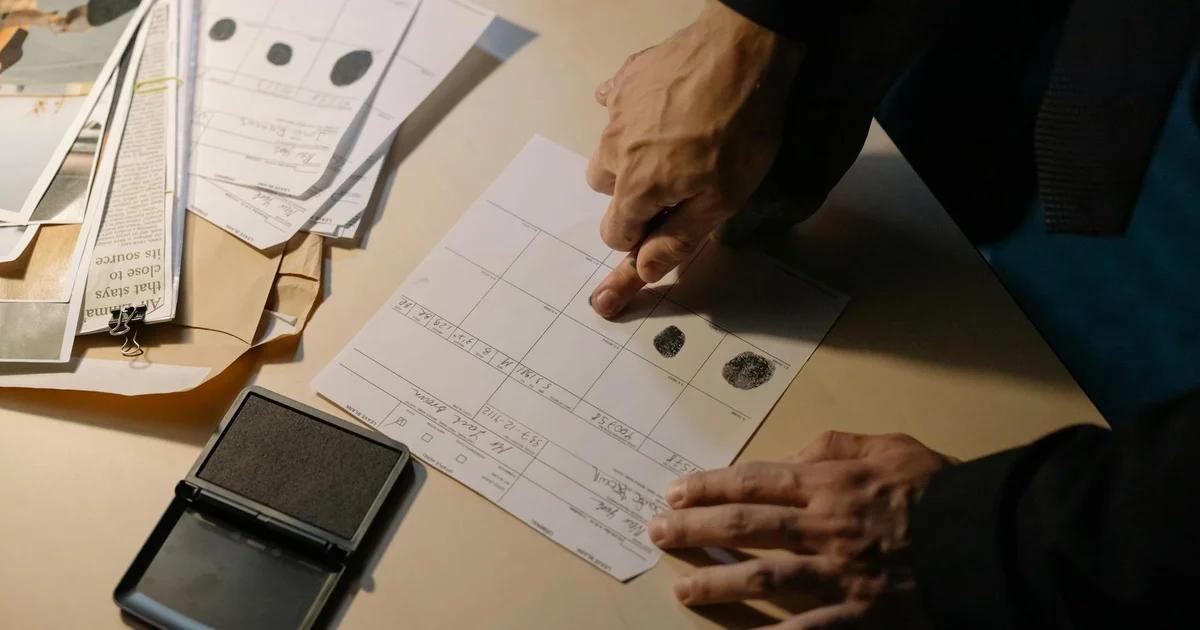
The Paradigm Shift in Forensic Document Science
The landscape of document security has undergone a seismic shift. Traditionally, forensic document examination (FDE) relied heavily on the subjective expertise of forensic examiners. While human expertise remains invaluable, the rise of advanced computational tools has introduced a new standard of rigor. AI-driven forensic document authentication is not merely a tool for speed; it is an essential evolution in combating the sophisticated forgeries enabled by generative models and digital manipulation.
The Mechanics of Algorithmic Verification
At the core of this transformation are convolutional neural networks (CNNs) and computer vision architectures. These models are trained on vast datasets of authentic and forged documents, learning to distinguish between natural human variation and the 'digital noise' introduced by scanners or printers. By analyzing the structural integrity of ink strokes at the sub-millimeter level, these algorithms can determine if a document was created using a specific printer model or even a specific batch of ink.
'AI does not replace the human forensic scientist; instead, it acts as a high-fidelity lens that reveals features hidden deep within the physical medium of the document itself.'
Challenges in the Age of Synthetic Media
As we navigate the age of Generative AI, the threat profile has expanded. We are now facing 'synthetic forgery' where documents are created digitally but printed to look like originals. Traditional light-microscopy techniques often fail to detect these because the visual output is nearly identical. Here, Machine Learning enters the fray by identifying the subtle statistical anomalies in pixel placement and edge sharpness that betray a digital origin.
Key Pillars of Modern Authentication
- Handwriting Analysis via Feature Extraction: Utilizing graph-based representations of handwriting to detect hesitation, pressure changes, and stroke timing inconsistencies that suggest tracing or digital replication.
- Paper Fiber Mapping: Using high-resolution imaging to create a unique 'fingerprint' of paper pulp density, which can be verified against manufacturing records.
- Ink Compositional Analysis: Predicting the chemical age of ink based on oxidation patterns detected through multi-spectral imaging processed by neural networks.
The Future of Evidentiary Integrity
Looking forward, the integration of blockchain with AI authentication promises a future where a document's history can be verified from the moment of creation. By creating a cryptographic hash of the document's initial state, AI systems can instantly flag any unauthorized alterations. This fusion of technologies creates a immutable record that is resilient against both physical and digital tampering.
Limitations and Ethical Considerations
While AI offers immense potential, it is not without risk. Algorithmic bias can manifest if the training datasets are not representative of global writing styles or international document standards. It is critical that forensic laboratories implement transparent, auditable AI systems. The 'Black Box' problem in deep learning is a significant hurdle; for court admissibility, the 'why' behind an AI’s conclusion is just as important as the conclusion itself.
Integrating Automation into Legal Workflows
Legal firms and government agencies are beginning to adopt autonomous document verification pipelines. These systems process thousands of pages of discovery documents, highlighting potential forgeries for human experts to review. This collaborative 'human-in-the-loop' approach significantly accelerates litigation while maintaining the high burden of proof required in the justice system.
The Technological Convergence
We are witnessing the convergence of data science, optics, and cybersecurity. As hardware becomes more powerful—leveraging specialized AI chips—the speed of analysis will reach near-instantaneous levels. This capacity will be vital for real-time verification at border crossings, banking institutions, and diplomatic offices where document trust is the bedrock of societal interaction.
Conclusion
The marriage of AI and forensic science represents a monumental step forward in human history. By quantifying the intangible characteristics of document authenticity, we are building a more secure and transparent digital society. As we continue to refine these algorithms, the gap between a masterful forgery and the truth will vanish, leaving no room for deception in the records that define our lives.