
The Impending Crisis of Wildfires
The escalation of global wildfires has emerged as one of the most critical environmental challenges of the twenty-first century. As climate change intensifies, the frequency and intensity of forest fires are outpacing traditional suppression methods. Traditional fire towers and ground-based patrols are no longer sufficient to monitor the millions of hectares of wildland vulnerable to ignition. This is where AI-driven forest fire mitigation is shifting the paradigm from reactive firefighting to proactive, automated management.
Integrating Neural Networks for Detection
At the core of modern fire mitigation lies the integration of advanced Neural Networks. By training deep learning models on historical satellite data and real-time infrared feeds, researchers have developed algorithms capable of identifying heat signatures that are invisible to the naked eye. These systems distinguish between legitimate fires, controlled agricultural burns, and ambient thermal radiation from rocky terrain with extreme accuracy.
The Role of IoT and Smart Sensors
Beyond satellite imagery, the deployment of Internet of Things (IoT) sensors throughout critical forest zones provides granular, real-time data. These sensors measure humidity, soil moisture, wind speed, and fuel load.
'By feeding this environmental data into AI models, we can forecast fire risk levels with precision that traditional meteorological tools simply cannot match,' says a lead researcher in climate-tech development.
Autonomous Robotics and Rapid Deployment
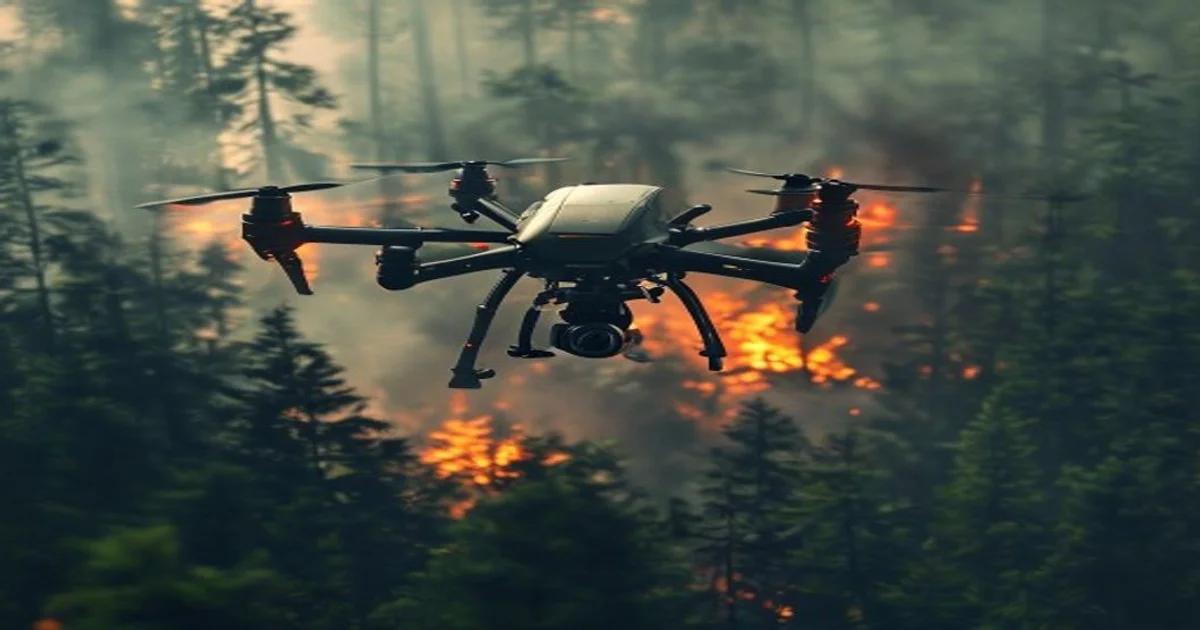
Once a potential ignition point is identified, autonomous systems take over. Automation allows for the deployment of drone swarms that can navigate dense canopies where piloted aircraft might struggle. These drones are equipped with specialized thermal imaging and fire-retardant payloads.
- Real-time heat mapping for ground crews
- Immediate aerial suppression for small-scale ignitions
- Autonomous navigation in low-visibility smoke conditions
Predicting Fire Behavior with Algorithms
Advanced Algorithms are not merely detecting fires; they are modeling them. These computational frameworks simulate how a fire will behave under various weather scenarios. By inputting variables like vegetation density, topography, and wind vectors, authorities can create 'digital twins' of wildfire scenarios. This allows emergency services to preemptively clear firebreaks and evacuate citizens long before the flames arrive.
The Future of Climate Resilience
As we look forward, the convergence of Smart Systems and climate policy will be essential. The scalability of these tools means that even developing nations can monitor vast tracts of land without the need for thousands of boots on the ground. The objective is to establish a global monitoring grid that uses shared cloud infrastructure to provide early warning alerts worldwide.
Challenges and Ethical Considerations
While the technological progress is undeniable, deploying AI in wilderness environments presents its own set of hurdles. Connectivity remains a challenge in deep mountain valleys, necessitating the use of satellite-linked mesh networks. Additionally, the ethical deployment of data collection must be managed to ensure that environmental surveillance respects local wildlife and privacy of neighboring communities.
Investment in robust, weather-hardened hardware is currently the primary barrier to universal adoption. As battery life and solar integration improve, however, these systems will become permanent fixtures of global environmental stewardship.
A Holistic Approach to Land Management
Mitigation is not just about fire fighting; it is about fire management. AI allows for better decision-making regarding controlled burns, which are vital for forest health. By simulating the long-term impact of various burn intensities, AI ensures that fire acts as a restorative force rather than a destructive one. This transition to precision forest management will define the next era of ecological preservation.
With continued investment and collaborative research, AI-driven mitigation will act as a guardian for our forests, ensuring that humanity can coexist with its natural landscapes even as the climate continues to evolve. The future of our forests depends on our ability to embrace the machine-driven insights that allow us to act with speed, accuracy, and foresight.