The Paradigm Shift in Archival Science
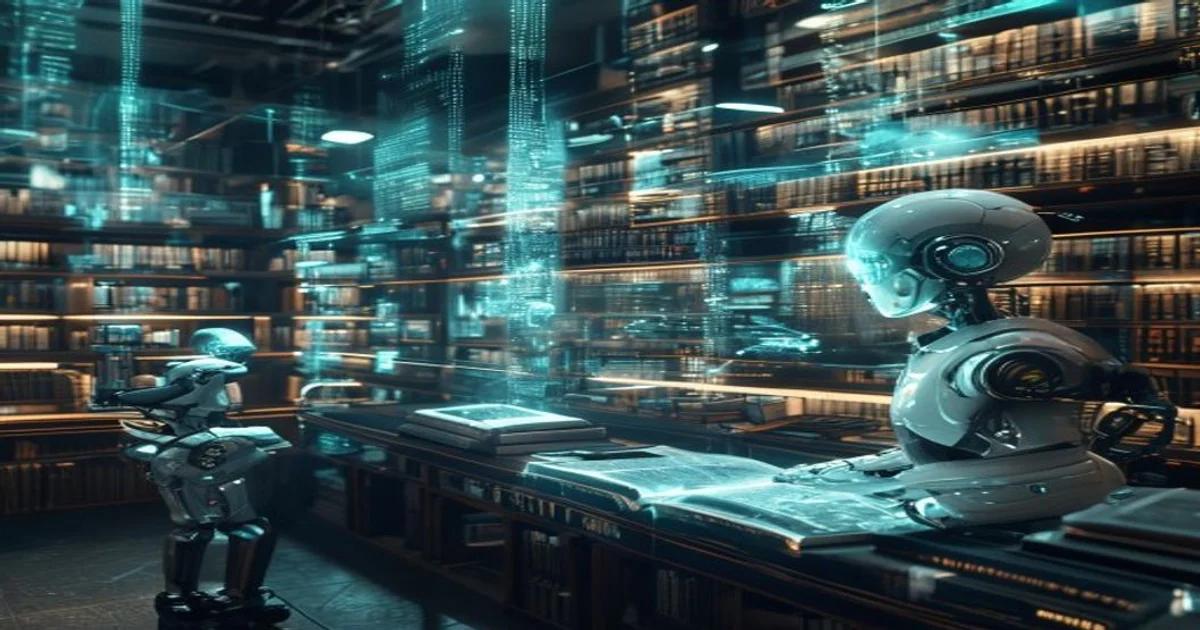
Institutional libraries have long served as the bedrock of human knowledge, housing centuries of intellectual progress within their physical walls. However, the traditional model of 'gatekeeping' information via physical cataloging is rapidly becoming obsolete. As we enter the era of ubiquitous computation, AI-driven digitization stands as the definitive bridge between the static past and the dynamic digital future. By leveraging advanced machine learning models, libraries are no longer just repositories; they are becoming active, intelligent systems that can synthesize information in real-time.
Scaling Preservation Through Robotics
The sheer volume of uncatalogued materials in major global institutions is staggering. Traditional manual digitization—where human staff carefully scan, OCR, and tag individual pages—is a bottleneck that could take centuries to resolve. Modern automation solutions are now changing this narrative. Robotic high-speed book scanners, guided by computer vision, can flip pages and capture high-resolution imagery without damaging delicate bindings. This efficiency is further bolstered by deep learning algorithms that perform 'image restoration,' automatically removing ink bleeds, water stains, and tears from historical documents to create a 'clean' digital master copy.
The Intelligence Layer: Metadata and Semantic Search
Digitization is useless without discoverability. In the past, researchers were limited by primitive keyword searches that often failed to capture the 'essence' of a document. Today, large language models (LLMs) are being deployed to ingest entire collections, generating rich, context-aware metadata that captures nuances, cross-references historical events, and links disparate documents based on thematic relationships.
'The integration of AI into archival workflows is not merely about digitizing text, but about unlocking the semantic DNA of our collective history.'
Addressing the Ethics of Automated Knowledge
As we deploy AI to index history, we must be vigilant about the 'black box' nature of these systems. If an algorithm is trained on data containing historical biases, it may inadvertently perpetuate those biases in its categorization process. Institutional libraries are now tasked with the responsibility of auditing these models, ensuring that the metadata generated by AI is representative, inclusive, and transparent. This is not just a technical challenge but a profound commitment to the integrity of the historical record.
The Path Toward a Global Knowledge Network
What happens when every library in the world is connected through a unified AI-driven search layer? We are moving toward a 'Global Knowledge Fabric.' This network will allow a student in rural India to instantly access the same historical manuscripts as a professor at Oxford. The barrier to entry for high-level academic research is being dismantled, democratizing knowledge in a way that was previously unthinkable. By utilizing cloud computing infrastructures, these digital archives are becoming scalable, resilient, and virtually indestructible, protecting them against physical disaster.
Technical Challenges and Implementation
Implementing these systems requires more than just scanners and software. It demands a total restructuring of institutional workflows. Library staff must evolve into 'data stewards,' overseeing the training of AI models, verifying the outputs of automated processes, and maintaining the cybersecurity protocols required to protect sensitive cultural data. The transition involves a steep learning curve, but the long-term benefits—reduced operational costs, higher research output, and preservation of endangered artifacts—far outweigh the initial friction.
Conclusion
AI-driven digitization is the definitive milestone in the history of information management. As institutional libraries embrace this wave of digital transformation, they secure their relevance in a world that demands instant, accurate, and deep access to data. We are witnessing the birth of a living library, where history is not just kept, but understood, analyzed, and synthesized by the very tools of the future.