
The Paradigm Shift in Cognitive Architecture
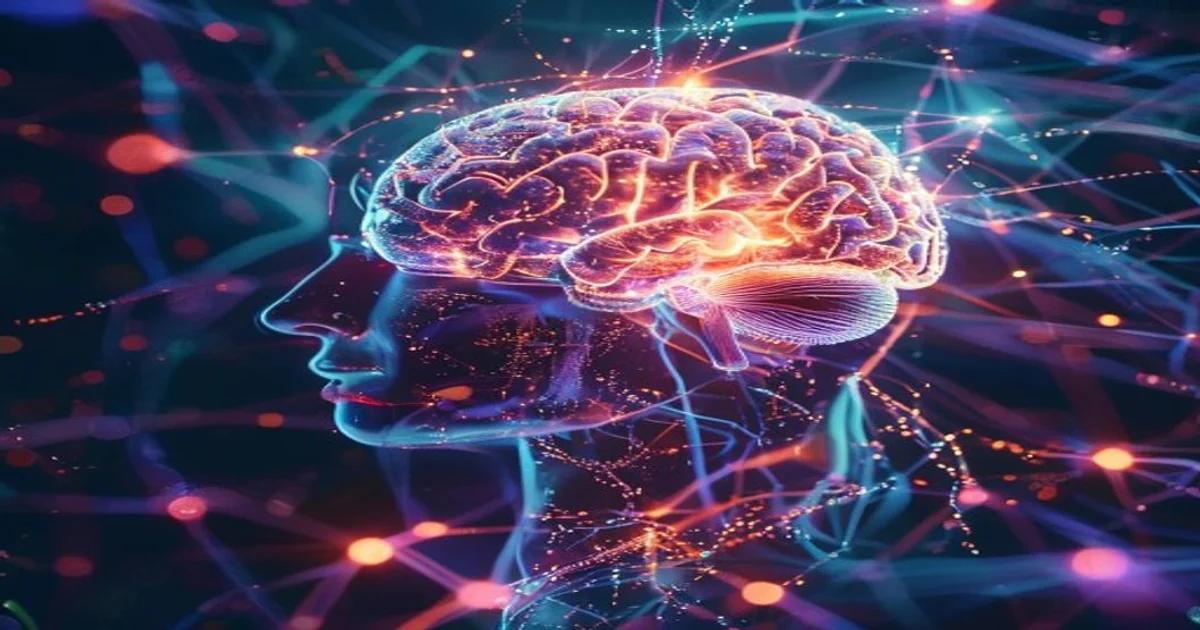
Cognitive offloading is not a new phenomenon. Humans have offloaded memory to books and calculation to abacuses for millennia. However, AI-driven instructional cognitive offloading represents a fundamental shift. Rather than just recording data, systems now actively participate in the processing of information. By delegating low-level executive functions to intelligent algorithms, the human brain is liberated to engage in synthesis, empathy, and creative problem-solving.
Defining Instructional Cognitive Offloading
At its core, instructional cognitive offloading involves using AI agents as cognitive extensions. These systems act as a secondary 'working memory,' managing complex variables, organizing vast datasets, and providing just-in-time instructional scaffolding. When a student approaches a complex programming task or a difficult historical analysis, the AI handles the retrieval of syntax or foundational facts, allowing the student to focus on the structure of the argument or the logic of the code.
'The goal of cognitive offloading is not to replace human thinking, but to expand the boundaries of what a human mind can effectively process at any given moment.'
The Mechanics of Intelligent Scaffolding
Traditional pedagogy often struggles with 'cognitive overload.' When a learner is confronted with a task that exceeds their working memory capacity, learning halts. AI systems combat this through:
- Dynamic Filtering: Removing noise from complex datasets.
- Real-time Summarization: Reducing long-form content into actionable insights.
- Executive Function Support: Planning steps for multi-stage projects.
- Pattern Recognition: Highlighting invisible connections in dense texts.
The Neuroplasticity and Skill Acquisition Balance
Critics often fear that offloading tasks will lead to cognitive atrophy. However, current research into cognitive offloading suggests that it creates a 'zone of proximal development' that is broader than previously possible. By delegating the 'boring' parts of knowledge work, learners can interact with much more complex conceptual frameworks earlier in their development. This is akin to how a calculator does not remove the need for mathematics, but rather allows a student to explore calculus sooner.
Enhancing Metacognition
One of the most profound benefits is the enhancement of metacognition. As AI takes on the 'doing' parts of a task, the learner is forced into the role of the 'architect' or 'reviewer.' This shift in perspective provides a meta-analytical view of one's own learning process, fostering a deeper understanding of how knowledge is constructed and validated.
Bridging the Knowledge Gap
In personalized learning environments, AI-driven offloading provides a safety net for students with varying levels of foundational knowledge. An intelligent tutor can detect when a learner is stuck on a definition and provide that information instantly, ensuring the flow of inquiry remains unbroken. This persistence of inquiry is the hallmark of advanced research and high-level skill mastery.
Ethical Considerations and Cognitive Sovereignty
While the promise is immense, the dependency on AI systems raises questions about cognitive sovereignty. If we offload too much, do we lose the ability to perform basic critical analysis?
- The Fragility of Reliance: Systems can fail or hallucinate.
- The Bias of the Offloader: If the AI is biased, the learner's foundational knowledge becomes corrupted.
- Maintaining Agency: It is vital that the learner remains the 'pilot' while the AI functions as the 'autopilot.'
Protecting the Human Element
To ensure AI-driven offloading remains a tool for empowerment, instructional designers must integrate 'friction' back into the learning process. Cognitive effort is necessary for long-term retention. Therefore, the AI must be designed to 'step back' once a skill has been acquired, forcing the learner to engage their own neural circuits in a process often called 'desirable difficulty.'
Designing for the Future Classroom
Future educational frameworks must transition from measuring rote reproduction to measuring the effectiveness of human-AI collaboration. Evaluation models will likely shift toward assessing a student's ability to prompt effectively, synthesize AI-generated summaries, and verify AI outputs against objective truth.
The Role of Educators
Teachers will evolve into facilitators of AI orchestration. They will guide students in:
- Selecting the right tools for specific intellectual tasks.
- Critically evaluating the outputs of generative models.
- Balancing machine-assisted speed with deep, contemplative study.
Conclusion: The Symbiotic Horizon
AI-driven instructional cognitive offloading is not the end of education; it is the beginning of an era where cognitive boundaries are pushed further than ever before. By strategically delegating, we do not shrink our minds; we reallocate our mental resources to the uniquely human traits of creation, ethics, and vision. We are moving toward a future where the partnership between the biological and the digital represents the next evolutionary leap in human capability.