
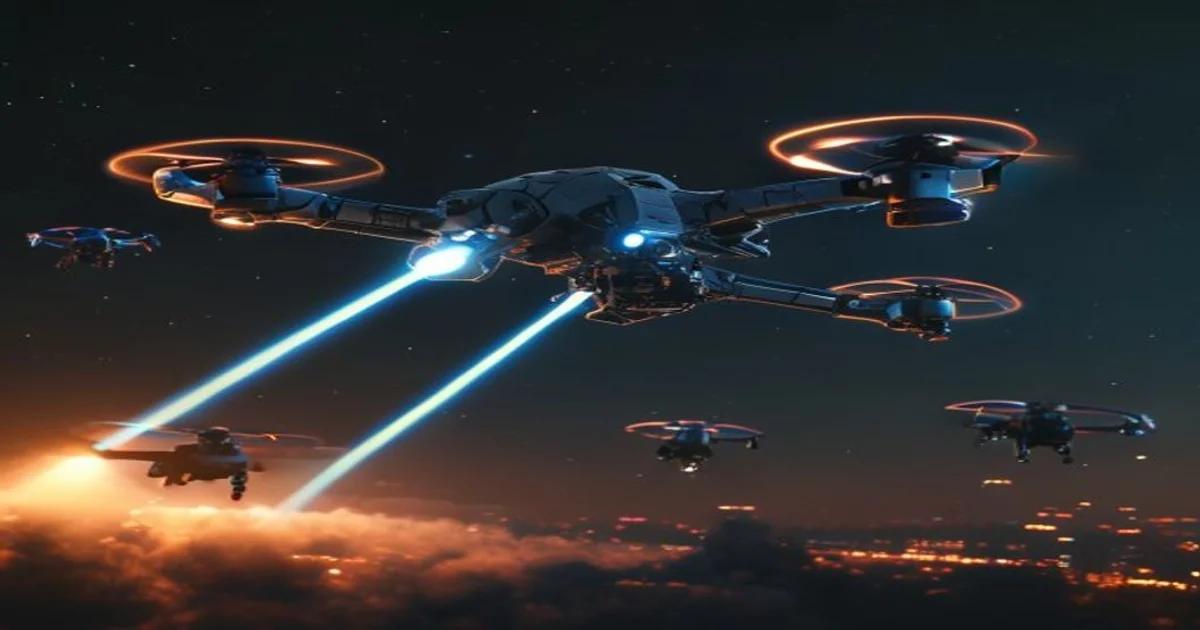
The Evolution of Aerial Threats and Kinetic Interception
The rapid proliferation of Unmanned Aerial Systems (UAS) has fundamentally transformed the nature of modern battlefield tactics and domestic security. As drones become cheaper, faster, and more capable, the challenge of defending critical infrastructure and front-line assets against swarms or autonomous strikes has escalated. Traditional electronic warfare methods, such as jamming and signal spoofing, are increasingly insufficient against drones equipped with advanced inertial navigation systems that operate autonomously without reliance on GNSS signals. This gap in capability has accelerated the development of AI-driven kinetic counter-drone systems.
The Role of Machine Learning in Target Acquisition
At the heart of modern counter-drone innovation lies a sophisticated stack of deep learning models. These systems ingest multi-modal data from radar, electro-optical, and infrared sensors to create a high-fidelity situational awareness bubble. Unlike legacy systems that rely on simple motion detection, current AI models are trained on massive datasets of aerial signatures, allowing them to differentiate between benign objects like birds and high-velocity hostile drones with near-perfect accuracy.
'The integration of high-speed AI processing allows kinetic effectors to track and engage threats that move at speeds and trajectories previously impossible for human operators to intercept manually.'
Precision Neutralization via Automated Kinetic Effectors
Kinetic interception involves the physical contact or destructive influence of a projectile on a target drone. While traditional anti-aircraft fire required massive shells, modern systems utilize smaller, smarter projectiles or 'kamikaze' interceptors that carry onboard sensors. The AI orchestrates the entire engagement cycle:
- Detection: Continuous scanning of 360-degree airspace.
- Classification: Distinguishing between friendly and adversarial assets.
- Tracking: Calculating intercept vectors using predictive trajectory modeling.
- Execution: Launching the kinetic effector and providing real-time course corrections.
Overcoming the Challenge of Autonomous Swarms
One of the most terrifying developments in modern warfare is the 'drone swarm'—a coordinated group of low-cost drones capable of overwhelming defensive batteries. An AI-driven kinetic system is the only viable counter to such a threat. By utilizing decentralized computation, a network of counter-drone nodes can communicate, distributing targets among themselves to ensure that each drone in the swarm is neutralized with the most efficient expenditure of resources. This is not just a technological advancement; it is a fundamental shift in defensive architecture from centralized command to edge-distributed autonomy.
Ethical Considerations and the Future of Defensive Automation
As we transition to fully autonomous kinetic systems, the debate surrounding 'human-in-the-loop' versus 'human-on-the-loop' control continues to intensify. Critics argue that delegating lethal force to an algorithm poses significant risks, while proponents maintain that human reaction speeds are simply too slow for the hypersonic or swarming threats of the near future. The future of this technology lies in hybrid decision-making models where AI handles the detection and trajectory calculations, while final authorization remains embedded in a multi-layered security protocol. We must ensure that the software governing these systems is robust, verifiable, and secure against adversarial interference. The development of AI-driven counter-drone technology will likely follow a path of increasing sophistication, where neural networks learn to adapt to new counter-countermeasures in real-time, effectively creating a perpetual loop of technological one-upmanship.