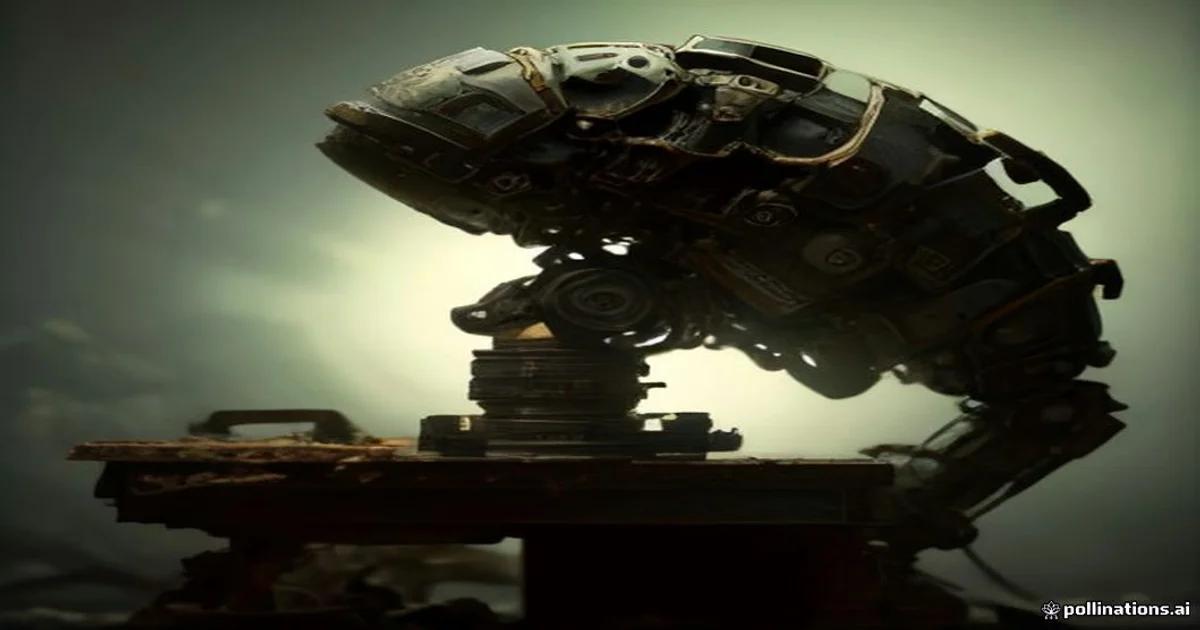
The New Era of Human-Machine Collaboration
We stand at the precipice of a profound structural shift in the global economy. As artificial intelligence advances from experimental labs into the heart of corporate operations, the traditional understanding of 'employment' is undergoing a radical metamorphosis. This transition is not merely about machines doing what humans did; it is about the redefinition of value creation in an algorithmic age.
The Shift from Manual to Cognitive Automation
For decades, automation was synonymous with physical robotics in manufacturing. Today, the focus has shifted toward cognitive automation—the use of Large Language Models (LLMs) and predictive analytics to handle tasks previously reserved for white-collar professionals. From legal document analysis to diagnostic medical reviews, software is now capable of processing information at scales and speeds impossible for biological brains.
'The future of work is not a zero-sum game between humans and machines, but rather a synergistic partnership that unlocks new categories of professional contribution.'
Why This Time Is Different
Unlike the industrial revolutions of the past, the AI-driven transition is happening at an exponential velocity. Whereas the transition from agrarian to industrial societies took generations, the displacement and creation of roles via AI occur in months. This speed creates a 'skills gap' that traditional education systems struggle to fill. Employers are finding that the most valuable hires are not those who know the most, but those who are the most adaptable to new technological stacks.
Critical Areas of Workforce Evolution
- Professional Services: Legal, financial, and administrative roles are seeing the highest degree of augmentation, with routine drafting and reporting being offloaded to intelligent systems.
- Creative Industries: Generative AI is changing the workflow of artists, writers, and designers from manual content creation to editorial oversight and conceptual curation.
- Technical Management: The need for AI-literate managers who understand how to orchestrate complex machine learning pipelines is skyrocketing.
The Rise of Human-Centric Soft Skills
As technical tasks become commoditized by AI, the 'human premium' increases. Skills such as critical thinking, complex negotiation, empathetic leadership, and strategic ethical judgment are becoming the defining traits of the next-generation workforce. Organizations are realizing that while an LLM can generate a marketing plan, it lacks the contextual understanding of organizational culture and long-term brand equity that a human leader possesses.
Strategies for Navigating the Transition
To survive and thrive in this transition, businesses and individuals must adopt a proactive stance. For corporations, this means investing heavily in the 'human capital' side of digital transformation. For individuals, this means viewing education as a perpetual state rather than a one-time credentialing event.
- Continuous Upskilling: Investing in micro-credentials focused on AI interaction.
- Hybrid Workflow Integration: Redesigning operational processes to leverage AI for data processing while keeping human intuition at the decision-making point.
- Psychological Resilience: Preparing for the shifting nature of job titles and responsibilities as organizations flatten their hierarchies to accommodate agile AI tools.
The Economic Implications of AI Integration
Economically, we are moving toward a period of extreme productivity gains. However, the distribution of these gains depends entirely on policy. If labor displacement is not met with robust transition programs—such as 'retraining credits' or updated social safety nets—we risk a widening of the wealth gap. Conversely, if society manages the transition effectively, we could see a 'Golden Age' of productivity where the cost of goods and services drops, and human time is freed from drudgery to focus on higher-level societal problems.
The Role of Governance and Ethics
As we integrate these technologies, we must ensure that the AI systems themselves are not biased or opaque. The workforce of the future must include 'AI Ethics Auditors'—professionals dedicated to ensuring that the automated decisions made by companies align with societal values and legal requirements. This represents an entirely new career path that did not exist a decade ago.
Conclusion: Embracing the Transition
The AI-driven labor market transition is the most significant economic event of the 21st century. It is a time of uncertainty, but also a time of unprecedented opportunity for those willing to lean into the change. By focusing on the unique intersection of human creativity and machine intelligence, we can build a future where work is more efficient, more impactful, and ultimately, more fulfilling.