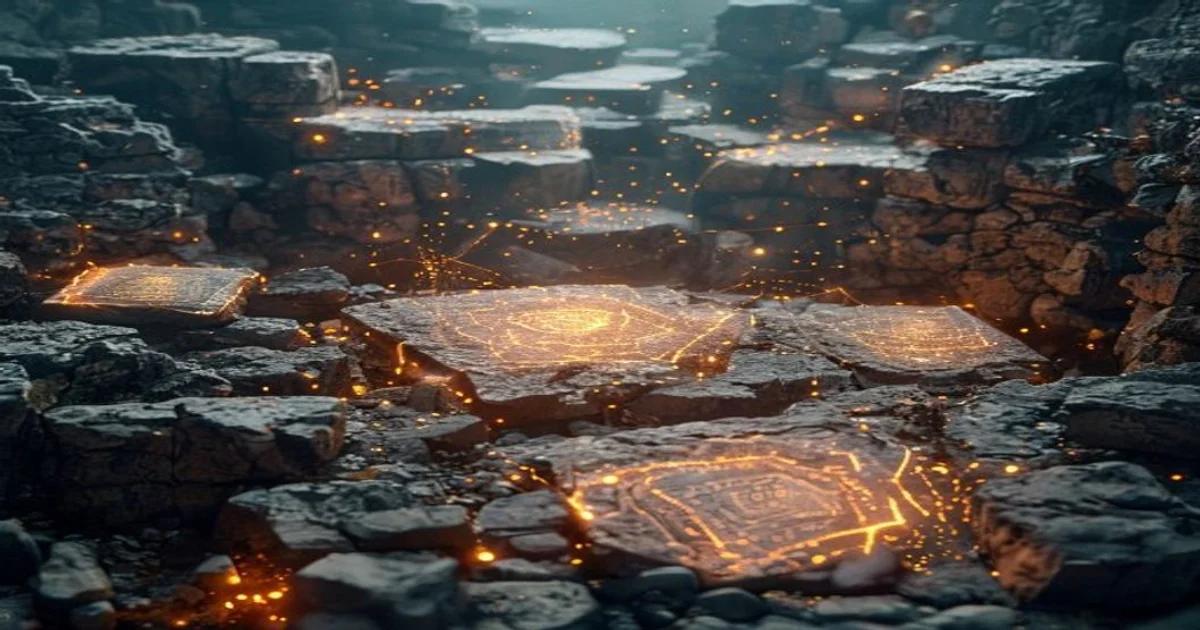
The Convergence of Antiquity and Computation
Phonetic paleography has long been considered one of the most intellectually demanding fields in the humanities. Scholars spend decades attempting to decipher the faded strokes of ancient scribes, often relying on incomplete texts and highly subjective interpretations. However, the emergence of AI-driven phonetic reconstruction is fundamentally shifting this landscape. By leveraging Deep Learning architectures, researchers can now train models to predict missing phonemes in fragmented inscriptions with unprecedented accuracy.
Deciphering the Lost Voices of History
The process begins with high-resolution scanning of historical documents, ranging from papyri to stone-etched monuments. These scans are converted into vector data, allowing neural networks to analyze the geometry of the strokes. Unlike traditional optical character recognition, these models are specifically tuned for paleography, accounting for the unique idiosyncratic styles of ancient writers.
'The application of generative models to historical linguistics represents a paradigm shift where we move from mere transcription to active reconstruction of phonetic environments.'
Neural Architectures for Linguistic Recovery
At the core of this technology are transformer-based architectures similar to those used in modern large language models. However, the constraints are significantly tighter. Instead of predicting the next token in a sentence, the models must adhere to the rigorous constraints of phonological reconstruction principles, such as sound laws and comparative morphology.
- Feature Extraction: Convolutional layers isolate individual calligraphic components.
- Sequence Modeling: Recurrent or self-attention mechanisms predict the phonetic sequence based on established linguistic evolution patterns.
- Probabilistic Estimation: The AI generates multiple viable interpretations, ranked by their linguistic probability in the context of the discovered language group.
Addressing the Challenge of Data Scarcity
One of the primary obstacles in AI-driven paleography is the lack of training data. Unlike common languages that boast millions of lines of digital text, ancient scripts often exist as a finite set of surviving fragments. To overcome this, researchers employ synthetic data generation. By creating 'digital paleographic twins' that simulate various stages of degradation and erosion, the models can learn to be more robust against noise. This technique mirrors the practices found in modern computer vision and data science.
The Future of Cultural Preservation
As these models continue to evolve, the ability to reconstruct the phonetic structure of languages like Old Sumerian, Linear A, or early Proto-Indo-European will become more accessible. This does not merely assist historians; it brings the voices of the past into the modern digital ecosystem, allowing for a more immersive understanding of human heritage.
Ethical Considerations and the Human Element
While AI offers a powerful toolkit, it cannot replace the critical thinking of the historian. The risk of 'hallucination'—where a model might confidently propose a plausible but incorrect phonetic reading—is significant. Therefore, these systems are designed to operate as tools for human-in-the-loop verification rather than autonomous black-box solvers. The synergy between domain expertise and artificial intelligence ensures that the reconstruction process remains historically rigorous.
Scaling to Global Heritage Sites
The integration of cloud computing allows for these massive computational models to be deployed globally. Digital archives can now run automated paleographic checks against newly discovered artifacts in real-time, accelerating the pace of discovery. This democratic approach to historical research empowers small institutions with limited budgets to leverage the same technological power as large research universities.
Moving Beyond the Textual Surface
Ultimately, phonetic paleography is about more than just reading words; it is about reconstructing the communicative intent of humanity. By understanding how the sounds of ancient languages functioned, we unlock a deeper appreciation for the development of human cognition, trade, religion, and social organization. We are witnessing the birth of a new era in historical inquiry, where the silent stones of the past finally begin to speak through the medium of modern computation.