The New Frontier of Autonomous Space Maintenance
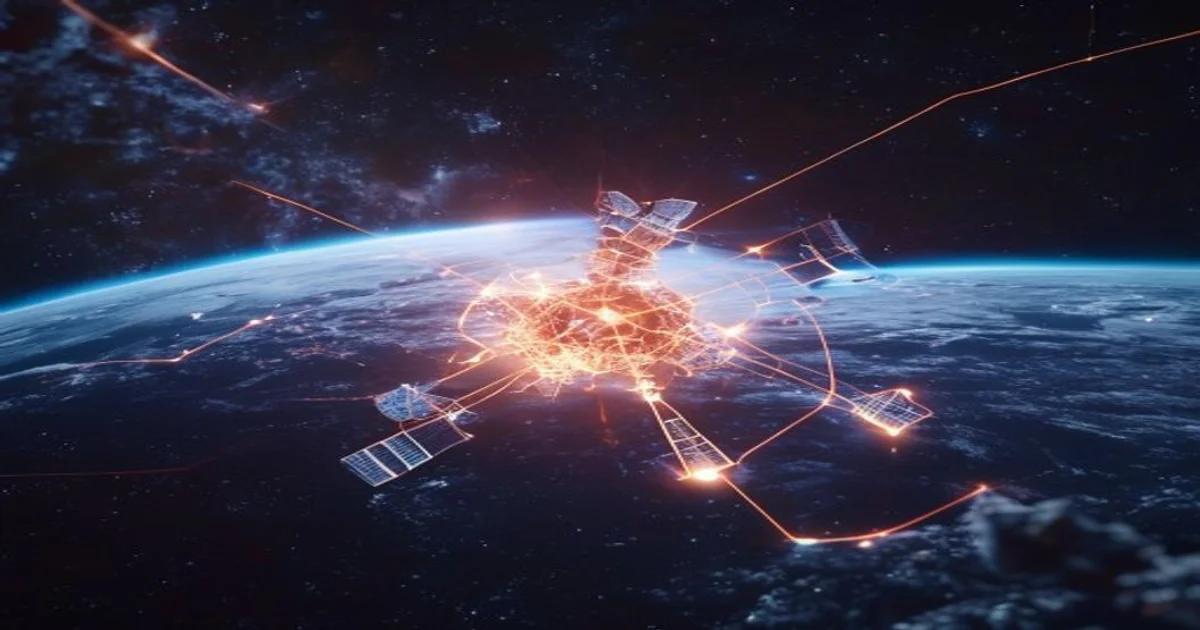
Space exploration has entered an era where the complexity of missions demands a shift from traditional maintenance cycles to intelligent, autonomous management. As humanity pushes further into the solar system, the reliance on human operators for diagnosing and fixing critical hardware failures becomes a liability. AI-driven predictive maintenance serves as the digital sentinel that safeguards multibillion-dollar investments in the void of space.
Beyond Traditional Telemetry
Historically, space agencies relied on threshold-based alerts. When a component reached a certain temperature or voltage, a red flag appeared on a dashboard in a mission control center. This approach is inherently reactive. Today, machine learning models process multi-dimensional telemetry data to identify subtle patterns that precede a system failure. By training neural networks on historical data from similar missions, these systems can distinguish between nominal operational drift and the precursors to mechanical or electrical failure.
'The integration of predictive intelligence is not merely a convenience; it is a fundamental requirement for the safety of long-duration spaceflights to Mars and beyond,' says Dr. Aris Thorne, a leading expert in aerospace robotics.
The Role of Edge Computing
Spacecraft often operate in communication windows where bandwidth is limited and latency is high. Transmitting terabytes of diagnostic data to Earth is inefficient and risky. By deploying AI models directly onto the spacecraft's edge computing hardware, systems can process raw sensor inputs in real-time. This localized processing means that the spacecraft can adjust its own thermal management systems, re-route power, or isolate faulty circuits milliseconds after an anomaly is detected, long before an engineer on Earth has even analyzed the log files.
Challenges in Deep Space Adaptation
Implementing advanced machine learning in space is not without significant hurdles. The radiation environment in space is harsh, often causing 'bit-flips' in traditional memory systems that can corrupt deep learning weights. Furthermore, the limited power budget of a satellite necessitates highly optimized algorithms that can perform inference without draining the craft's primary energy stores.
- Radiation-Hardened Hardware: Engineers are now utilizing AI-optimized chips specifically hardened to withstand high-energy cosmic rays.
- Transfer Learning: Utilizing data from ground-based simulations to seed models that adapt once in orbit.
- Federated Learning: Allowing constellations of satellites to share diagnostic knowledge without exposing sensitive raw data.
Predictive Maintenance in Practice
Consider the propulsion system of a long-term orbital observation platform. Small leaks in the thruster valves can be invisible to human operators for weeks, but an AI model sensitive to micro-vibrations and propellant flow rates can identify the seal degradation almost instantly. This allows operators to perform 'maintenance maneuvers,' such as re-adjusting propellant pressure or switching to redundant hardware, thereby salvaging a mission that would have otherwise ended in failure.
Building Resilient Architectures
To build a truly resilient spacecraft, system architects must design 'self-healing' frameworks. This involves creating a feedback loop where the predictive algorithm informs a decision engine. If the AI detects a degrading solar panel array, the onboard logic might autonomously reorient the craft to maximize remaining efficiency while simultaneously scheduling a diagnostic self-test to isolate the faulty cells. This level of autonomy represents the pinnacle of modern robotics and data science convergence.
Future Outlook: Toward Self-Repairing Infrastructure
Looking toward the next decade, we anticipate the emergence of 'Digital Twins' that update in real-time. By pairing a high-fidelity digital model of the spacecraft with its live onboard sensor stream, the system can simulate thousands of possible failure scenarios per second. This enables the machine to recommend optimal mitigation strategies that a human might never consider.
As we continue to launch massive constellations of satellites for global communications and Earth observation, the sheer volume of data will render manual monitoring impossible. Predictive maintenance will move from a specialized feature to the core operating system of all future spacecraft. We are entering an era where our machines do not just report their health, but actively preserve their own longevity. The fusion of neural networks and aerospace engineering ensures that our footprint in the stars remains sustainable and secure for generations to come.