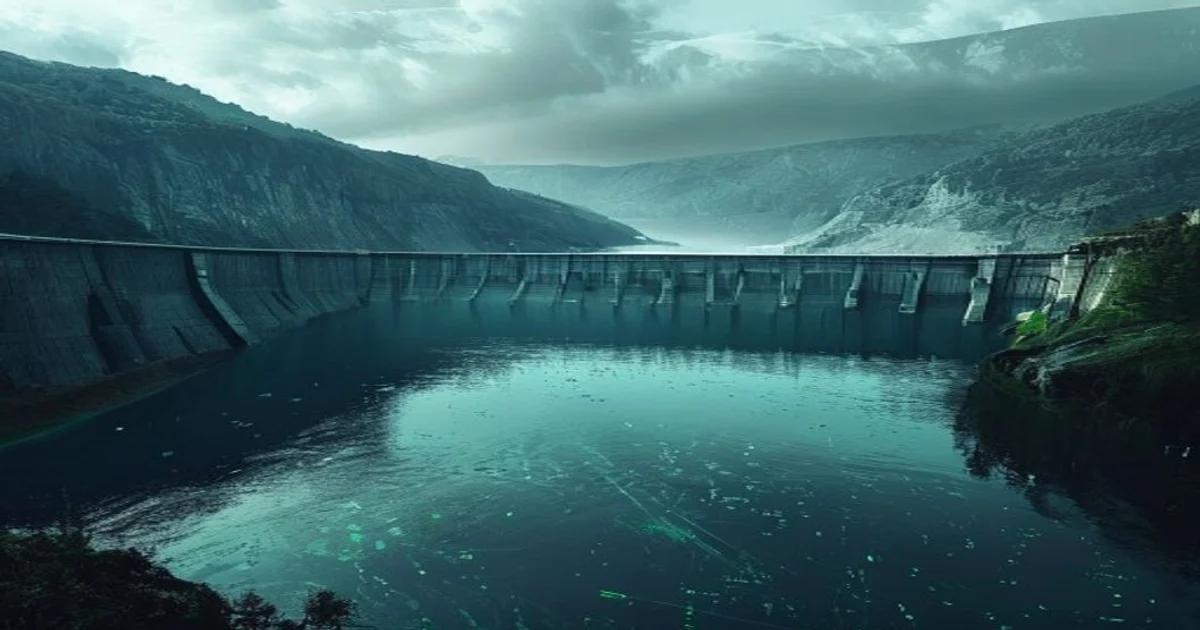
The Silent Crisis of Sediment Accumulation
Reservoir sedimentation represents one of the most significant existential threats to modern hydroelectric infrastructure and global water management. As rivers transport silt and clay into dams, the progressive loss of storage capacity reduces the efficacy of power generation, irrigation, and flood mitigation. Historically, operators have relied on periodic, reactive dredging or static historical data, both of which are notoriously inefficient. Today, however, AI-driven reservoir sedimentation management is shifting this paradigm toward a proactive, intelligent framework.
The Role of Machine Learning in Sediment Dynamics
Sediment transport is a highly non-linear, stochastic process influenced by complex environmental variables like rainfall intensity, soil degradation, and land-use changes. Traditional regression models often fail to capture the nuance of these interactions. By contrast, Deep Learning architectures—specifically Long Short-Term Memory (LSTM) networks—can process time-series data to predict sediment inflow with unprecedented accuracy. These systems ingest inputs from satellite imagery, remote sensing stations, and weather stations to generate granular forecasts.
'Integrating AI into sediment management is not merely an optimization; it is a fundamental requirement for infrastructure longevity in a changing climate.'
Optimization of Sluicing and Flushing Operations
One of the most critical aspects of managing a dam is the timing of sluicing and flushing operations. Releasing too little sediment results in rapid reservoir filling, while releasing too much at the wrong time can devastate downstream ecosystems. Smart Systems now allow for the automated synchronization of dam gate operations with predicted sediment surges. By optimizing discharge based on real-time water turbidity and velocity data, operators can effectively transport sediment through the dam while minimizing the loss of valuable water storage.
Data Science and the Digital Twin
The development of 'Digital Twins' for large-scale reservoirs enables engineers to run thousands of simulation scenarios before making physical adjustments to dam infrastructure. These virtual environments mimic the hydro-morphological behavior of a reservoir, allowing the AI to 'learn' the optimal set of parameters to maintain sediment equilibrium. This approach minimizes human error and reduces the financial risks associated with large-scale hydraulic engineering projects.
Strategic Benefits of Automation
- Extended Asset Life: By reducing the rate of volume loss, the functional lifespan of existing dams is extended by decades.
- Ecological Stewardship: Intelligent sediment passage helps restore the downstream sediment balance, which is vital for maintaining riverbank health.
- Economic Efficiency: Automation significantly decreases the fuel and energy expenditure associated with mechanical dredging operations.
- Operational Resilience: AI-powered systems can adapt to extreme weather events, ensuring safety protocols are enacted before peak sediment influx occurs.
Overcoming Barriers to Implementation
Despite the clear advantages, the adoption of AI in the hydro-sector faces challenges. Data silos remain a primary obstacle, as many national water agencies still operate on fragmented, legacy data systems. Furthermore, the high cost of high-resolution sensor arrays can be a barrier for developing nations. However, as the cost of satellite data and cloud computing continues to drop, the democratization of these tools will become inevitable.
Future Outlook: The Autonomous Reservoir
Looking toward the future, we anticipate the rise of fully autonomous reservoir management systems. These systems will operate without human intervention, continuously refining their internal algorithms based on the feedback loop of inflow versus discharge. By leveraging Machine Learning to anticipate shifts in catchment areas—such as deforestation-led erosion—these systems will be able to warn policymakers of potential risks years before they impact the water supply. This transition from reactive to predictive management is the cornerstone of sustainable infrastructure in the 21st century.