
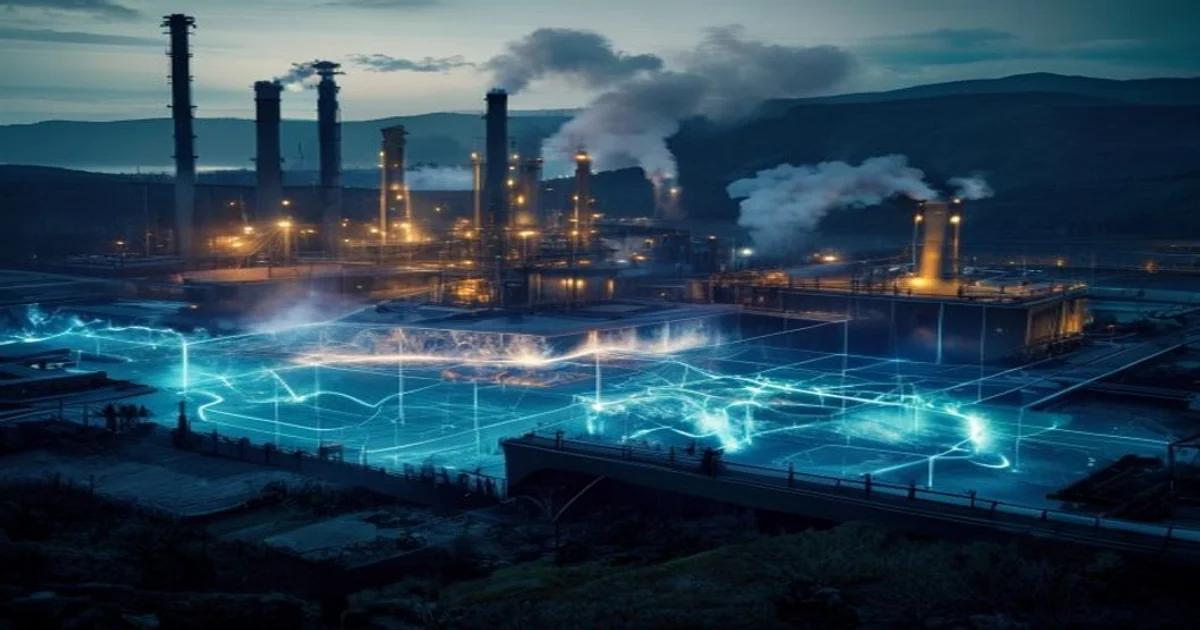
The Convergence of Intelligence and Earth Sciences
The quest for sustainable, baseload renewable energy has led the global energy sector toward an unlikely frontier: the deep subsurface. While geothermal energy has long been recognized for its stability and minimal carbon footprint, the historic hurdle has been the high financial and operational risk associated with drilling into unknown geological formations. Today, we are witnessing a fundamental shift as AI-Driven Subsurface Geothermal Exploration begins to demystify the Earth's crust, turning high-risk gambles into calculated investment strategies.
The Challenge of Subsurface Uncertainty
Traditional geothermal exploration relies on sparse data points from scattered surface surveys and expensive deep-well drilling. Geologists historically have had to rely on intuition and limited 2D seismic interpretations to estimate heat flow. This 'blind' drilling approach has historically carried failure rates as high as 40 percent. In the energy industry, such uncertainty is a major deterrent for capital expenditure.
Machine Learning as the New Geological Compass
By deploying Machine Learning models capable of processing petabytes of disparate data—ranging from tectonic plate movement histories to microscopic core samples—energy companies are now building high-fidelity 3D digital twins of potential geothermal reservoirs. These systems identify subtle geophysical markers, such as specific fracture patterns or thermal anomalies, that were previously invisible to human analysts.
- Seismic Pattern Recognition: Convolutional Neural Networks (CNNs) analyze seismic volumes to identify potential fluid pathways with unprecedented precision.
- Predictive Thermal Modeling: Deep learning frameworks simulate long-term heat decay, allowing operators to predict the lifespan of a geothermal well before breaking ground.
- Automated Log Analysis: AI agents process decades of legacy drilling data to provide actionable insights that were once buried in paper archives.
The fusion of geophysical data science and generative design is not merely enhancing exploration; it is creating an entirely new methodology for renewable infrastructure development.
Optimizing Reservoir Management
Once a site is identified, the challenge shifts to reservoir management. Sustaining heat extraction without causing ground instability or reservoir cooling requires a delicate balance. AI-driven smart systems serve as the nervous system of modern plants, continuously monitoring pressure, temperature, and chemical composition in real-time. If an anomaly is detected, the algorithms adjust extraction rates autonomously, protecting the longevity of the heat source.
Bridging the Data Gap
One of the most critical breakthroughs has been the application of Bayesian neural networks to address the 'small data' problem common in geological studies. Even when drilling data is limited, these models provide a probabilistic framework, offering not just a prediction but a confidence interval. This transparency allows stakeholders to understand the inherent risk-to-reward ratio of each project, facilitating better decision-making.
The Future of Deep Heat
As we look toward the next decade, the integration of edge computing at drilling sites will enable near-instantaneous decision-making. Imagine a drill bit that 'senses' the geological formation in real-time and adjusts its path, aided by a cloud-based AI that interprets seismic vibrations within milliseconds. This is the path toward making geothermal energy a truly scalable, worldwide solution.
Overcoming Barriers to Adoption
The transition to AI-integrated geothermal energy is not without obstacles. Data siloing remains a primary concern, as oil and gas entities and geothermal developers often operate in different ecosystems. However, the move toward open-source geological databases and collaborative research platforms is beginning to erode these boundaries.
Furthermore, the training of these AI models requires massive amounts of labeled data. The emergence of synthetic data generation using physical simulators provides a solution, allowing us to 'train' our models in virtual worlds that behave according to the laws of thermodynamics, even before we hit the field.
Sustainability and Ethics
In our pursuit of clean energy, we must also address the ethical implications of AI deployment in natural resources. Transparency in algorithm development is essential to ensure that site selection does not negatively impact local communities or ecosystems. The use of AI should be viewed as a tool for environmental stewardship, helping us drill more efficiently while minimizing the number of wells required to achieve maximum power output. By maximizing the utility of every successful borehole, we reduce the total footprint of the geothermal operation on the surrounding landscape.
Concluding Thoughts
Geothermal energy represents the most untapped 'battery' in our planet. By leveraging the power of Artificial Intelligence, we are transitioning from a trial-and-error approach to a precision-engineered industry. As our algorithms become more sophisticated and our subsurface mapping grows more granular, the economic threshold for geothermal power will continue to drop, positioning it as a primary pillar of the global decarbonization strategy. The future of energy lies beneath our feet, and AI is the key that will finally unlock it.