
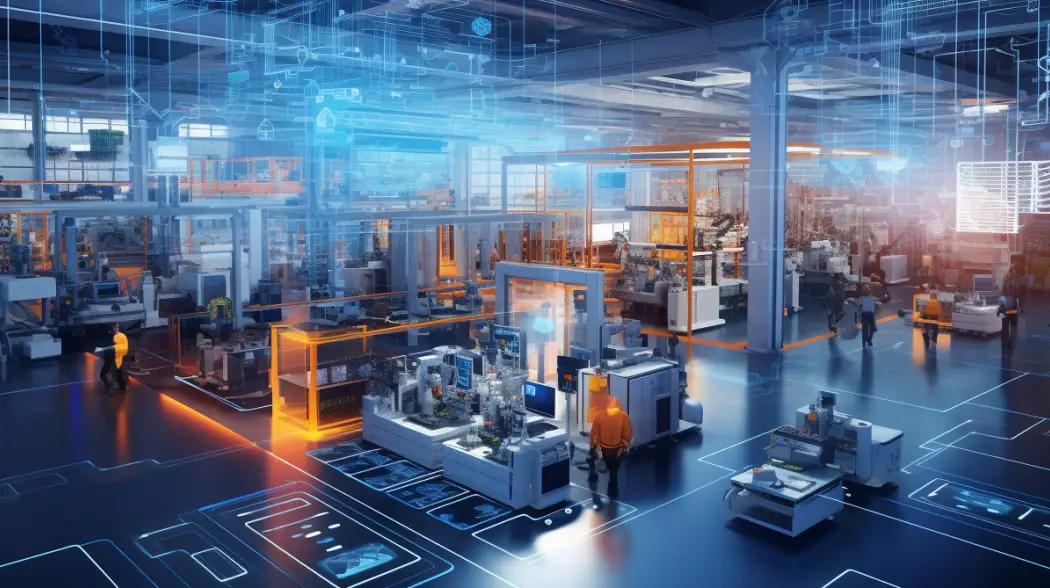
The Reshaping of Global Manufacturing: AI as the Catalyst for Reshoring
The landscape of global manufacturing is undergoing a profound transformation, marked by a significant shift away from the decades-long trend of offshoring. This 'reshoring' movement – the return of manufacturing operations to a company's home country – is not merely a cyclical economic adjustment but a strategic imperative driven, critically, by the advent and maturation of Artificial Intelligence (AI). AI technologies are fundamentally altering the economics and operational capabilities of production, making domestic manufacturing not just viable, but often superior in terms of efficiency, resilience, and responsiveness.
For decades, companies sought lower labor costs and access to new markets by moving production offshore. While initially successful, this strategy increasingly revealed vulnerabilities: extended and complex supply chains prone to disruption, quality control challenges, intellectual property risks, and growing geopolitical tensions. The COVID-19 pandemic served as a harsh wake-up call, exposing the fragility of globalized supply chains and accelerating the drive towards localized production. AI is not simply facilitating this return; it's actively engineering its possibility by creating entirely new paradigms for how goods are designed, produced, and delivered.
AI's Fundamental Role in Manufacturing Transformation
AI's influence permeates every facet of modern manufacturing, from the design phase to logistics, making domestic production more competitive than ever before. Its ability to process vast datasets, learn from experience, and automate complex tasks is the bedrock of the reshoring phenomenon.
Automation and Robotics: The Smart Factory Revolution
At the heart of AI-driven reshoring is the dramatic advancement in automation and robotics. Modern industrial robots, powered by AI and machine learning, are far more sophisticated and versatile than their predecessors. They can perform intricate tasks with extreme precision, learn new processes quickly, and even collaborate safely with human workers (cobots). This reduces reliance on manual labor, effectively neutralizing a primary driver for offshoring – low labor costs. A single AI-driven robotic cell can outperform numerous human workers in repetitive tasks, operating 24/7 with minimal error rates. This efficiency gain makes high-wage economies competitive again, as the 'lights-out' factory becomes a realistic, scalable model.
Predictive Maintenance: Maximizing Uptime and Efficiency
AI algorithms excel at predictive maintenance, a critical factor in manufacturing efficiency. By analyzing real-time data from sensors embedded in machinery – vibrations, temperature, pressure, acoustic signatures – AI can accurately predict when a component is likely to fail. This allows for proactive maintenance, preventing costly breakdowns and unscheduled downtime. Instead of reactive repairs or time-based maintenance, factories can perform maintenance precisely when needed, optimizing equipment lifespan and ensuring continuous production. This reduction in operational interruptions directly translates to higher output and lower costs, diminishing one of the historical disadvantages of domestic, higher-cost production environments.
Quality Control: Flawless Production at Speed
Traditional quality control methods are often labor-intensive and prone to human error. AI-powered vision systems and machine learning algorithms are revolutionizing this area. Cameras combined with AI can inspect products at high speed, identifying even microscopic defects that would be missed by the human eye. They can learn from datasets of acceptable and defective products, continually improving their detection capabilities. This ensures consistent, high-quality output, minimizing waste and rework, which are significant cost drivers in any manufacturing operation. For industries like aerospace, medical devices, or automotive, where zero-defect is paramount, AI-driven quality control is indispensable.
Supply Chain Optimization: Resilience and Visibility
One of the most compelling arguments for reshoring is the desire for enhanced supply chain resilience. AI plays a pivotal role here by providing unprecedented visibility and optimization. Machine learning algorithms can analyze global events, geopolitical risks, weather patterns, and demand fluctuations to predict potential disruptions and suggest alternative sourcing or logistics routes. Digital twins of entire supply chains allow companies to simulate the impact of various scenarios, from port closures to raw material shortages, and devise proactive strategies. This 'intelligent' supply chain management drastically reduces lead times, mitigates risks, and ensures a more agile response to market changes, negating the appeal of distant, opaque supply networks.
Generative Design and Rapid Prototyping: Accelerating Innovation
AI is also transforming the very beginning of the product lifecycle through generative design. Engineers input design parameters, materials, and manufacturing constraints, and AI algorithms autonomously generate thousands of optimized design variations. This dramatically accelerates the product development cycle, often resulting in lighter, stronger, or more material-efficient designs. Coupled with advanced manufacturing techniques like 3D printing (additive manufacturing), AI enables rapid prototyping and small-batch production that was previously uneconomical. This agility and speed to market are significant advantages for localized manufacturing, allowing companies to respond swiftly to consumer trends and customize products without the logistical overhead of global production lines.
The Economic Imperative for Reshoring
Beyond operational efficiency, AI fundamentally alters the economic calculations that previously favored offshoring.
Labor Costs Reimagined
The most straightforward economic argument for offshoring has always been lower labor costs. AI challenges this premise by dramatically reducing the human labor component in manufacturing. As AI-powered automation takes over repetitive and physically demanding tasks, the cost advantage of low-wage regions diminishes. While there's still a need for human oversight, maintenance, and skilled roles, the overall labor expenditure as a percentage of total production cost shrinks considerably. The focus shifts from 'cheap labor' to 'skilled labor' – those who can design, deploy, and maintain AI systems and robots. This intellectual capital is often more readily available and protected in developed economies.
Reduced Logistics Expenses and Carbon Footprint
Bringing manufacturing closer to end-markets inherently reduces logistics expenses. Shorter transportation routes mean lower fuel costs, reduced insurance, and less risk of transit damage or loss. This also has a significant environmental benefit, reducing the carbon footprint associated with long-distance shipping – an increasingly important consideration for companies aiming for sustainability targets and consumers demanding eco-friendly products. The financial and environmental benefits combined create a compelling case for domestic production.
Tariffs, Trade Wars, and Geopolitical Stability
The last decade has seen a rise in protectionist trade policies, tariffs, and geopolitical instability. Companies with deeply integrated global supply chains found themselves vulnerable to sudden policy changes or international conflicts. Reshoring, especially with AI-driven efficiencies, offers a powerful hedge against these risks. By producing domestically, companies reduce exposure to import duties, currency fluctuations, and political upheavals in foreign countries, ensuring greater operational stability and predictability.
Intellectual Property Protection
Protecting intellectual property (IP) is a paramount concern for innovative manufacturers. Operating in some foreign jurisdictions can expose proprietary designs, processes, and technologies to greater risk of theft or unauthorized replication. By bringing production back home, companies can leverage stronger domestic legal frameworks and greater control over their manufacturing processes, safeguarding their competitive edge.
Enhancing Resilience and Agility in a Volatile World
The ability to withstand shocks and adapt quickly to changing conditions is a hallmark of successful businesses today. AI-driven manufacturing is inherently more resilient and agile.
Responding to Demand Volatility
Consumer preferences can shift rapidly, and market demand can be notoriously volatile. Offshore production, with its long lead times, struggles to keep pace. AI-powered localized manufacturing, however, can quickly reconfigure production lines, adjust output volumes, and even switch between different product variants with minimal retooling. This agility allows companies to produce 'just-in-time' or 'just-in-case' more effectively, reducing inventory holding costs and minimizing obsolescence.
Crisis Management and Business Continuity
In the face of unexpected crises – pandemics, natural disasters, geopolitical conflicts – AI can enable rapid adjustments. Machine learning models can analyze real-time data on supply chain disruptions and propose immediate mitigation strategies. Automated factories can continue operating with minimal human presence, ensuring business continuity even during lockdowns or labor shortages. This level of intrinsic resilience is a strong driver for companies to reconsider their global manufacturing footprint.
Customization at Scale: The Era of Mass Personalization
AI makes mass customization not just feasible but economically attractive. By using AI to manage complex production schedules, configure adaptable machinery, and optimize material flow, companies can produce highly customized products at a scale approaching mass production. This ability to offer personalized goods, from sneakers to industrial machinery, appeals strongly to modern consumers and businesses, providing a competitive differentiator that is easier to achieve with localized, AI-enabled production.
Workforce Evolution in the AI-Powered Factory
While AI-driven automation may raise concerns about job displacement, the reality is a transformation of the workforce, not its elimination. Reshoring, propelled by AI, demands a new set of skills and fosters a different kind of human-machine collaboration.
New Skill Sets and Roles
The AI-powered factory requires workers with expertise in data science, AI engineering, robotics maintenance, cybersecurity, and advanced analytics. Roles will shift from repetitive manual tasks to supervisory, analytical, and problem-solving functions. Humans will be responsible for programming, monitoring, and maintaining complex AI systems and robots, ensuring their optimal performance and safety. This creates higher-value, more engaging jobs, often requiring advanced technical education.
Human-AI Collaboration: Augmenting Capabilities
Rather than replacing humans entirely, AI often augments human capabilities. Collaborative robots (cobots) work alongside humans, assisting with heavy lifting, precision tasks, or repetitive actions, thereby improving ergonomic conditions and overall productivity. AI-powered decision support systems provide human managers with insights to make better, faster decisions regarding production planning, inventory management, and quality assurance. This symbiotic relationship leverages the strengths of both humans (creativity, critical thinking, adaptability) and AI (speed, precision, data processing).
Training and Education: Bridging the Skills Gap
To successfully implement AI-driven reshoring, significant investment in workforce training and education is essential. Governments, educational institutions, and private companies must collaborate to develop curricula that equip workers with the necessary skills for the factories of the future. This includes vocational training in robotics and automation, as well as higher education programs in AI, machine learning, and data science. The success of reshoring efforts will hinge on the ability to cultivate a skilled domestic workforce capable of harnessing AI's full potential.
Challenges and Strategic Implementation
While the benefits are clear, the path to AI-driven reshoring is not without its challenges.
Investment Barriers
Implementing AI and advanced automation requires substantial initial capital investment. Small and medium-sized enterprises (SMEs) may find this particularly daunting. Government incentives, subsidies, and public-private partnerships can play a crucial role in lowering these barriers and encouraging adoption across the manufacturing sector.
Data Security and Privacy
AI systems in manufacturing rely on vast amounts of data, much of which is proprietary or sensitive. Ensuring robust data security and privacy protocols is paramount to protect against cyber threats and intellectual property theft. Secure cloud infrastructure, advanced encryption, and stringent access controls are essential components of any AI implementation strategy.
Integration Complexities
Many existing factories operate with legacy systems and disparate machinery. Integrating new AI technologies into these environments can be complex and time-consuming. A modular approach, standardized communication protocols (e.g., OPC UA), and specialized integration expertise are required to bridge the gap between old and new technologies effectively.
Ethical Considerations and Societal Impact
The large-scale adoption of AI in manufacturing raises important ethical considerations. Questions about job displacement, algorithmic bias, and the responsible use of AI must be addressed proactively. Companies and policymakers need to develop frameworks that ensure AI is deployed in a way that benefits society, fosters inclusive growth, and provides safety nets for workers whose roles may be impacted.
The Future of Manufacturing: A Localized, Intelligent Ecosystem
Looking ahead, the trajectory of AI-driven reshoring suggests a future where manufacturing is more localized, more intelligent, and more responsive than ever before. This vision encompasses several key elements:
- Hyper-localized Micro-factories: Smaller, highly automated factories situated close to urban centers, catering to specific regional demands and enabling ultra-fast delivery of customized products.
- Circular Economy Integration: AI optimizing material usage, waste reduction, and end-of-life product recycling, fostering a truly sustainable manufacturing ecosystem.
- Enhanced Human-Machine Teaming: Continuous evolution of collaborative robotics and AI interfaces, making factories safer, more productive, and more adaptive workspaces.
- Decentralized Production Networks: AI-managed networks of smaller manufacturing units, capable of quickly reconfiguring and rerouting production in response to disruptions or demand shifts.
AI is not just a tool; it's an enabler of a paradigm shift. It empowers manufacturers to overcome the traditional disadvantages of high-wage economies, offering unprecedented levels of efficiency, quality, and resilience. As global geopolitical and economic uncertainties persist, the strategic advantages offered by AI-driven reshoring will only grow, cementing its place as a defining trend of 21st-century industry. Nations that embrace and invest in these technologies will likely lead the next era of industrial innovation and economic prosperity, bringing manufacturing home and building more robust, responsive economies for the future.