
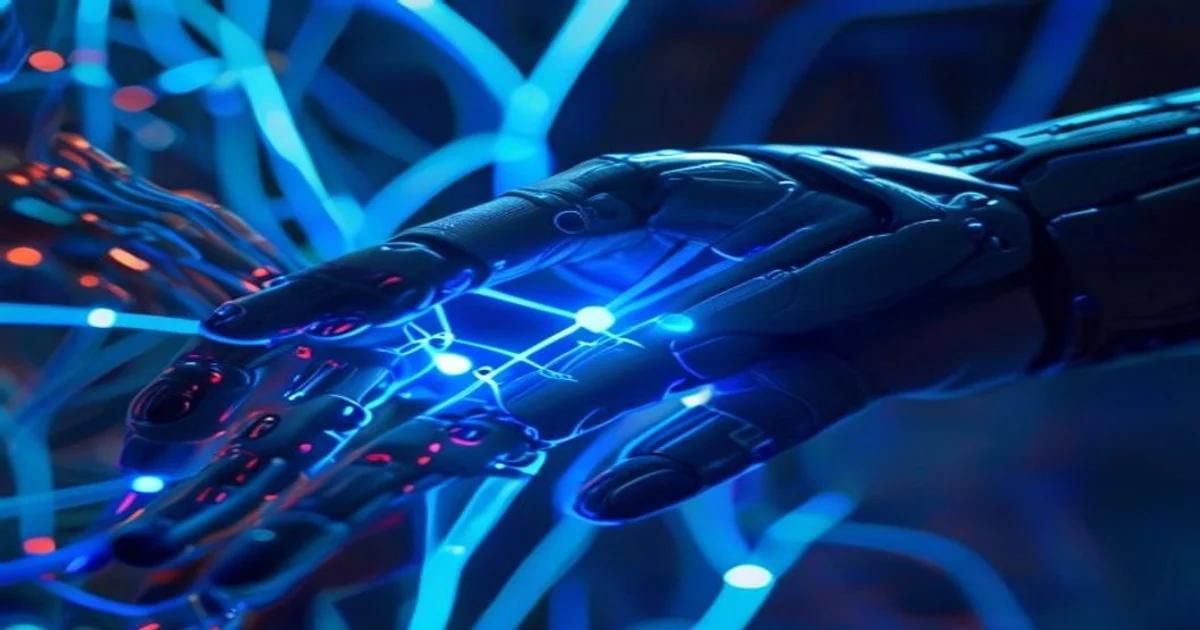
The Dawn of Neural-Mechanical Synergy
The convergence of artificial intelligence and biomechatronics has ushered in a new era of medical capability. Historically, prosthetic devices were passive tools, requiring significant cognitive load to operate and lacking any form of sensory feedback. Today, AI-enhanced sensory prosthetic integration is transforming these static tools into dynamic, responsive, and intuitive extensions of the human body. By leveraging sophisticated neural decoding, researchers are bridging the gap between biological intention and mechanical execution.
Decoding the Neural Blueprint
At the heart of this innovation lies the ability to interpret peripheral nerve signals in real-time. Through the application of deep learning models, computers can now filter through the chaotic electrical activity of damaged or residual nerves to identify the specific intent of a movement. This process, often referred to as pattern recognition, allows a user to move a prosthetic limb by simply thinking about the action, effectively bypassing the limitations of traditional electromyography.
The ultimate goal of AI integration is to make the prosthesis feel not like a tool, but like a part of the self. This psychological integration is only possible when the delay between thought and action is reduced to sub-millisecond levels.
Closing the Feedback Loop
While motor control is crucial, the absence of sensory input has been the greatest hurdle in prosthetics. AI-driven sensory feedback systems now utilize sensors on the prosthetic fingertips to measure pressure, temperature, and texture. This data is then converted into electrical pulses delivered directly to the user's peripheral nerves. This bi-directional communication ensures that the brain receives constant updates about the physical state of the limb, allowing for unconscious adjustments in grip force and dexterity.
The Role of Edge Computing and Low Latency
To achieve true fluidity, the computational heavy lifting must happen locally on the device. Modern AI-enhanced prosthetics utilize dedicated low-power chips that process incoming sensory data and outgoing motor commands within the prosthetic chassis itself. This reduces reliance on external cloud computing and minimizes the risk of signal lag or connection failure. As these chips become more powerful, the prosthetics themselves are shrinking in size while increasing in complexity.
Challenges in Calibration and Long-Term Adaptation
Despite these advancements, the human nervous system is inherently plastic, meaning it constantly adjusts its own wiring. Maintaining a consistent interface between silicon and nerve endings requires sophisticated machine learning algorithms that adapt alongside the user. Current systems utilize 'continual learning' techniques, allowing the software to refine its understanding of the user's neural patterns over weeks and months of daily use.
Ethical Implications and Future Directions
As we move closer to seamless integration, we must grapple with the ethical dimensions of neural enhancement. Does the ability to increase sensory sensitivity or motor strength create an unfair advantage? Who owns the data generated by a neural-connected device? These are questions that will define the regulatory landscape for the next decade. Nevertheless, the trajectory of this technology remains clear: we are entering an age where disability is not a permanent state, but a problem that can be solved through the synergy of biology and artificial intelligence.
The Integration Roadmap
- Mapping individual nerve clusters for signal clarity
- Training custom neural network models on user-specific datasets
- Implementing haptic feedback sensors across all articulated points
- Synchronizing motor response with cognitive intent via predictive algorithms
- Continuous software updates to refine responsiveness and battery efficiency
By treating the human-machine interface as a collaborative environment rather than a command-and-control hierarchy, developers are creating systems that feel inherently natural. This shift in design philosophy is perhaps the most important contribution of AI to the field of prosthetics. It acknowledges that human movement is rarely linear or calculated, but rather spontaneous and context-dependent. The future of prosthetics lies in this fluid, messy, and deeply human complexity.