
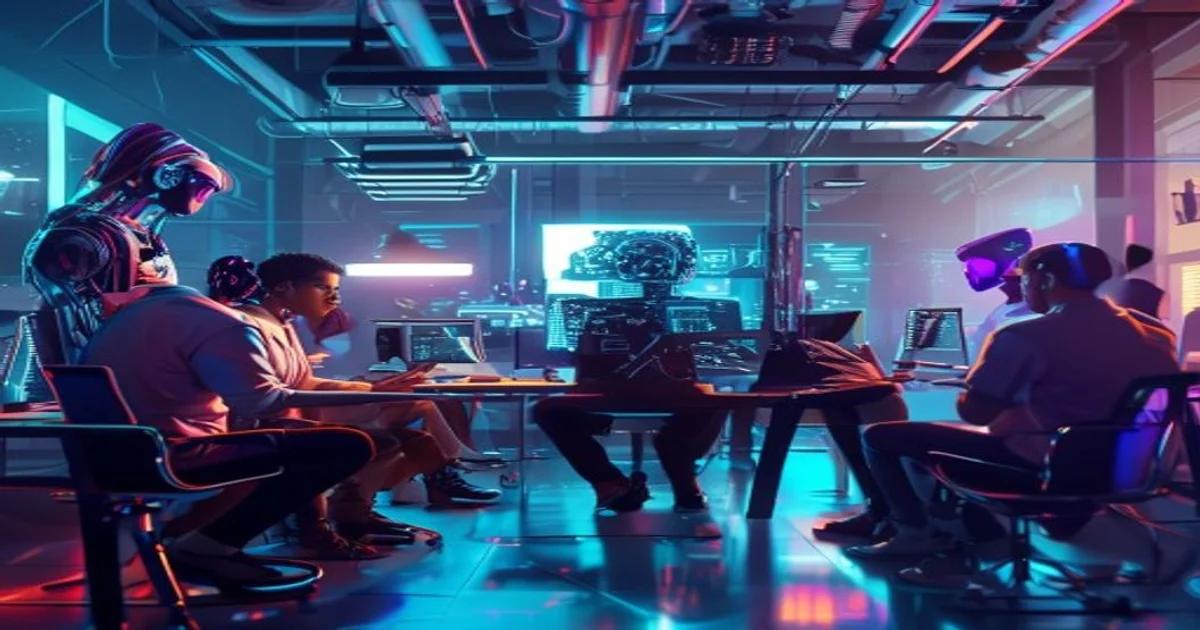
Navigating the AI Frontier in Creative Realms: A Governance Imperative
Artificial intelligence (AI) is rapidly transforming creative industries, from music composition and visual art generation to storytelling and game design. While AI offers unprecedented tools for innovation, efficiency, and personalization, its integration presents profound challenges that demand robust governance frameworks. The sheer speed of AI's advancement means that traditional legal, ethical, and economic structures are struggling to keep pace, creating a pressing need for proactive and thoughtful policy development. This article delves into the complexities of AI governance within creative sectors, exploring key challenges, ethical considerations, and potential pathways toward a sustainable and equitable future.
The Proliferation of AI in Creative Work
The impact of generative AI on creative output has been nothing short of revolutionary. Tools capable of producing text, images, audio, and video from simple prompts are now widely accessible. Artists, designers, writers, and musicians are experimenting with AI to augment their processes, explore new styles, and even create entirely new forms of media. This newfound capability promises to democratize creativity, lower barriers to entry, and unleash a wave of unprecedented artistic expression. However, this accessibility also raises fundamental questions about originality, value, and the very definition of 'creator.'
Key Governance Challenges in the AI-Powered Creative Landscape
The advent of AI brings several critical governance challenges to the forefront, each requiring careful consideration and innovative solutions.
Intellectual Property and Authorship
Perhaps the most contentious issue is intellectual property (IP). When an AI generates a piece of art or music, who owns the copyright? Is it the developer of the AI, the user who provided the prompt, or does the AI itself hold a claim? Current IP laws were not designed with AI authorship in mind, leading to significant legal ambiguity.
- Originality: Traditional copyright law requires human originality. Can an AI's output be considered 'original' in this context? Jurisdictions worldwide are grappling with this fundamental question, often leaning towards human authorship as a prerequisite.
- Training Data: Many generative AI models are trained on vast datasets of existing copyrighted works. This raises concerns about 'unauthorized use' and fair compensation for the original creators whose work fuels these AI systems. Establishing clear guidelines for data licensing and attribution in AI training is critical.
- Derivative Works: AI-generated content might be seen as derivative of its training data. How do we distinguish between fair use, transformative use, and outright infringement when AI is involved?
- Enforcement: Identifying AI-generated content that infringes on human-created works can be challenging, requiring new detection technologies and legal precedents.
Authenticity, Attribution, and Deepfakes
The ability of AI to create hyper-realistic content blurs the lines between authentic and synthetic, posing threats to trust and individual rights.
- Misinformation and Disinformation: AI-generated 'deepfakes' can be used to create convincing but false images, videos, or audio recordings of individuals, leading to defamation, fraud, or political manipulation. Governance must address the responsible use and clear labeling of synthetic media.
- Attribution and Transparency: There's a growing need for clear mechanisms to disclose when content has been AI-generated or significantly AI-assisted. Transparency helps maintain trust with audiences and respects the effort of human creators. Technologies like watermarking or metadata tagging could play a role.
- Identity and Likeness: The use of AI to replicate an artist's style or an individual's likeness without explicit consent raises serious ethical and legal questions regarding personality rights and economic exploitation. 'Voice cloning' and 'digital resurrection' of deceased celebrities are prime examples of this challenge.
Economic Disruption and Labor Impact
While AI can enhance productivity, it also poses a threat to traditional creative roles and livelihoods.
- Job Displacement: Automation of routine or even complex creative tasks (e.g., initial drafts, background art, stock music) could lead to job losses in certain sectors, requiring social safety nets, retraining programs, and new economic models.
- Fair Compensation: As AI becomes a co-creator, how should revenue be shared? What constitutes fair compensation for human artists whose styles are mimicked or whose data is used for training? Establishing royalty structures for AI-generated works that incorporate human input or derive from human-trained models is a complex task.
- Value of Human Creativity: There's a philosophical debate about the inherent value of human-created art versus AI-generated art. Governance frameworks must consider how to preserve and promote human creativity in an AI-dominated landscape.
Bias and Representation
AI models reflect the biases present in their training data. If this data is skewed, the AI's output will perpetuate and amplify those biases, leading to problematic creative outcomes.
- Stereotyping: AI might generate images or narratives that reinforce harmful stereotypes related to race, gender, ethnicity, or disability if its training data is not diverse and balanced.
- Exclusion: Lack of diverse representation in training data can lead to AI systems that struggle to generate content for or about underrepresented groups, further marginalizing them.
- Ethical AI Development: Addressing bias requires careful curation of training data, development of fairness metrics, and robust testing of AI models to ensure equitable and inclusive creative outputs. This is a development-stage governance issue, not just a post-deployment one.
Developing Ethical Frameworks and Principles
Beyond legal challenges, a strong ethical foundation is crucial for AI governance in creative industries. Several guiding principles are emerging:
- Human-Centricity: AI should augment human creativity, not replace it entirely. Governance should prioritize human agency, dignity, and artistic expression.
- Transparency and Explainability: Users and audiences should understand when AI is involved in content creation and how it operates. This includes clarity on training data sources and model limitations.
- Accountability: Clear lines of responsibility must be established for AI's outputs, especially in cases of harm or infringement. This ensures that someone is always accountable for the actions of an AI system.
- Fairness and Equity: Efforts must be made to mitigate bias in AI systems, ensure equitable access to AI tools, and provide fair compensation for creators.
- Sustainability: Governance should promote sustainable practices that support both technological advancement and the livelihoods of creative professionals.
'The challenge isn't merely about regulating AI; it's about reimagining the very ecosystem of creation, ensuring that the benefits of this powerful technology are shared widely and equitably, without stifling the human spirit of innovation that fuels art itself.'
Regulatory Approaches and Policy Debates
Different jurisdictions are exploring various regulatory models to address AI governance. No single approach fits all, and a multi-faceted strategy is likely required.
Sector-Specific Regulations
Instead of broad, horizontal AI laws, some argue for regulations tailored to specific sectors like media, music, or visual arts. This allows for nuanced rules that address industry-specific challenges, such as royalty distribution in music or attribution in visual art. This approach acknowledges that the impact and risks of AI vary significantly across creative domains.
Horizontal AI Laws
Conversely, some advocate for overarching AI legislation, like the EU AI Act, which classifies AI systems based on risk. While broad, such laws can provide a foundational layer of protection and establish general principles for trustworthy AI, applicable across all industries, including creative ones. The challenge lies in making these general principles specific enough to address the unique facets of creative work without being overly burdensome.
Voluntary Guidelines and Industry Standards
Industry-led initiatives, such as codes of conduct, best practices, and technical standards, can play a significant role. These can be developed faster than legislation and foster collaboration among stakeholders. Examples include standards for AI transparency, ethical use of training data, or model provenance. However, their effectiveness often depends on widespread adoption and enforcement mechanisms.
International Cooperation
Given the global nature of AI development and creative industries, international cooperation is essential. Harmonized approaches to IP, data governance, and ethical AI principles can prevent regulatory fragmentation and foster a level playing field.
The Role of Stakeholders in Shaping AI Governance
Effective governance requires the active participation of all relevant parties.
- Creators and Artists: Must advocate for their rights, contribute their unique perspectives on authenticity and artistic integrity, and participate in policy discussions. Their lived experience with AI tools is invaluable.
- Technology Developers: Have a responsibility to build ethical, transparent, and fair AI systems. They should engage in 'responsible AI' practices, including bias detection and mitigation, and work with creative communities to understand their needs.
- Creative Industries (Studios, Publishers, Labels): Need to adapt business models, invest in ethical AI tools, and develop internal policies that respect creators' rights and foster innovation. They bridge the gap between technology and creative output.
- Governments and Regulators: Must create agile legal frameworks, enforce IP rights, protect consumers from misinformation, and invest in education and retraining programs for the workforce. Their role is to provide a stable and fair operating environment.
- Academics and Researchers: Play a crucial role in studying the impact of AI, identifying emerging challenges, and proposing evidence-based solutions for governance.
- Users and Consumers: Need to be educated on the nature of AI-generated content and empowered to make informed decisions about what they consume and how they interact with AI tools. Demand for ethical AI products will drive responsible development.
Best Practices and Future Directions
Moving forward, several best practices and future directions will be crucial for effective AI governance in creative industries.
Embracing a Proactive, Adaptive Approach
Given the rapid evolution of AI, governance cannot be static. It must be flexible, iterative, and capable of adapting to new technologies and societal impacts. Regular review and updates of policies will be necessary.
Fostering Collaboration and Dialogue
Building bridges between technologists, artists, lawyers, ethicists, and policymakers is paramount. Multi-stakeholder dialogues, workshops, and joint initiatives can help develop holistic solutions that balance diverse interests.
Investing in Education and Digital Literacy
Educating creators, consumers, and policymakers about AI's capabilities, limitations, and ethical implications is vital. Digital literacy programs can help individuals navigate the complex landscape of AI-generated content and understand their rights.
Developing Technical Solutions for Governance
Technologies like blockchain for provenance tracking, digital watermarking for AI-generated content, and robust metadata standards can support governance efforts by increasing transparency and accountability. These technical solutions can act as enforcement mechanisms for policy.
Prioritizing Ethical AI by Design
Integrating ethical considerations from the very beginning of AI development, rather than as an afterthought, is crucial. This includes thoughtful data curation, algorithm auditing for bias, and privacy-preserving techniques.
Conclusion: Charting a Course for Creative Flourishing
AI's journey into the creative industries is still in its nascent stages, yet its transformative power is undeniable. The challenges it poses to governance – from intellectual property and ethical considerations to economic stability and the very definition of creativity – are significant. However, these challenges also present an unparalleled opportunity to build a more just, transparent, and innovative creative ecosystem. By prioritizing human creativity, fostering open dialogue, developing adaptive regulatory frameworks, and embracing ethical AI by design, we can chart a course that allows both AI and human ingenuity to flourish, ensuring that the future of creativity is vibrant, inclusive, and equitable for all. The time for thoughtful, proactive governance is now, to ensure that AI serves as a powerful ally in the pursuit of artistic excellence and cultural enrichment, rather than a disruptor that diminishes human value. The future of creative expression hinges on our ability to govern this powerful technology wisely and responsibly.