
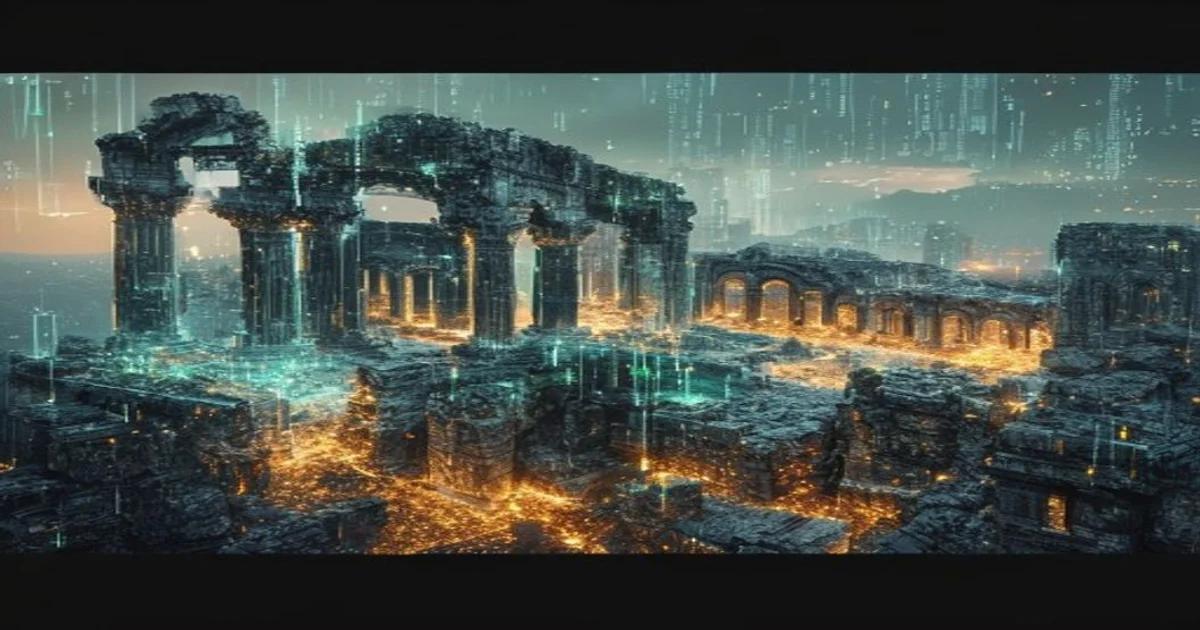
The Dawn of Digital Archaeology: AI's Transformative Role
The field of historical reconstruction, traditionally reliant on meticulous excavation, painstaking analysis of fragmented evidence, and expert human interpretation, is undergoing a profound transformation. Artificial intelligence (AI), with its unparalleled capacity for pattern recognition, data processing, and predictive modeling, is rapidly emerging as a pivotal tool, offering unprecedented avenues for unearthing, interpreting, and visualizing the past. This isn't merely an incremental improvement; it's a paradigm shift, enabling archaeologists, historians, and heritage scientists to tackle challenges previously deemed insurmountable, breathing new life into ancient civilizations and forgotten narratives.
For centuries, archaeologists traditionally faced daunting challenges: 'locating buried settlements', 'interpreting fragmented artifacts', and 'understanding the broader social dynamics' of past eras. The sheer volume of data, often incomplete or degraded, demanded immense time and resources, leading to slow progress and sometimes speculative conclusions. AI's prowess in pattern recognition and data analysis is proving invaluable, acting as a 'super-sleuth' to identify subtle clues hidden within vast datasets, from satellite imagery to microscopic material analyses. It allows researchers to process information at speeds and scales unimaginable just a few decades ago, thereby accelerating discovery and deepening our understanding of human history.
Revolutionizing Data Acquisition and Analysis
The initial stages of archaeological research involve extensive data acquisition, often covering vast geographical areas. AI's capabilities are revolutionizing this phase, making it more efficient, accurate, and comprehensive.
Satellite Imagery and Remote Sensing
One of the most impactful applications of AI in initial archaeological surveys is its integration with satellite imagery and remote sensing technologies. Traditional methods of aerial photography and ground surveys were limited by visibility, terrain, and the sheer scale of the areas to be covered. However, advanced sensors like LiDAR (Light Detection and Ranging), Synthetic Aperture Radar (SAR), and multispectral cameras can penetrate dense vegetation or analyze subtle changes in soil composition, revealing features invisible to the naked eye. AI, specifically 'computer vision' and 'machine learning algorithms', is adept at processing these massive datasets. It can:
- Identify Buried Structures: By analyzing subtle topographical variations, vegetation anomalies, and soil moisture differences, AI models can detect the faint outlines of ancient roads, buildings, and irrigation systems buried beneath the surface. For instance, 'convolutional neural networks' (CNNs) can be trained on known archaeological sites to recognize similar patterns in unexplored regions, significantly reducing the need for costly and destructive exploratory digs.
- Map Ancient Landscapes: AI can reconstruct entire ancient landscapes, mapping river courses, agricultural fields, and settlement patterns that have long been obscured by modern development or natural processes. This helps historians understand the ecological and geographical context in which ancient societies thrived.
- Prioritize Excavation Sites: Instead of random searching, AI can highlight areas with the highest probability of containing archaeological remains, allowing limited resources to be allocated more effectively. This intelligent targeting reduces the impact on undisturbed landscapes and maximizes the potential for significant discoveries.
Photogrammetry and 3D Scanning
Once artifacts or sites are located, accurate documentation is paramount. Photogrammetry and 3D scanning create highly detailed digital replicas, and AI plays a crucial role in enhancing their utility:
- Digitizing Artifacts and Sites: Thousands of photographs taken from different angles can be processed by AI algorithms to generate precise 3D models of artifacts, architectural fragments, or even entire buildings. This digital preservation ensures that fragile objects can be studied without handling, and sites can be virtually visited even if physically inaccessible.
- Creating Detailed 3D Models: AI-powered software can automatically align images, generate dense point clouds, and construct photorealistic meshes with incredible accuracy. This automation reduces the manual effort involved and improves the consistency of the models. Furthermore, AI can 'upscale' lower-resolution scans or 'fill in minor gaps' in the data, creating more complete representations.
- AI for Processing Vast Datasets: The creation of high-fidelity 3D models often involves processing terabytes of data. AI algorithms efficiently handle this scale, automating tasks like noise reduction, surface reconstruction, and texture mapping. This accelerates the transformation of raw scan data into usable, analytical models for researchers.
Reconstructing the Fragmented Past with Machine Learning
One of archaeology's most persistent challenges is dealing with fragmentation – shattered pottery, incomplete texts, and scattered ruins. Machine learning (ML) offers powerful solutions for piecing together these remnants.
Artifact Reassembly
Imagine a jigsaw puzzle with thousands of pieces, many missing, and no picture on the box. This is often the reality for archaeologists dealing with fragmented artifacts. ML, particularly 'computer vision' and 'pattern recognition', is proving revolutionary:
- Puzzles of Pottery, Statues: AI can analyze the 'shape', 'color', 'texture', and 'fracture patterns' of individual fragments. Algorithms can then suggest potential matches, scoring them based on geometric fit and stylistic consistency. This significantly reduces the manual trial-and-error process that can take years for human experts.
- Automated Matching and Fitting: 'Deep learning models', trained on vast datasets of archaeological fragments and their known reassemblies, can learn subtle cues that indicate a match. For example, in projects like the reassembly of ancient Roman mosaics or shattered cuneiform tablets, AI can identify patterns in breaks and surface decorations to propose correct alignments with high accuracy.
- Case Studies: Prominent examples include the digital reassembly of frescoes from Akrotiri, where AI helped piece together thousands of fragments to reconstruct stunning wall paintings, or the innovative application to 'ceramic sherds' from archaeological digs, identifying not only matching pieces but also suggesting connections between different vessels based on clay composition and firing techniques.
Textual Restoration and Decipherment
Ancient texts are frequently found in damaged, incomplete, or undeciphered states. Natural Language Processing (NLP), a branch of AI, is opening new possibilities for their restoration and interpretation.
- Incomplete Manuscripts, Ancient Languages: NLP models, trained on known fragments of ancient languages (like Greek, Latin, or hieroglyphs), can predict missing words or phrases based on context, grammar, and known linguistic patterns. This is akin to an advanced 'auto-complete' function for ancient scripts.
- Natural Language Processing (NLP) for Context and Prediction: Beyond mere word prediction, advanced NLP can analyze the 'semantic context' of a text, understanding the relationships between words and concepts. This allows for more meaningful restoration and can even assist in dating texts based on vocabulary evolution or stylistic markers. For 'palimpsests' (manuscripts overwritten multiple times), multispectral imaging combined with AI can separate layers of text, making previously illegible writings accessible.
- Dealing with Palimpsests and Damaged Scrolls: For extremely fragile materials like the Herculaneum scrolls, charred by Vesuvius, AI, coupled with X-ray micro-CT scans, can virtually 'unroll' and read the layers of text without causing further damage. Similarly, AI can enhance faded or damaged inscriptions, making them readable by reconstructing missing strokes or characters based on statistical likelihood.
Deep Learning for Virtual Heritage and Immersive Experiences
One of the most exciting frontiers in historical reconstruction is the creation of immersive, interactive virtual environments. Deep learning techniques are pivotal in making these digital worlds historically accurate and engaging.
Virtual Reconstruction of Lost Sites
Imagine walking through the streets of ancient Rome at its zenith or exploring the Library of Alexandria before its destruction. Deep learning makes such experiences possible:
- Bringing Ancient Cities Back to Life: Generative AI models, specifically 'Generative Adversarial Networks' (GANs), can create highly realistic textures, materials, and architectural details based on historical descriptions, archaeological evidence, and comparative architectural styles. This allows for the creation of 'photorealistic' virtual reconstructions of lost cities and buildings.
- Architectural Modeling: AI can automate the tedious process of building 3D models from blueprints or fragmentary remains, inferring missing elements and ensuring structural integrity based on known architectural principles of the era. This significantly speeds up the development of large-scale virtual heritage projects.
- Creating Interactive Historical Environments: Beyond static models, AI can power 'intelligent agents' within virtual environments, simulating the movement of people, the sounds of daily life, and even the changing light throughout the day, offering a truly immersive historical experience for education and research. Users can interact with reconstructed objects, gaining a deeper, embodied understanding of the past.
Facial Reconstruction and Population Modeling
AI is also providing new insights into the lives of individuals and populations from the past.
- Forensic Anthropology Meets AI: By analyzing skeletal remains, AI algorithms can perform 'facial reconstruction' with higher accuracy and efficiency than traditional manual methods. Using datasets of modern human faces and their underlying skeletal structures, AI can predict soft tissue depth and facial features, offering a glimpse into the appearance of historical figures or common people.
- Understanding Ancient Demographics and Individual Lives: Beyond individual faces, AI can analyze large datasets of skeletal remains to model population health, diet, migration patterns, and disease prevalence. 'Machine learning classifiers' can identify markers of stress, trauma, or specific diseases, providing a more detailed picture of daily life and challenges faced by ancient communities.
- Ethical Considerations: The power of AI in creating such vivid reconstructions also brings ethical responsibilities. It's crucial to distinguish between evidence-based reconstruction and artistic interpretation, clearly labeling what is known versus what is inferred or speculative, especially when dealing with the representation of individuals or entire cultures to avoid perpetuating stereotypes or misinformation.
Predictive Modeling of Historical Events and Societies
AI is not limited to reconstructing physical objects; it can also model abstract historical processes and social dynamics.
- Simulating Social Structures, Trade Routes: 'Agent-based models' powered by AI can simulate the interactions of individuals within ancient societies, predicting the emergence of social hierarchies, the flow of goods along trade routes, or the spread of innovations. By varying parameters, researchers can test hypotheses about societal development.
- Understanding Societal Collapse and Resilience: AI can analyze historical datasets containing environmental, economic, and social indicators to identify patterns that precede societal collapse or resilience. This can provide valuable insights into current global challenges by learning from the successes and failures of past civilizations.
- 'What If' Scenarios: Researchers can use AI-driven simulations to explore 'what if' scenarios, such as the impact of a prolonged drought on an agricultural society or the consequences of a major political upheaval. This allows for a deeper, more dynamic understanding of historical causality and complexity.
Challenges and Ethical Considerations
While AI presents unprecedented opportunities, its application in historical reconstruction is not without its challenges and ethical dilemmas. A responsible approach requires careful consideration of these issues.
Data Bias and Interpretation
One of the most significant concerns revolves around data quality and potential biases.
- The Quality and Completeness of Source Data: AI models are only as good as the data they are trained on. If historical records or archaeological finds are incomplete, skewed by chance preservation, or contain inherent biases from their original creators, AI may perpetuate or even amplify these inaccuracies in its reconstructions. The archaeological record is inherently fragmentary and often reflects the elite rather than the common people, for instance.
- AI's 'Black Box' Problem in Interpretation: Many advanced AI models, particularly deep neural networks, operate as 'black boxes', meaning their decision-making processes can be opaque and difficult for humans to fully understand. This lack of transparency can be problematic in fields where rigorous evidential reasoning is paramount. Historians need to be able to trace how an AI arrived at a particular reconstruction or interpretation.
- Avoiding Perpetuating Historical Biases: If training data predominantly represents certain demographics, cultures, or historical narratives, the AI may inadvertently reinforce existing biases, leading to misrepresentations or the marginalization of less-documented groups. Ensuring diverse and critically evaluated datasets is essential to mitigate this risk. Researchers must actively interrogate the sources and potential biases within the data fed to AI.
Authenticity and Speculation
The line between evidence-based reconstruction and imaginative artistic interpretation can blur, especially with highly capable generative AI.
- Distinguishing Reconstruction from Artistic Interpretation: AI can generate remarkably realistic images and models. It is crucial to clearly delineate what parts of a reconstruction are based on direct archaeological evidence, what is inferred from comparative studies, and what constitutes informed speculation or artistic license. Transparency in methodology is key.
- The Role of Human Experts: AI serves as a powerful assistant, but it cannot replace the nuanced critical thinking, contextual knowledge, and interpretive skills of human archaeologists and historians. Human experts are necessary to validate AI's outputs, contextualize findings, and make ethical judgments about how the past is represented. Their expertise ensures that the AI's technical capabilities are guided by historical rigor.
- Communicating Uncertainty: The past is often ambiguous. AI-driven reconstructions should ideally incorporate methods to communicate levels of certainty or uncertainty for different elements. For example, some visual elements might be clearly labeled as 'highly probable', while others are 'speculative', allowing audiences to understand the evidentiary basis.
Accessibility and Collaboration
Ensuring equitable access to these powerful tools and fostering interdisciplinary collaboration are vital for maximizing AI's positive impact.
- Making AI Tools Available to Researchers Globally: The development of advanced AI often requires significant computational resources and specialized expertise. Efforts must be made to democratize access to these tools, perhaps through open-source initiatives or cloud-based platforms, ensuring that researchers from all regions can benefit.
- Interdisciplinary Collaboration: Effective application of AI in historical reconstruction demands collaboration between computer scientists, archaeologists, historians, conservators, and ethicists. Each discipline brings unique knowledge and perspectives essential for both technical development and responsible application.
- Digital Divide: Addressing the digital divide in historical research is crucial. Training and infrastructure support are necessary to empower researchers in developing nations to leverage these technologies, ensuring a truly global and inclusive approach to understanding human heritage.
The Future Landscape: AI as a Historical Co-Pilot
The trajectory of AI's integration into historical reconstruction points towards a future where it acts as an indispensable 'co-pilot', augmenting human intellect and intuition in unprecedented ways.
- Integration of Various AI Techniques: Future AI systems will likely integrate diverse techniques—from computer vision and NLP to robotics for automated excavation and material analysis—into cohesive platforms. These integrated systems will offer 'holistic insights' by cross-referencing different types of evidence, identifying subtle connections that human researchers might overlook across vast and disparate datasets. Imagine an AI system that simultaneously analyzes satellite imagery for site location, processes 3D scans of artifacts, deciphers fragmented texts, and models potential societal interactions, all within a unified analytical framework. This level of synthesis will enable a 'multi-scalar understanding' of historical phenomena, from the micro-details of a single artifact to the macro-trends of an entire civilization.
- Real-Time Archaeological Insights: As AI models become more sophisticated and data acquisition methods more streamlined, we can anticipate a future where archaeological sites yield 'real-time insights'. Imagine archaeologists on a dig using augmented reality (AR) glasses that overlay AI-generated predictions of buried structures directly onto their field of view, or an AI system that analyzes freshly unearthed pottery sherds and instantly suggests their origin, date, and potential matches for reassembly. This immediate feedback loop could dramatically accelerate the pace of discovery and initial interpretation, allowing for more adaptive and informed excavation strategies. The ability to 'test hypotheses in real-time' against emerging evidence will transform fieldwork from a slow, methodical process into a dynamic, interactive exploration.
- Democratizing Historical Research: The development of user-friendly AI tools, potentially accessible via cloud computing, promises to democratize historical research. Researchers without specialized programming skills could leverage powerful AI algorithms to analyze their data, generate reconstructions, and explore complex historical questions. This broadens participation, bringing diverse perspectives and research questions to the forefront, moving beyond the confines of well-funded institutions to empower a wider global community of scholars and enthusiasts. The creation of 'citizen science' initiatives, where public volunteers contribute to historical data analysis with AI assistance, could also become a significant force, much like in astronomy or biology.
- The Evolving Definition of 'History' in the Digital Age: The profound capabilities of AI will inevitably lead to a re-evaluation of what constitutes 'history' itself. When AI can reconstruct lost languages, simulate entire societies, and visualize forgotten landscapes with startling realism, the boundaries between empirical evidence, informed inference, and plausible simulation will become more fluid. This necessitates a critical engagement with epistemological questions: 'How do we define historical truth in an age of AI-generated realities?' 'What is the role of human narrative alongside algorithmic interpretation?' The future of historical reconstruction isn't about AI replacing historians but rather about AI becoming an indispensable partner, challenging us to refine our methodologies, expand our imaginative horizons, and grapple with deeper philosophical questions about our relationship to the past. The blend of human intuition and AI's analytical power will create a richer, more nuanced, and ultimately more accessible tapestry of human history than ever before possible.