
The Democratization of Talent Identification
For decades, the world of amateur sports scouting relied heavily on 'boots-on-the-ground' observation. Scouts would travel from town to town, sitting in bleachers with clipboards, looking for the next superstar based on intuition and subjective experience. While this traditional method produced legends, it was inherently flawed by geographical limitations, human fatigue, and deep-seated cognitive biases. Today, we are witnessing a paradigm shift as Artificial Intelligence enters the amateur arena.
The Shift to Data-Driven Decisions
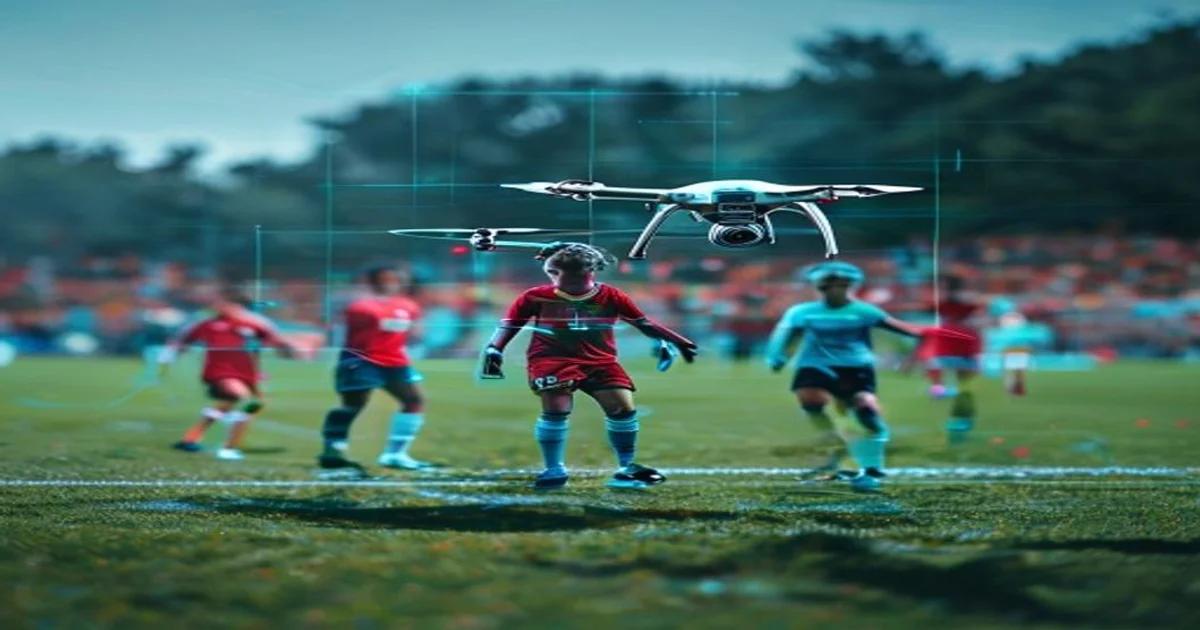
Machine learning is no longer reserved for the elite leagues of the NFL or the Premier League. With the rapid decline in sensor costs and the ubiquity of smartphone cameras, amateur organizations now have access to high-fidelity data streams. AI platforms can ingest raw video footage and automatically track player movement, velocity, and tactical positioning without requiring a single human operator to watch every frame.
'The integration of computer vision in amateur scouting is equivalent to the invention of the telescope in astronomy; suddenly, we can see things that were previously invisible to the naked eye.'
Breaking Down Biomechanics
One of the most critical aspects of amateur scouting is determining an athlete's 'ceiling.' AI excels here by analyzing biomechanical efficiency. By using deep learning models trained on millions of hours of professional movement, these systems can flag potential injury risks or identify technical inefficiencies in a youth athlete's throwing motion or stride pattern before they lead to long-term chronic issues.
- Biometric Monitoring: Real-time heart rate and fatigue tracking via affordable wearable tech.
- Positional Awareness: AI-driven heat maps that display a player's tactical intelligence.
- Comparative Analysis: Matching local talent against established professional archetypes.
Removing Bias from the Equation
Human scouts are susceptible to the 'halo effect,' where a player's physical size or a single highlight-reel play influences their entire evaluation. AI offers a refreshing alternative by focusing solely on performance output and consistency. When the data is normalized against thousands of other athletes in the same age group, a 'hidden gem' becomes statistically impossible to ignore.
The Role of Predictive Modeling
Predictive algorithms are changing the game by looking at the trajectory of development rather than just current skill levels. By inputting historical growth data, coaches can predict how a player's frame might develop, allowing for tailored strength and conditioning programs that were once reserved for professional academies. This is particularly transformative for rural or underfunded areas where professional eyes rarely reach.
Implementation Challenges
While the technology is powerful, it is not without its hurdles. Privacy concerns regarding the collection of data from minors are at the forefront of the conversation. Additionally, there is a cultural resistance from coaches who have built their entire careers on 'gut feel' scouting. Bridging the gap between data-driven insights and on-field coaching wisdom remains the most significant challenge for the industry.
Future Outlook: The AI-Powered Academy
As we look to the future, the democratization of these tools will lead to a more equitable sports landscape. When technology lowers the barrier to entry, it ensures that meritocracy prevails. Every child with a dream, regardless of their location or background, will eventually have a digital 'scouting report' that allows them to be seen by the right eyes at the right time.
Conclusion
The marriage of AI and amateur scouting is not about replacing the human scout; it is about augmenting their capabilities. By handling the heavy lifting of data aggregation and pattern recognition, AI frees up human experts to focus on the qualitative aspects of scouting—such as character, leadership, and emotional intelligence—that machines cannot yet capture. The future of sports is data-informed, and it starts at the grassroots level.