
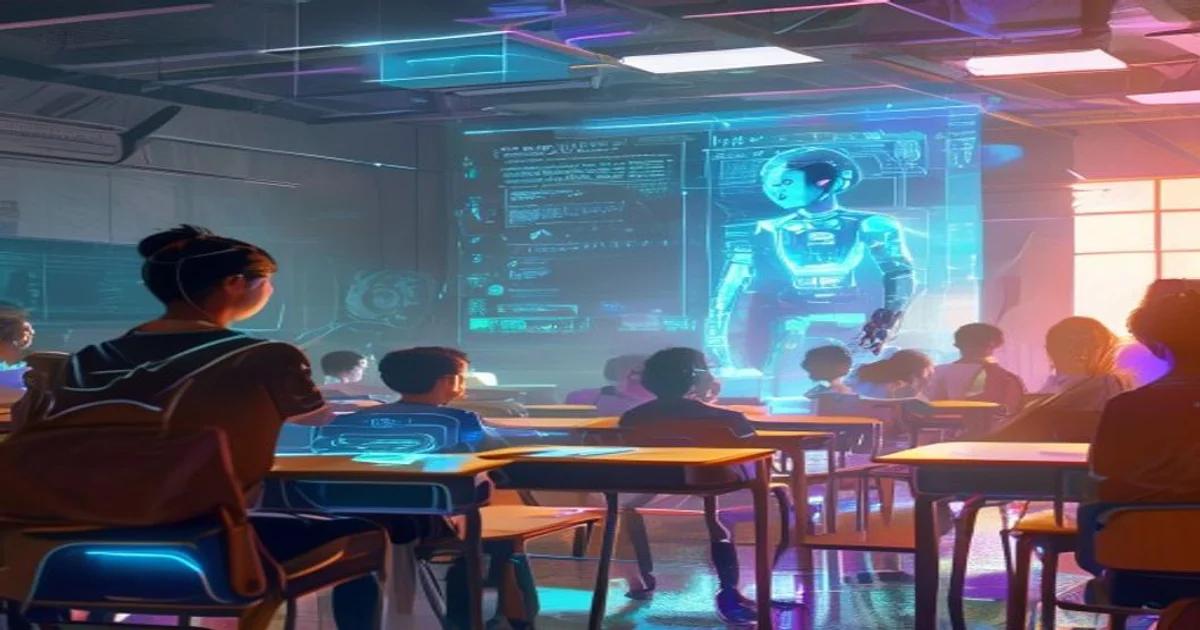
The Dawn of AI in Educational Discourse
The landscape of education is undergoing a profound transformation, and at the forefront of this shift lies the integration of Artificial Intelligence (AI) into pedagogical practices. Traditionally, classroom debates have served as a cornerstone for developing critical thinking, public speaking, and research skills. However, the advent of sophisticated AI models, particularly Large Language Models (LLMs) like ChatGPT, is redefining what is possible in these intellectual arenas. This article delves into the multifaceted ways AI is revolutionizing classroom debates, exploring its potential to enhance student learning, foster deeper engagement, and prepare students for an increasingly AI-driven future. We will examine the benefits, challenges, and ethical considerations that accompany this technological integration, ultimately painting a picture of AI as a powerful ally in the pursuit of educational excellence.
AI as a Research Powerhouse
One of the most immediate and impactful applications of AI in classroom debate is its ability to supercharge the research process. Students are often tasked with gathering information, identifying key arguments, and understanding opposing viewpoints. Traditionally, this involved hours spent poring over books, academic journals, and websites. AI tools can now condense this process significantly.
- Rapid Information Synthesis: LLMs can quickly process vast amounts of text, summarizing complex documents and extracting key information relevant to a debate topic. This allows students to grasp the core arguments and counterarguments much faster, freeing up cognitive resources for deeper analysis.
- Identification of Diverse Perspectives: AI can help students uncover a wider range of viewpoints on a subject, including those they might not have initially considered. By querying AI with specific prompts, students can explore different ethical, economic, or social angles, leading to more nuanced and well-rounded arguments.
- Fact-Checking Assistance: While not infallible, AI can assist in cross-referencing information and identifying potential inaccuracies or biases in sources. This encourages a more critical approach to information consumption from the outset.
- Source Discovery: AI can suggest relevant academic papers, reputable websites, and expert opinions, guiding students towards high-quality research materials they might otherwise miss.
'The ability of AI to rapidly process and synthesize information democratizes access to knowledge, enabling students to engage with complex topics more effectively.'
This accelerated research phase doesn't diminish the student's role; rather, it shifts the focus from information gathering to information evaluation and application. Students are no longer just passive recipients of data but active curators and strategists, leveraging AI to build a robust foundation for their arguments.
Enhancing Critical Thinking and Argumentation
Beyond mere information retrieval, AI offers sophisticated ways to refine critical thinking and argumentation skills crucial for debate.
- Argument Structure and Refinement: Students can use AI to outline their arguments, identify logical fallacies, and strengthen their reasoning. By presenting their draft arguments to an AI, they can receive feedback on clarity, coherence, and persuasive power.
- Counter-Argument Simulation: AI can be prompted to play the role of an opponent, generating potential counterarguments and rebuttals. This allows students to anticipate challenges, practice responding to objections, and develop more resilient debate strategies in a low-stakes environment.
- Identifying Weaknesses: An AI can analyze a student's argument for logical gaps, unsupported claims, or emotional appeals that might detract from its credibility. This provides a safe space for identifying and rectifying weaknesses before a formal debate.
- Persuasive Language and Rhetoric: While care must be taken not to over-rely on AI for generating eloquent prose, it can be used as a tool to learn about persuasive language. Students can analyze how AI phrases arguments, identify rhetorical devices, and understand different tones, then apply these learnings to their own writing and delivery.
AI as a Collaborative Partner
Viewing AI not as a cheat code but as a collaborative partner is key to its successful integration. In this paradigm, AI assists in the iterative process of constructing and defending arguments.
- Brainstorming and Idea Generation: When students encounter a mental block, AI can serve as a brainstorming partner, offering new angles or related concepts to explore.
- Understanding Complex Concepts: For highly technical or abstract debate topics, AI can provide simplified explanations, analogies, and examples, making the subject matter more accessible.
- Developing Scenarios: AI can help students construct hypothetical scenarios or case studies to illustrate their points, adding depth and real-world relevance to their arguments.
Ethical Considerations and Responsible Use
The integration of AI into classroom debates is not without its challenges and ethical considerations. It is imperative to establish clear guidelines and foster a culture of responsible use.
- Plagiarism and Authenticity: The most significant concern is the potential for students to simply copy AI-generated content without understanding or internalizing it. Educators must design assignments that require critical analysis, personal reflection, and original synthesis, making it difficult to pass off AI work as one's own.
- Over-Reliance and Skill Atrophy: There is a risk that students might become overly dependent on AI, hindering the development of their own independent research and argumentation skills. The goal should be augmentation, not replacement.
- Bias in AI: AI models are trained on vast datasets that can contain biases. Students need to be educated about these potential biases and taught to critically evaluate AI-generated information, cross-referencing with other sources.
- Equity and Access: Ensuring equitable access to AI tools for all students is crucial to prevent widening existing educational disparities.
- The Role of the Educator: Educators play a vital role in guiding students on how to use AI effectively and ethically. This includes teaching prompt engineering, critical evaluation of AI outputs, and the importance of academic integrity.
'The ethical framework for AI in education must prioritize critical thinking, academic honesty, and the development of independent learners.'
Practical Implementation Strategies
Educators can implement AI tools in classroom debates through various practical strategies:
- AI-Assisted Research Projects: Assign students to use AI for initial research, but require them to submit a critical analysis of the AI's findings, identify biases, and cite original sources.
- Debate Preparation Workshops: Dedicate class time to teaching students how to effectively prompt AI for research, argument structuring, and counter-argument generation. Focus on prompt engineering and AI output evaluation.
- Simulated AI Opponents: Use AI as a virtual opponent for practice debates, with students tasked with refuting AI-generated points and analyzing the AI's strategies.
- AI for Outline and Structure: Allow students to use AI to generate initial debate outlines or argument structures, but require them to flesh out these outlines with their own research, analysis, and original arguments.
- Ethical AI Use Contracts: Develop clear guidelines and have students sign a contract outlining acceptable and unacceptable uses of AI in their debate work.
- Post-Debate AI Analysis: After a debate, students could use AI to analyze the arguments presented by both sides, identifying strengths and weaknesses from an objective standpoint.
The Future of Debate with AI
The integration of AI into classroom debates signifies a paradigm shift in how we approach skill development in the digital age. It presents an opportunity to cultivate students who are not only knowledgeable but also adept at navigating complex information landscapes, thinking critically, and constructing compelling arguments. The key lies in harnessing AI's capabilities responsibly, ensuring it serves as a tool for empowerment and learning, rather than a crutch that hinders intellectual growth.
As AI continues to evolve, so too will its potential applications in education. We can anticipate more sophisticated AI tutors, advanced debate simulation platforms, and AI-powered tools that can analyze and provide feedback on oral presentations. Preparing students for a future where AI is ubiquitous requires us to embrace these technologies and teach them how to leverage them effectively and ethically.
The classroom debate, once a purely human-centric endeavor, is now on the cusp of a new era. By thoughtfully integrating AI, educators can unlock unprecedented opportunities for student engagement, critical thinking, and the development of essential 21st-century skills. The challenge is to ensure this integration is guided by pedagogical principles that prioritize deep learning, intellectual curiosity, and the enduring values of academic integrity.
AI's evolving role: AI is not a static tool but a dynamic force. Its capabilities in understanding context, generating nuanced responses, and even mimicking human reasoning are rapidly advancing. This means that the ways AI can assist in debates will only become more sophisticated.
Focus on higher-order thinking: With AI handling some of the more rudimentary aspects of research and information gathering, educators can dedicate more classroom time to fostering higher-order thinking skills such as analysis, synthesis, and evaluation. AI becomes a catalyst for deeper cognitive engagement.
The human element remains critical: Despite AI's power, the core of debate remains human. Empathy, ethical reasoning, persuasive delivery, and the ability to connect with an audience are skills that AI can assist in developing but not replace. The goal is a synergistic relationship where AI amplifies human capabilities.
Lifelong learning with AI: Teaching students how to use AI effectively for debate preparation is essentially teaching them a crucial skill for lifelong learning. The ability to query, analyze, and synthesize information from AI tools will be invaluable in academic, professional, and personal pursuits.
Continuous adaptation: Educators and institutions must remain agile, continuously adapting their curricula and teaching methodologies to incorporate new AI advancements. What works today might need refinement tomorrow. This adaptive approach is key to staying ahead in the AI-driven educational landscape.
The journey of AI in classroom debate is just beginning. It promises a future where learning is more personalized, engaging, and effective, equipping students with the intellectual tools necessary to thrive in an increasingly complex world. The responsible and innovative application of AI will be the defining factor in realizing this promise.