
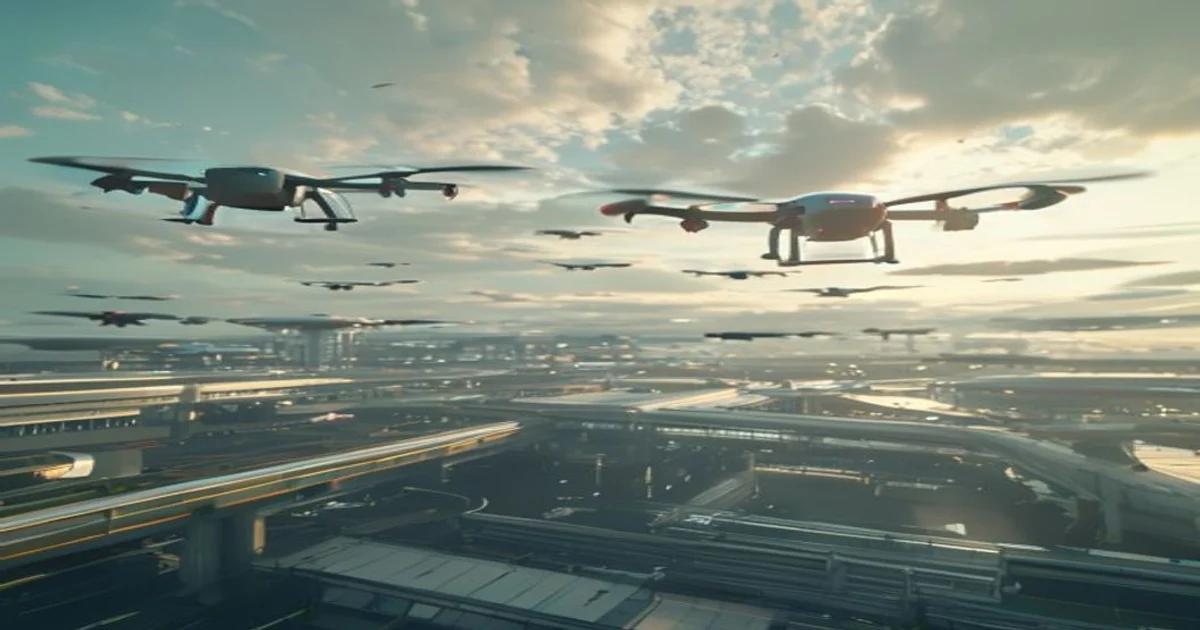
The New Era of Aviation Logistics
The aviation industry is currently undergoing a paradigm shift driven by the integration of artificial intelligence. As global supply chains grow increasingly complex, the demand for agility, precision, and efficiency has never been higher. AI is no longer just a buzzword in logistics; it is the backbone of a new operational framework that minimizes waste and maximizes throughput. By leveraging vast amounts of data, aviation companies are finally able to predict disruptions before they occur and automate tasks that were once labor-intensive and error-prone.
Predictive Maintenance and Asset Management
One of the most profound impacts of AI in aviation is the shift toward predictive maintenance. Historically, maintenance was either reactive or scheduled based on strict time intervals. Today, Machine Learning models analyze sensor data from engines, landing gear, and avionics systems to identify potential failures before they manifest as flight delays.
'Predictive maintenance allows airlines to transform from a model of scheduled downtime to one of condition-based service, ensuring that assets are only grounded when absolutely necessary.'
This shift not only saves millions in operational costs but also significantly enhances safety protocols. By utilizing digital twins—virtual replicas of physical aircraft—engineers can simulate how specific components will wear over time under varying environmental conditions.
Optimizing Ground Operations with Automation
Ground handling is often the bottleneck in air cargo logistics. AI-powered smart systems are now being deployed to orchestrate the complex choreography of baggage loading, refueling, and catering. Through computer vision and advanced sensors, autonomous vehicles can move cargo across the tarmac with a level of precision that human operators cannot match, especially in low-visibility conditions.
- Automated Sortation: High-speed sorting systems use AI to classify freight based on priority and destination.
- Smart Loading: Algorithms calculate optimal weight distribution to improve fuel efficiency during flight.
- Dynamic Scheduling: AI reallocates ground crew assets in real-time based on flight delays or gate changes.
Fuel Efficiency and Flight Path Optimization
Fuel accounts for a massive percentage of total airline operating costs. Traditional flight planning software has always looked at standard weather patterns, but AI takes this a step further by processing gigabytes of meteorological data to adjust flight paths in real-time. By accounting for micro-currents and atmospheric changes, AI algorithms suggest altitudes and speed adjustments that minimize drag and maximize fuel burn efficiency. This not only lowers the bottom line but also contributes to the industry's sustainability goals by reducing carbon footprints.
Data-Driven Decision Making
At the core of this transformation is the ability to parse unstructured data. Airlines now utilize sophisticated LLMs and neural networks to analyze thousands of pages of cargo manifests, regulatory filings, and market demand trends. This information is synthesized into actionable intelligence that helps logistics managers make decisions about fleet deployment, route expansion, and capacity planning.
When we look at the landscape of digital transformation, it is clear that the integration of AI is not merely an optional upgrade. It is an existential necessity for firms hoping to remain competitive in a volatile global market. The future of logistics is proactive, autonomous, and driven by continuous learning systems that improve with every cycle of data they ingest.
Challenges and Ethical Considerations
Despite the clear benefits, the implementation of AI in aviation logistics is not without challenges. Integrating legacy systems with modern, cloud-based AI architecture often requires substantial capital investment and cultural shifts within the workforce. Furthermore, as we become more reliant on these algorithms, the industry must prioritize cybersecurity to ensure that these interconnected systems remain resilient against malicious threats. Ensuring that AI decisions remain transparent and explainable is also a critical hurdle, as regulators require clear audit trails for any automated decision that affects flight safety or operational integrity.
As the industry moves forward, collaboration between tech providers and aviation authorities will define the success of these initiatives. The goal is a seamless, self-healing supply chain where AI acts as a co-pilot to human judgment, rather than a replacement for it.