The Growing Crisis of Orbital Congestion
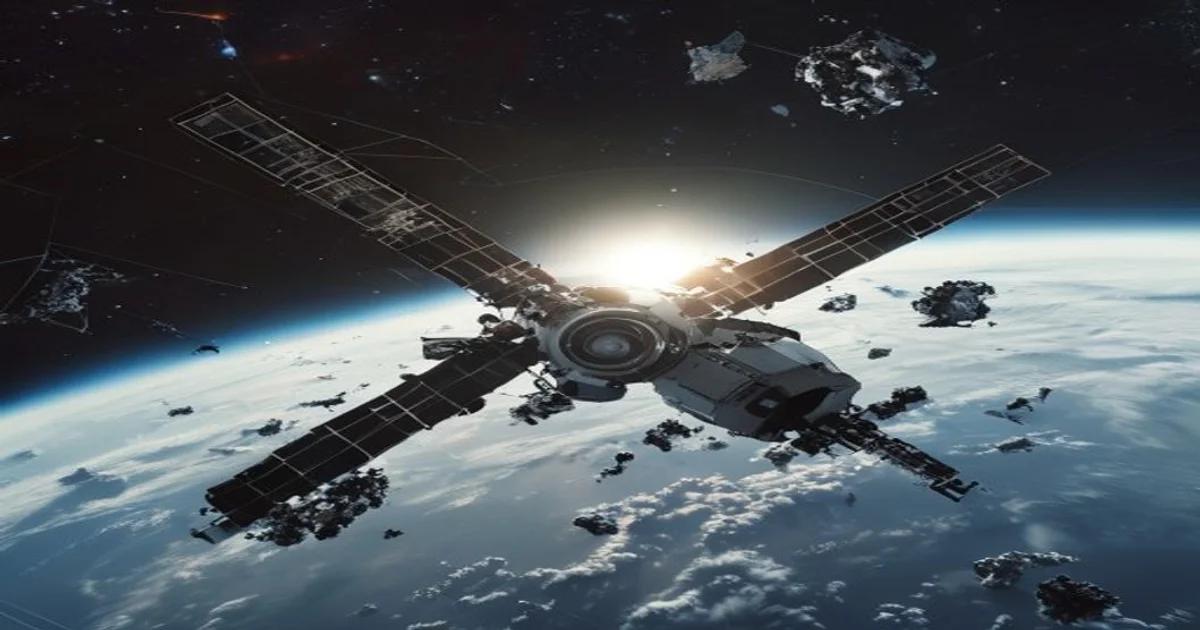
The expansion of human activity in low Earth orbit (LEO) has brought unprecedented benefits, from global telecommunications to climate monitoring. However, this progress is threatened by a mounting pile of orbital debris. Millions of fragments, ranging from defunct satellites to spent rocket stages and microscopic flecks of paint, circle our planet at speeds exceeding 17,500 miles per hour. At these velocities, even a small piece of hardware can cause catastrophic damage to active assets. Enter the era of AI-powered orbital debris mitigation, a technological imperative to keep our space lanes open and safe.
Enhancing Space Situational Awareness with AI
Space situational awareness (SSA) is the foundational layer of debris mitigation. Traditional methods of tracking objects relied on ground-based radar and manual computation, which struggle to process the overwhelming volume of data produced by the modern space industry. Artificial intelligence, specifically machine learning, is transforming this field by enabling real-time analysis of sensor data.
Predictive Analytics and Collision Avoidance
AI models are being deployed to predict the orbital paths of debris with significantly higher precision than deterministic physics-based models alone. By ingesting vast datasets of historical orbital maneuvers and atmospheric density fluctuations, neural networks can forecast potential close-approach events days in advance. This lead time is crucial for satellite operators to initiate fuel-efficient collision avoidance maneuvers.
'The integration of AI into collision avoidance systems is no longer optional; it is the only way to manage the exponential growth of space traffic in a crowded orbital environment.'
Autonomous Robotic Removal Missions
Beyond avoidance, the active removal of debris has become a focal point of research and development. Deploying autonomous spacecraft to capture and de-orbit large pieces of junk is a complex engineering challenge. AI provides the 'eyes' and 'brain' for these robotic systems to function in the harsh, unpredictable conditions of space.
Computer Vision for Target Capture
Capturing a tumbling, non-cooperative target requires sophisticated computer vision systems. Deep learning models trained on synthetic space imagery allow robotic spacecraft to identify, track, and rendezvous with debris objects. These systems must adapt to variable lighting, glare, and the lack of standard docking interfaces. Once the target is acquired, reinforcement learning algorithms guide the final approach, ensuring that the kinetic energy of the encounter remains within safe tolerances.
The Role of Automation in Sustainable Space Operations
Automation extends to the management of entire satellite constellations. Operators now use intelligent agents to orchestrate fleet-wide adjustments, minimizing the probability of conjunctions while optimizing fuel consumption. This systemic approach is essential, as the sheer number of objects in orbit precludes manual oversight of every individual node.
Challenges in Implementation
Despite the clear benefits, integrating AI into orbital hardware is fraught with challenges:
- Latency and Communication: Space-based systems require on-board processing because latency to ground stations can be fatal to mission objectives.
- Harsh Radiative Environments: AI-capable hardware must be radiation-hardened to function reliably in the Van Allen belts.
- Algorithmic Trust: Regulators and operators demand transparency in AI decision-making to ensure that autonomous maneuvers do not inadvertently create new hazards.
Future Prospects and Global Governance
As we look toward the future, the convergence of innovation and international cooperation will define the next chapter of space flight. Developing common standards for AI-driven debris mitigation is vital to prevent collisions between defensive systems themselves. Governments are increasingly recognizing that space debris is a tragedy of the commons, requiring a concerted effort to preserve the orbital environment for future generations.
Furthermore, the miniaturization of AI chips, combined with the increasing capabilities of cloud computing, suggests that we may soon see 'space-edge' computing platforms that function with the same autonomy as modern self-driving cars. This evolution will lower the costs of debris mitigation, making it economically viable to clean up the orbit in the same way we manage terrestrial waste.
In conclusion, while the threat of space debris is significant, the deployment of AI-powered systems offers a path toward a sustainable future. Through precision tracking, autonomous capture, and intelligent fleet management, humanity can continue to explore and utilize the cosmos without sacrificing the accessibility of space for those who follow.