
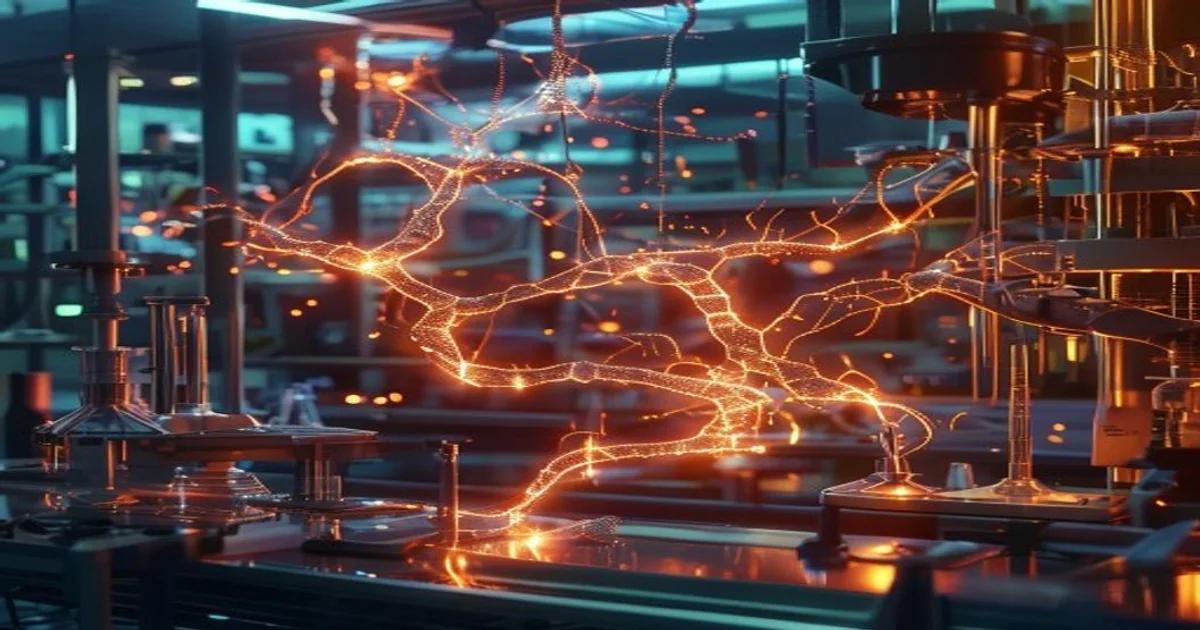
AI's Cognitive Revolution in STEM
The advent and rapid evolution of artificial intelligence (AI) represents a seismic shift across nearly every sector, but its cognitive impact on Science, Technology, Engineering, and Mathematics (STEM) is particularly profound and transformative. AI is not merely a tool for automation; it is fundamentally altering the very nature of discovery, problem-solving, and education within these critical fields. From accelerating the pace of scientific research to reimagining how students learn and professionals work, AI is ushering in an era of unprecedented capability and challenge, demanding a fresh perspective on how we approach innovation and knowledge.
At its core, AI's cognitive impact in STEM stems from its ability to process, analyze, and synthesize vast datasets with speeds and patterns far beyond human capacity. This capability enables scientists, engineers, and mathematicians to uncover hidden correlations, simulate complex systems, and generate novel hypotheses that were previously inaccessible. The integration of machine learning, deep learning, and neural networks into STEM workflows is not just enhancing efficiency; it's catalyzing a paradigm shift in how foundational questions are posed and answered, fostering an environment where innovation is limited less by computational power and more by human imagination.
Redefining Scientific Discovery and Research
AI is proving to be an indispensable partner in scientific research, acting as a force multiplier for human intellect. Its applications span from the micro-scale of molecular biology to the macro-scale of astrophysics, dramatically accelerating the pace of discovery and enabling breakthroughs that once seemed decades away.
Accelerating Drug and Materials Science
In drug discovery, AI algorithms can screen billions of potential compounds in silico, predicting their efficacy, toxicity, and interaction profiles with remarkable accuracy. This process, traditionally painstakingly slow and expensive, is now being optimized by AI, leading to faster identification of promising drug candidates for diseases ranging from cancer to infectious agents. Similarly, materials science benefits immensely from AI's predictive capabilities. Researchers can use machine learning models to design novel materials with specific properties – whether for energy storage, aerospace, or medical implants – without extensive trial-and-error experimentation. AI accelerates the discovery of superconductors, high-performance alloys, and sustainable polymers, reducing development cycles and costs.
'The synergy between AI and scientific inquiry is not just about crunching numbers; it's about discerning patterns and relationships that are invisible to the human eye, pushing the boundaries of what's discoverable.'
Enhancing Astronomical and Environmental Science
Astronomy is grappling with an explosion of data from advanced telescopes and observatories. AI plays a crucial role in processing this deluge of information, from identifying exoplanets and distant galaxies to classifying celestial objects and detecting transient events like supernovae. AI-powered algorithms can sift through petabytes of data to pinpoint anomalies or confirm theoretical predictions, effectively augmenting astronomers' ability to explore the universe.
In environmental science, AI models are crucial for understanding complex climate patterns, predicting extreme weather events, and monitoring biodiversity. Machine learning helps analyze satellite imagery for deforestation, track pollution sources, and model the impact of climate change on ecosystems. This predictive power allows for more proactive conservation efforts and informed policy-making.
Computational Thinking and Data Science Synergy
The integration of AI has profound implications for computational thinking and data science. AI algorithms, particularly those in machine learning, are essentially sophisticated data pattern recognizers. This capability is transforming fields like bioinformatics, genomics, and financial modeling, where data interpretation is paramount. AI tools enable:
- Automated hypothesis generation: Suggesting new research questions based on observed data patterns.
- Complex system modeling: Simulating intricate biological, physical, or social systems with higher fidelity.
- Anomaly detection: Identifying outliers in datasets that could signify errors, novel discoveries, or critical events.
This synergy empowers researchers to extract deeper insights from complex data, driving innovation in areas previously limited by manual analytical capabilities.
Transforming Engineering and Technological Innovation
Engineering disciplines are being reshaped by AI, moving towards more intelligent, autonomous, and optimized systems. AI's capacity for complex decision-making and pattern recognition is streamlining design processes, enhancing operational efficiency, and enabling the creation of entirely new technologies.
Smart Automation and Robotics
AI is the brain behind smart automation and robotics. In manufacturing, AI-powered robots are performing intricate assembly tasks with greater precision and speed than ever before, adapting to changes in production lines, and learning from experience to improve performance. Autonomous vehicles, drones, and advanced robotic systems in logistics and healthcare rely heavily on AI for navigation, perception, and decision-making in dynamic environments. AI optimizes robotic movements, anticipates maintenance needs, and ensures safer, more efficient operations across various industries.
'AI in engineering is about building intelligence into every layer – from the materials used to the systems that control them – creating truly adaptive and resilient technologies.'
Software Development and AI-Driven Tools
Even within the realm of software development, AI is becoming an invaluable asset. AI-powered tools can assist programmers by generating code snippets, identifying bugs, and suggesting optimizations. Generative AI models are capable of translating natural language requests into functional code, democratizing access to software creation. Furthermore, AI is critical in:
- Predictive maintenance: Analyzing sensor data from machines to forecast failures before they occur, reducing downtime and costs.
- System optimization: Using AI to fine-tune algorithms, network configurations, and resource allocation for maximum performance.
- Cybersecurity: AI algorithms learn to detect anomalous network behavior, identify new threats, and automate responses to cyberattacks.
These applications demonstrate how AI not only improves existing engineering processes but also enables the development of more intelligent, robust, and secure technological solutions.
The Evolving Landscape of STEM Education
The transformative power of AI extends directly into the classroom and beyond, fundamentally altering how STEM subjects are taught, learned, and evaluated. As AI reshapes industries, it equally demands a revolution in education to prepare the next generation of STEM professionals.
Personalized Learning Pathways
AI-powered educational platforms are capable of offering personalized learning pathways. These systems adapt to individual students' learning styles, paces, and strengths, providing tailored content, exercises, and feedback. AI tutors can offer real-time assistance, identify areas where a student struggles, and recommend supplementary materials, transforming the one-size-fits-all model into a dynamic, individualized experience. This personalization can dramatically improve comprehension, engagement, and retention in complex STEM subjects.
New Skill Sets for the AI Era
Integrating AI into STEM education necessitates a shift in focus towards developing new skill sets. Rote memorization is becoming less critical, while skills such as data literacy, critical thinking, problem-solving with AI tools, and ethical AI reasoning are paramount. Students need to understand:
- How AI algorithms work, their capabilities, and their limitations.
- The principles of data collection, cleaning, and interpretation.
- The ethical implications of AI development and deployment.
- How to effectively collaborate with AI systems to augment human capabilities.
This demands curricula that emphasize interdisciplinary learning, computational thinking, and a strong ethical foundation.
Interdisciplinary Approaches and Curriculum Reform
The complex challenges of the future are unlikely to be solved by isolated disciplines. AI naturally fosters interdisciplinary approaches, requiring students to combine knowledge from computer science, mathematics, ethics, and traditional STEM fields. Education reform must integrate AI concepts across the curriculum, moving away from siloed subjects. Project-based learning, which involves real-world AI applications, can immerse students in collaborative problem-solving, preparing them for the multifaceted demands of the modern workforce.
'The future of STEM education isn't just about teaching *about* AI; it's about teaching *with* AI and preparing students to *think* like innovators in an AI-driven world.'
Workforce Implications: Collaboration, Not Replacement
A common concern regarding AI's rise is its potential to displace human workers. While AI will undoubtedly automate many routine and repetitive tasks, its broader impact on the STEM workforce is more nuanced, emphasizing augmentation, collaboration, and the creation of entirely new roles.
Augmented Human Capabilities
AI is increasingly serving as a co-pilot, augmenting human capabilities rather than replacing them. In engineering, AI tools assist in design iterations, simulations, and risk assessments, allowing engineers to focus on higher-level creative problem-solving and strategic decision-making. Scientists leverage AI for data analysis, experimental design, and literature reviews, freeing up cognitive resources for theoretical development and interpretation. The future STEM professional will be defined by their ability to effectively collaborate with AI systems, using them to enhance productivity, accuracy, and innovation.
Job Creation and Reskilling Imperatives
The emergence of AI is also driving job creation, leading to new roles such as AI ethics specialists, prompt engineers, machine learning operations (MLOps) engineers, and AI trainers. However, this shift necessitates a significant focus on reskilling and upskilling the existing workforce. Educational institutions, industries, and governments must collaborate to provide accessible training programs that equip professionals with the AI literacy, technical skills, and adaptive mindset required to thrive in this evolving landscape. Continuous learning will not be an option but a fundamental requirement for career longevity in STEM.
Ethical and Societal Considerations
The profound cognitive impact of AI in STEM brings with it a host of ethical and societal considerations that demand careful attention and proactive governance.
Bias, Fairness, and Transparency
One of the most critical challenges is addressing bias, fairness, and transparency in AI systems. AI models are trained on data, and if that data reflects existing societal biases, the AI will perpetuate and even amplify those biases. This can lead to discriminatory outcomes in areas like medical diagnostics, hiring, or even scientific research. Ensuring fairness requires:
- Diverse and representative datasets.
- Explainable AI (XAI) techniques to understand how AI makes decisions.
- Robust auditing and validation of AI systems for unintended biases.
'Without explicit attention to ethics, AI's power to innovate could inadvertently exacerbate societal inequalities and undermine public trust in scientific endeavors.'
Data Privacy and Security
AI systems often require vast amounts of data, raising significant concerns about data privacy and security. Protecting sensitive research data, personal information used in AI models, and proprietary algorithms from breaches and misuse is paramount. Robust cybersecurity measures, privacy-preserving AI techniques (like federated learning), and clear regulatory frameworks are essential to build and maintain trust.
The Human Element: Creativity and Intuition
While AI excels at pattern recognition and data processing, the human element of creativity, intuition, and ethical reasoning remains indispensable. AI can generate novel ideas, but human insight is required to discern their true value, guide their development, and apply them wisely. Maintaining human oversight in critical AI applications, fostering unique human intellectual capabilities, and ensuring that AI remains a tool to serve humanity's best interests are ongoing challenges.
The Future Trajectory of AI in STEM
The trajectory of AI's cognitive impact in STEM is one of continuous acceleration and deepening integration. We can anticipate further advancements in:
- Autonomous Research Systems: AI-driven labs capable of conducting experiments, analyzing results, and formulating new hypotheses with minimal human intervention.
- Personalized Healthcare: Hyper-personalized treatments and preventative care plans based on individual genomic, lifestyle, and environmental data, powered by AI.
- Advanced Materials Discovery: AI platforms that can design and synthesize new materials from first principles, leading to revolutionary products.
- Complex Climate Modeling: More accurate and granular climate models that aid in mitigating environmental disasters and informing sustainable policies.
However, unlocking this potential responsibly will require a concerted effort from researchers, educators, policymakers, and the public. Investing in ethical AI research, fostering interdisciplinary collaboration, reforming educational systems, and establishing robust governance frameworks are crucial steps. The cognitive impact of AI in STEM is not merely about technological progress; it's about reshaping human potential and ensuring that this powerful tool serves to advance knowledge, foster innovation, and create a more prosperous and equitable future for all.
Ultimately, AI's journey within STEM is a testament to humanity's ongoing quest for understanding and mastery. It is a tool that amplifies our intellect, extends our reach, and challenges us to think differently. The cognitive revolution sparked by AI in STEM is not an endpoint but a vibrant new beginning, demanding continuous adaptation, learning, and an unwavering commitment to ethical innovation.