Unpacking the AI's Creative Reception Paradox
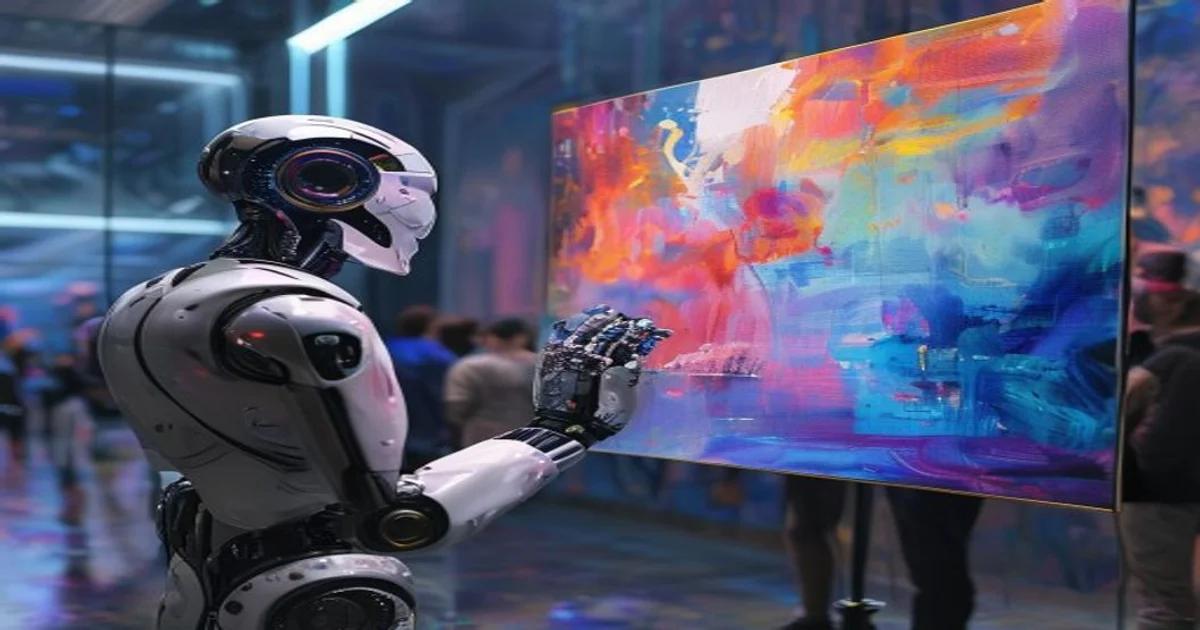
The advent of advanced generative artificial intelligence (AI) systems has ushered in an era where machines can produce art, music, literature, and even architectural designs that are virtually indistinguishable from, and in some cases surpass, human creations in terms of technical prowess and aesthetic appeal. Yet, a peculiar phenomenon, which we term the 'AI's Creative Reception Paradox,' consistently emerges: human audiences often express genuine admiration for an artwork, only to recalibrate or diminish their appraisal upon discovering it was created by an AI. This paradox challenges our deeply ingrained notions of creativity, authorship, and the very essence of artistic value, forcing a re-evaluation of what it means to create and to appreciate in a world increasingly shaped by intelligent algorithms.
The Heart of the Contradiction: A Deep Dive into Cognitive Bias
At the core of this paradox lies a complex interplay of cognitive biases and deeply held cultural beliefs about creativity. For centuries, creativity has been perceived as an exclusively human trait, intrinsically linked to consciousness, emotion, and intentionality. When an AI generates a painting or composes a symphony, it does so through algorithms, statistical models, and vast datasets, devoid of personal experience, suffering, or inspiration in the human sense. This fundamental difference in 'origin story' triggers a recalibration of value.
The Intentionality Bias: Humans are predisposed to attribute intention and agency to creators. We seek to understand the artist's motivations, their struggles, their messages. An AI, by its nature, lacks these human-centric drivers. When we learn an AI produced a piece, the perceived absence of a 'conscious mind' behind the work can deflate its perceived artistic depth. The emotional resonance we might initially feel is often contingent upon the assumption of a fellow human's input.
The Effort Heuristic: There's a subconscious belief that greater effort leads to greater value. Human artists often spend years honing their craft, enduring periods of intense struggle, and investing significant emotional and intellectual labor. AI can generate complex works in seconds or minutes. This perceived lack of 'effort' – or rather, a different kind of effort, computational rather than emotional – can lead to a devaluation, despite the output's quality. It's not the same as a human's 'sweat and tears,' and our brains struggle to equate the two.
The 'Authenticity' Conundrum: What constitutes authenticity in art? Is it the uniqueness of the vision, the hand of the master, or the emotional truth conveyed? For many, authenticity is tied to the human spirit, an unbroken chain from creator to audience. AI challenges this chain, presenting works that are authentic in their aesthetic qualities but inauthentic in their human origin, according to traditional definitions.
'The AI's creative reception paradox isn't merely about liking or disliking AI art; it's about the fundamental reorientation of value when the presumed source of creativity shifts from a human consciousness to an algorithmic process.'
Historical Precedents and the Evolution of Artistic Reception
The idea of technological intervention in art isn't new. Photography, for instance, faced initial resistance from the art establishment in the 19th century, deemed a mere mechanical reproduction rather than a legitimate art form. Critics argued it lacked the 'soul' and 'hand' of painting. Similarly, electronic music and digital art were once viewed with skepticism, often dismissed as lacking the organic warmth or complexity of their analog counterparts. Each technological leap has forced a re-evaluation of what art is and how it should be judged. However, AI presents a unique challenge because it doesn't just assist in creation; it *generates* independently, creating a new category of authorship.
- Photography's Struggle: Initially seen as a scientific tool, photography slowly gained acceptance as artists explored its unique expressive capabilities, proving that the tool doesn't inherently diminish the art.
- Synthesizers and Digital Music: Faced resistance for being 'cold' or 'unnatural,' yet revolutionized music, demonstrating that new sound palettes open new creative avenues.
- Computer Graphics: Once considered purely technical, now integral to visual arts, film, and gaming, showing how computational power can extend human artistic vision.
The key difference with AI is its capacity for ostensibly *autonomous* generation, making the question of 'who' or 'what' is creating more salient than ever before.
Redefining Creativity in the Algorithmic Age
To move beyond the paradox, we must re-evaluate our definition of creativity itself. Traditionally, creativity involves novelty, utility, and surprise, coupled with an element of intentionality and personal expression. AI can certainly achieve novelty, utility, and surprise. Large Language Models (LLMs) and generative adversarial networks (GANs) excel at producing unique and unexpected outputs. But does this equate to 'creativity'?
Some argue that true creativity requires consciousness, self-awareness, and the ability to *understand* the impact of one's creations. AI, currently, lacks these attributes. It operates based on patterns, correlations, and statistical probabilities gleaned from massive datasets. It doesn't 'feel' or 'intend' in a human way. However, this perspective may be overly anthropocentric.
- Computational Creativity: This field explores whether machines can exhibit creative behavior. It proposes that creativity can be modeled algorithmically, focusing on processes like recombination, transformation, and exploration of conceptual spaces.
- Human-AI Collaboration: Perhaps the most fruitful path lies not in pitting human against AI, but in seeing AI as a powerful co-creator or an advanced tool. AI can generate ideas, extrapolate styles, or even fill in gaps, allowing human artists to focus on conceptualization, curation, and adding the 'human touch' that resonates with audiences.
The Impact on Human Artists and Industries
The Creative Reception Paradox has profound implications for artists, cultural institutions, and the creative industries. On one hand, AI offers unprecedented tools for artistic exploration, allowing artists to break through creative blocks, experiment with new styles, and generate vast quantities of preliminary ideas. It democratizes creation, making sophisticated artistic tools available to a wider audience.
On the other hand, there are legitimate concerns:
- Economic Displacement: If AI can generate commercially viable art faster and cheaper, what happens to human artists, especially those in more commercial or design-oriented fields?
- Ethical Appropriation: AI models are trained on vast datasets, often scraped from the internet without explicit consent or compensation to the original creators. This raises significant questions about intellectual property, plagiarism, and the ethics of 'style mimicry.'
- Devaluation of Skill: If machines can instantly produce high-quality work, does it devalue the years of practice and skill development required by human artists? The distinction between technical skill and conceptual innovation becomes blurred.
These concerns are not unfounded and require careful consideration. Establishing clear guidelines for attribution, compensation, and ethical training data is crucial for fostering a sustainable ecosystem where both human and AI creativity can thrive.
Philosophical Underpinnings: What Does it Mean to Be Human?
Beyond the practical considerations, the AI's Creative Reception Paradox touches upon deep philosophical questions about human exceptionalism. For a long time, creativity, along with reason and consciousness, was considered a defining characteristic of humanity, setting us apart from the animal kingdom and, by extension, from machines. If AI can genuinely 'create,' what then distinguishes us?
This prompts a re-examination of what it means to be human in an increasingly AI-driven world. Perhaps our unique contribution lies not just in creation, but in our capacity for:
- Empathy and Emotional Connection: The ability to convey and elicit deep emotions through art, rooted in shared human experience.
- Narrative and Meaning-Making: The innate human desire to tell stories, to imbue meaning, and to understand the world through subjective experience.
- Conscious Intent and Purpose: The deliberate choice to create, to communicate a specific message, or to explore a particular theme, driven by internal states.
These qualities may be where the enduring value of human-generated art will lie, regardless of AI's capabilities.
Navigating the Future: Towards a More Inclusive Framework
Resolving the AI's Creative Reception Paradox requires a shift in perspective, moving away from an 'us vs. them' mentality towards a more nuanced understanding of creative collaboration and diverse forms of authorship. Several pathways can help us navigate this future:
- Transparency and Attribution: Clearly labeling AI-generated content or specifying when AI was used as a tool can help manage audience expectations and foster trust. This allows for appreciation of the work on its own merits, while acknowledging its origin.
- Focus on Curatorial and Conceptual Roles: As AI handles more generation, human artists may increasingly take on roles as curators, conceptualizers, and 'prompters' – guiding the AI's output and imbuing it with human intent and meaning. The skill shifts from brushstroke to vision.
- New Forms of Intellectual Property: Legal frameworks must evolve to address AI-generated content, considering issues of ownership, copyright, and originality. This is a complex area, but essential for fairness and incentivizing ethical AI development.
- Education and Critical Thinking: Promoting media literacy and critical engagement with AI art can help audiences understand its mechanisms, appreciate its unique qualities, and distinguish it from human-only creations without automatically devaluing it.
- Embracing Hybrid Art Forms: Encouraging and celebrating art that explicitly blends human and AI contributions can open new artistic frontiers. Examples include AI-assisted musical compositions, interactive AI installations, or novels co-written with LLMs. These hybrid forms naturally bridge the perceived gap.
'The challenge is not to deny AI's capacity for producing aesthetically pleasing output, but to redefine the parameters of value and authorship in a way that accommodates both human and machine contributions without diminishing either.'
Case Studies: From DALL-E to DeepMind's AlphaGo
The paradox is vividly illustrated by numerous examples. When OpenAI's DALL-E 2 or Midjourney generates stunning, photorealistic images from text prompts, initial reactions are often awe and excitement. Yet, if these images are presented as if created by a human artist, and the AI origin is later revealed, the perception often shifts, sometimes accompanied by a sense of 'trickery' or diminished wonder. The quality of the image hasn't changed, only its backstory.
In music, AI systems like AIVA have composed entire symphonies that listeners have found deeply moving, only for some to retract their emotional investment upon learning of its non-human origin. Similarly, AI-generated poetry can evoke powerful emotions, but the 'poet' is an algorithm.
Even in strategic games, where AI has long surpassed human capabilities (e.g., DeepMind's AlphaGo defeating Go champions), the admiration for the AI's 'brilliance' is distinct from the human emotional investment we typically have in human competitors. We marvel at the AI's processing power, but it doesn't carry the same narrative of human struggle, triumph, or genius.
Conclusion: A New Horizon for Creativity
The AI's Creative Reception Paradox is more than a fleeting curiosity; it's a critical lens through which we can understand our evolving relationship with advanced technology and our deeply held beliefs about what it means to be a creator. By acknowledging our cognitive biases, re-evaluating our definitions of creativity and authorship, and establishing ethical frameworks for human-AI collaboration, we can move towards a future where AI is not just a tool, but a partner in expanding the boundaries of artistic expression. The true genius of this era may not lie solely in what AI can create, but in how it challenges us to redefine creativity itself, ultimately enriching our understanding of both human potential and artificial intelligence's remarkable capabilities. The journey is one of integration, re-definition, and ultimately, a more expansive appreciation for the multifaceted nature of creation.