
The Epochal Shift: Decoding AI's Place in Tomorrow's Classrooms
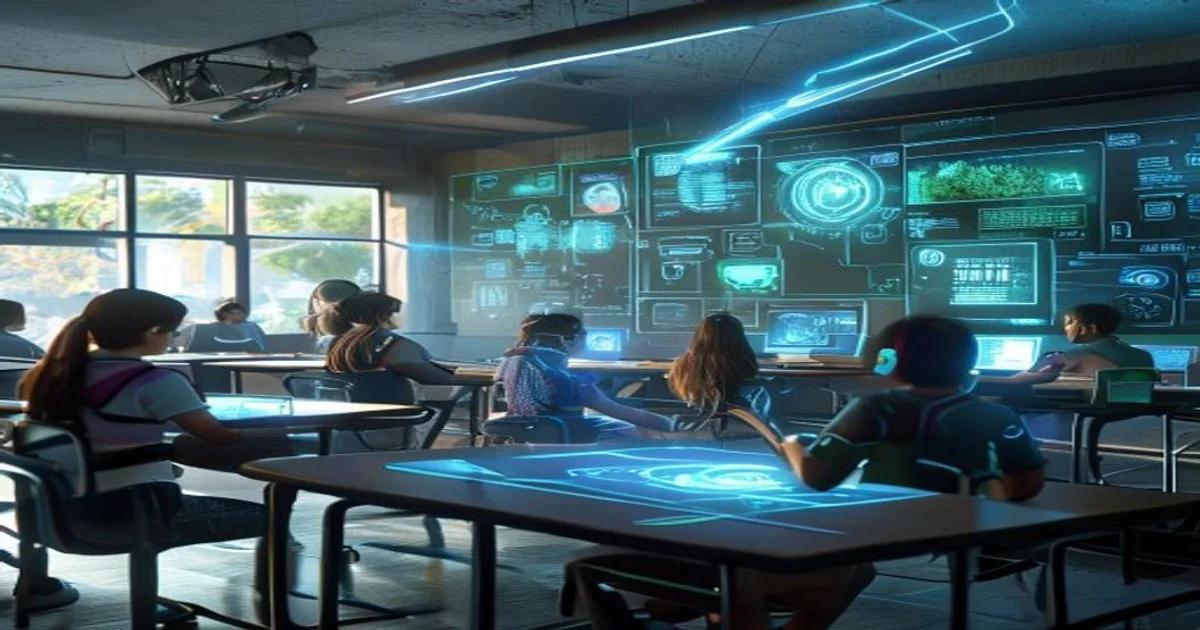
The advent of Artificial Intelligence (AI) heralds a profound transformation across every sector, and education stands poised at the precipice of its most significant pedagogical revolution since the printing press. As AI capabilities, particularly those of Large Language Models (LLMs) and generative AI, become increasingly sophisticated and accessible, the discourse surrounding their integration into classrooms has escalated from speculative musings to urgent, practical debates. This article delves into the multi-faceted arguments surrounding AI's role in education, dissecting its potential to revolutionize learning experiences, the formidable ethical challenges it presents, and the strategic pathways educators and policymakers must navigate to harness its power responsibly. It's a debate not just about technology, but about the very essence of learning, teaching, and human development in an increasingly AI-permeated world.
AI as an Educational Catalyst: Unlocking Unprecedented Potentials
The proponents of AI integration paint a compelling picture of an educational landscape redefined by personalization, efficiency, and enhanced accessibility. The core argument rests on AI's unparalleled ability to process vast amounts of data, learn from patterns, and adapt its responses, capabilities that, when applied to learning, promise a paradigm shift.
- Personalized Learning Pathways: One of AI's most lauded potentials is its capacity to tailor educational content and pace to individual student needs. Imagine an AI tutor that understands a student's learning style, identifies their knowledge gaps in real-time, and provides bespoke explanations, exercises, and resources. This isn't a futuristic dream; rudimentary forms are already emerging. Systems can adapt curricula based on a student's progress, offering remedial support where needed and advanced challenges for those excelling. This level of individualized attention, historically a luxury reserved for one-on-one tutoring, could become universally accessible, potentially narrowing achievement gaps and fostering deeper comprehension. It promises to move beyond the 'one-size-fits-all' model that has long characterized traditional classroom instruction, allowing every student to learn at their optimal pace and in their preferred modality.
- Automated Administrative Tasks and Teacher Empowerment: Educators are often burdened by time-consuming administrative tasks, from grading routine assignments to managing student records. AI tools offer a potent solution, capable of automating many of these processes. AI-powered grading systems can evaluate objective assessments, provide immediate feedback to students, and even flag areas where a class, or individual, struggles. This frees up teachers' valuable time, allowing them to focus on higher-order tasks: fostering critical thinking, facilitating complex discussions, providing socio-emotional support, and developing innovative pedagogical strategies. Instead of replacing teachers, AI can augment their capabilities, transforming them from disseminators of information to facilitators of deeper learning and critical mentors. It allows for a re-allocation of human capital towards truly human-centric aspects of education.
- Enhanced Accessibility and Inclusivity: AI holds immense promise for making education more accessible to diverse learners, including those with disabilities or in remote locations. AI-driven translation tools can break down language barriers, text-to-speech and speech-to-text functionalities can assist students with visual or hearing impairments, and adaptive interfaces can accommodate various motor skill challenges. For students in underserved areas, AI can provide access to high-quality educational content and personalized instruction that might otherwise be unavailable due to geographical or socio-economic constraints. This aspect of AI's potential is particularly compelling, offering a path towards a more equitable educational ecosystem globally. It implies a democratization of sophisticated learning resources that were previously geographically or financially restricted.
- Data-Driven Insights for Pedagogical Improvement: AI's ability to analyze vast datasets can provide educators and institutions with unprecedented insights into learning patterns, curriculum effectiveness, and student engagement. By identifying common misconceptions, optimal teaching methodologies, or early indicators of student disengagement, AI can inform pedagogical adjustments, curriculum revisions, and intervention strategies. This shifts educational decision-making from intuition-based to evidence-based, leading to more effective and responsive learning environments. This analytical power, when harnessed ethically, can continuously refine and optimize the educational experience for an entire cohort, moving beyond anecdotal evidence to systemic improvements.
Navigating the Ethical Labyrinth: Challenges and Concerns
While the opportunities presented by AI are vast, the ethical and practical challenges of its integration are equally significant and demand rigorous consideration. A cavalier approach risks exacerbating existing inequalities, compromising privacy, and fundamentally altering the human element of education in unforeseen ways.
The Spectre of Bias and Inequity
- Algorithmic Bias: AI systems learn from data, and if that data reflects existing societal biases, the AI will perpetuate and even amplify them. In an educational context, this could manifest in biased grading algorithms, unfair recommendations for learning paths, or even discriminatory access to resources based on demographic information. For instance, if an AI is trained predominantly on data from a particular demographic, its performance may be suboptimal or even prejudicial when applied to students from different backgrounds. Ensuring fairness and equity in AI is not merely a technical challenge but a societal imperative, requiring diverse training datasets, transparent algorithms, and continuous auditing. The danger is that an AI system, if unscrutinized, could hardwire existing systemic biases into the very fabric of future learning, entrenching disadvantage.
- Digital Divide Exacerbation: The promise of AI's accessibility benefits is contingent on equitable access to the necessary infrastructure and devices. If AI-powered educational tools become indispensable, students from socio-economically disadvantaged backgrounds who lack reliable internet access, up-to-date hardware, or digital literacy skills will be left further behind. This 'AI divide' could widen existing educational disparities, creating a two-tiered system where advanced AI-enhanced learning is available only to the privileged. Policies must be developed to ensure universal access and digital literacy training to prevent AI from becoming another barrier to opportunity. The allure of advanced technology must not overshadow the fundamental need for universal access to basic educational necessities.
Privacy, Security, and Data Governance
- Student Data Privacy: AI systems, particularly those offering personalized learning, often require access to vast amounts of student data – performance metrics, learning styles, emotional responses, and even biometric data. Protecting this sensitive information from misuse, breaches, or unauthorized access is paramount. Robust data privacy frameworks, compliance with regulations like GDPR or FERPA, and transparent data handling policies are non-negotiable. Parents, students, and educators must be fully informed about what data is collected, how it's used, and who has access to it. The long-term implications of comprehensive student data profiles being held by private entities are profound and require careful ethical foresight. A data breach involving student information could have catastrophic and lasting consequences for individuals and institutions alike.
- Security Vulnerabilities: As AI systems become more integrated into critical educational infrastructure, they also become potential targets for cyberattacks. The integrity of learning platforms, student records, and assessment tools must be robustly protected. A compromised AI system could lead to manipulated grades, data theft, or disruption of educational services, undermining trust and causing widespread harm. Proactive cybersecurity measures, regular audits, and incident response plans are essential to safeguard these digital learning environments. The interconnected nature of these systems means a vulnerability in one area could cascade throughout an entire educational network.
The Evolving Role of the Human Educator
- De-skilling and Over-reliance: There's a legitimate concern that over-reliance on AI for certain tasks could lead to a 'de-skilling' of both students and educators. If AI provides all the answers or completes all the routine work, will students lose the ability to think critically, solve problems independently, or conduct research? Will educators become mere managers of algorithms rather than inspirational guides? The goal of AI should be to augment human capabilities, not replace them. Emphasizing AI literacy – teaching students *how* to use AI tools effectively, ethically, and critically – is crucial. Similarly, educators need professional development to integrate AI thoughtfully into their pedagogy, ensuring it serves to enhance learning, not diminish human agency.
- Maintaining Human Connection: Education is fundamentally a human endeavor, built on relationships, empathy, and social interaction. While AI can personalize content, it cannot replicate the nuanced emotional intelligence, mentorship, and sense of community that human teachers provide. The classroom is a space for social-emotional development, collaborative learning, and the formation of identity. AI must complement, not erode, these vital human aspects of schooling. Striking the right balance – leveraging AI's strengths while preserving the irreplaceable human element – is perhaps the greatest challenge. The risk is an impoverished educational experience if human interaction is marginalized by technological interfaces.
Reimagining Pedagogy: Strategies for Effective AI Integration
Successful AI integration requires more than just deploying new tools; it demands a fundamental rethinking of pedagogical approaches, curriculum design, and the very purpose of education in an AI-powered world.
Cultivating AI Literacy for All
- Beyond Basic Usage: AI literacy extends beyond simply knowing how to use an AI tool. It encompasses understanding how AI works (its capabilities and limitations), its ethical implications, how to critically evaluate AI-generated content, and how to harness AI for creative and productive purposes. This should be a core component of future curricula, preparing students for a world where AI proficiency will be as essential as traditional literacy and numeracy. Teaching students to 'prompt engineer' effectively, to discern fact from AI hallucination, and to understand the societal impact of AI will be paramount.
- Educating the Educators: Teachers need comprehensive professional development to effectively integrate AI. This includes training on new AI tools, understanding AI's pedagogical potential, recognizing its ethical pitfalls, and adapting teaching methodologies. Educators must become fluent in AI to guide their students, shifting their role from sole knowledge providers to curators of AI-enhanced learning experiences and facilitators of higher-order thinking. This investment in teacher training is arguably the most critical component for successful AI integration. Without it, even the most advanced AI tools will remain underutilized or misused.
Designing for Human-AI Collaboration
- Hybrid Learning Models: The future of education likely lies in hybrid models where AI and human instruction complement each other. AI can deliver personalized content, provide immediate feedback, and automate assessments, while human teachers focus on complex problem-solving, fostering creativity, critical thinking, emotional intelligence, and collaborative projects. This synergistic approach maximizes the strengths of both human and artificial intelligence, creating richer, more dynamic learning environments. The aim is not to replace, but to augment, to elevate the educational experience beyond what either could achieve alone.
- Curriculum Adaptation: Educational curricula need to evolve to reflect the realities of an AI-driven world. This means not only incorporating AI literacy but also re-evaluating what knowledge and skills are most valuable. Rote memorization, for instance, may become less critical, while skills like critical analysis, complex problem-solving, ethical reasoning, creativity, and interdisciplinary thinking will become even more prized. Curricula should encourage students to use AI as a tool for inquiry and innovation, rather than merely a shortcut for answers. The emphasis should shift from 'what to know' to 'how to learn' and 'how to think with powerful tools'.
Fostering Ethical and Responsible AI Deployment
- Transparency and Explainability: AI systems used in education should be as transparent and explainable as possible. Students, parents, and educators should understand how an AI system makes its recommendations or evaluations. 'Black box' algorithms, where the reasoning is opaque, erode trust and prevent critical scrutiny. Future AI development in education must prioritize explainable AI (XAI) principles. This ensures accountability and allows for intervention if biases or errors are detected.
- Robust Policy and Governance Frameworks: Governments and educational institutions must develop comprehensive policies and governance frameworks for AI integration. These policies should address data privacy, algorithmic bias, equitable access, intellectual property concerns (especially regarding AI-generated content), and the continuous professional development of educators. These frameworks should be developed through collaborative efforts involving educators, technologists, ethicists, students, and parents to ensure they are robust, inclusive, and forward-looking. Proactive policy development, rather than reactive patchwork, will be essential for orderly and beneficial integration.
The Long Arc of AI in Education: A Glimpse into the Future
The debate surrounding AI's classroom integration is not a fleeting one; it represents a foundational shift in how we conceive of and deliver education. As AI technologies continue their relentless march of innovation, the conversation will only deepen and become more nuanced.
- Adaptive Learning Ecosystems: Imagine entire learning ecosystems powered by AI, where every interaction, every resource, and every assessment dynamically adapts to individual learners. These systems could identify optimal learning paths across subjects, recommend extracurricular activities based on student interests and aptitude, and even provide guidance on career pathways, creating highly personalized and deeply engaging educational journeys from early childhood through higher education and lifelong learning. This holistic approach would move beyond individual AI tools to a comprehensive, interconnected AI-powered learning environment.
- AI as a Creative Partner: Beyond automating tasks and personalizing content, AI is increasingly demonstrating capabilities as a creative partner. Students could collaborate with AI to generate initial ideas for essays, design innovative projects, compose music, or even create virtual worlds. This shifts AI from being merely a tool for consumption to a powerful collaborator in the creative process, fostering innovation and pushing the boundaries of what students can achieve. Learning would become an active, co-creative process with intelligent agents.
- Global Collaboration and Knowledge Sharing: AI-powered platforms can facilitate unprecedented global collaboration among students and educators. Breaking down language barriers and geographical distances, AI can connect learners from diverse cultures, enabling shared projects, cross-cultural understanding, and collective problem-solving on a global scale. This could foster a new generation of globally-minded citizens equipped to tackle complex world challenges collaboratively.
- Ethical Vigilance as a Continuous Imperative: As AI evolves, so too will the ethical considerations. Continuous vigilance will be required to monitor for new forms of bias, unforeseen privacy risks, and the impact of increasingly autonomous AI systems on human development. The debate will shift from 'should we integrate AI?' to 'how do we integrate AI ethically, equitably, and effectively to serve humanity's highest ideals?' This will require ongoing research, policy adjustments, and public discourse to ensure AI remains a force for good in education.
In conclusion, the debate surrounding AI's classroom integration is multifaceted, urgent, and profoundly important. It is a conversation that transcends mere technological adoption; it delves into our values, our aspirations for future generations, and our understanding of what it means to be educated in an intelligent age. By embracing AI's transformative potential while rigorously addressing its ethical challenges, and by empowering educators and students with AI literacy, we can shape an educational future that is more personalized, more accessible, and ultimately, more human-centric. The choices made today will determine whether AI becomes a cornerstone of enlightened learning or a source of deepened divides. The path forward demands thoughtful leadership, collaborative effort, and an unwavering commitment to the principles of equity, ethics, and human flourishing.