The Unfolding Tapestry: AI, Craftsmanship, and the Future of Human Skill
The relentless march of artificial intelligence (AI) has sparked profound conversations across every sector of human endeavor. From complex scientific research to mundane administrative tasks, AI's capabilities are expanding at an exponential rate. This progress, while exciting, inevitably raises questions about the role of human skills, particularly those rooted in traditional craftsmanship. Can the intricate art of hand-weaving, the delicate precision of a master luthier, or the nuanced flavor of a baker's artisanal bread survive in an age of algorithms and automation? The answer is not a simple dichotomy of replacement or obsolescence. Instead, it lies in understanding how to leverage AI as a tool for preservation, innovation, and enhancement, ensuring that the irreplaceable value of human touch and skill continues to resonate.
The AI Landscape: A Double-Edged Sword for Artisans
AI, in its various forms – from machine learning algorithms to generative models – presents both opportunities and challenges for human craft. On one hand, AI can automate processes, replicate designs with startling accuracy, and even generate new aesthetic possibilities. This can lead to increased efficiency, lower production costs, and the potential for wider accessibility of certain goods. For instance, AI-powered design tools can assist craftspeople in visualizing complex patterns or optimizing material usage. AI can also analyze historical data to help identify fading techniques or endangered craft forms, providing crucial insights for preservation efforts.
However, the very efficiency that AI offers can also be seen as a threat. The ability of generative AI to produce art, music, and even text that mimics human creativity raises concerns about devaluing original human output. If an AI can generate a thousand unique logos in seconds, what becomes of the graphic designer whose craft involves hours of conceptualization and meticulous execution? If a machine can produce perfectly uniform ceramic pots, how does the artisan who imbues each piece with unique character and subtle imperfections compete?
Defining and Valuing Human Craft in the AI Era
To preserve human craft, we must first clearly define what makes it unique and valuable. Human craftsmanship is not merely about the final product; it is about the process, the intention, the story, and the inherent variability that arises from human skill and experience. Key elements include:
- Skill and Mastery: Years, often decades, of dedicated practice and learning to achieve a high level of proficiency.
- Creativity and Intuition: The ability to innovate, adapt, and imbue work with personal vision and emotional depth.
- Narrative and Heritage: The connection to cultural history, personal stories, and traditional techniques passed down through generations.
- Materiality and Tactility: The sensory experience of working with materials, the feel, the texture, and the unique qualities that emerge from human interaction.
- Imperfection and Uniqueness: The subtle variations and human 'flaws' that make each handmade item distinct and authentic.
AI-generated content, by its nature, often lacks these deeply human elements. While it can mimic form and style, it cannot replicate the lived experience, the emotional investment, or the serendipitous discoveries that are intrinsic to human creation. The challenge, therefore, is to educate consumers and the market about the inherent differences and to foster a premium placed on authenticity and human origin.
Strategies for Preservation and Integration
Preserving human craft in the face of AI requires a multi-faceted approach, focusing on both protection and thoughtful integration.
1. Documentation and Digital Archiving
AI can be an invaluable tool for documenting endangered crafts. High-resolution imaging, 3D scanning, and detailed video capture, combined with AI-powered analysis, can create comprehensive digital archives of techniques, tools, and processes. These archives can serve as invaluable resources for future generations of artisans and researchers, ensuring that knowledge is not lost.
- AI-assisted analysis of archival footage: Identifying specific movements and techniques.
- 3D modeling of tools and workshops: Preserving the physical context of the craft.
- Natural Language Processing (NLP) for transcribing oral histories: Capturing the stories behind the craft.
2. Education and Skill Transfer
Ensuring the continuity of craft requires robust educational programs. AI can play a role here too, by providing personalized learning platforms, interactive tutorials, and virtual simulations that allow aspiring craftspeople to practice and learn at their own pace.
- AI-powered tutors: Offering real-time feedback on technique.
- Virtual Reality (VR) workshops: Allowing immersive learning experiences.
- Curated online courses: Leveraging AI to recommend learning paths based on individual progress.
3. Enhancing, Not Replacing, the Artisan
The most promising path forward involves integrating AI as a supportive tool for artisans, rather than a replacement. This 'hybrid' approach allows craftspeople to augment their abilities and reach new markets while maintaining control over the creative process.
- AI for design exploration: Assisting with pattern generation, color palettes, or material optimization.
- AI for market analysis: Identifying trends and consumer preferences to inform product development.
- AI for logistics and sales: Streamlining the business side of artisanal production.
Consider the ceramicist using AI to generate novel glaze combinations to experiment with, or a textile artist employing AI to design intricate weave patterns that would be prohibitively complex to draw by hand. In these scenarios, AI acts as an assistant, amplifying human creativity and efficiency.
4. Building Authenticity and Brand Story
In a world saturated with mass-produced goods, the narrative behind a product becomes paramount. Artisans can leverage AI-powered tools to enhance their storytelling capabilities, but the core authenticity must remain human.
- AI for content creation: Generating social media posts or website copy that highlights the artisan's story.
- AI for customer engagement: Personalizing communication and recommendations.
- Blockchain technology: Potentially used to verify the authenticity and provenance of handmade items.
The Ethical Imperative
As we navigate this technological frontier, ethical considerations must guide our actions. It is crucial to ensure that the development and deployment of AI in creative fields do not lead to the exploitation of artists or the homogenization of culture. Transparency about AI involvement is essential. Consumers have a right to know when a product is entirely human-made versus AI-assisted or AI-generated.
We must foster a symbiotic relationship between AI and human craft, one where technology serves to elevate and preserve human ingenuity, rather than diminish it.
The Future of Craft: A Human-Centric Evolution
The fear that AI will render human craft obsolete is understandable, but likely unfounded if we approach the integration thoughtfully. The unique value proposition of human-made goods lies in their imperfection, their story, their tangible connection to a creator, and the deep well of human experience from which they emerge. AI can assist in preserving these crafts, disseminating knowledge, and even innovating within their traditions, but it cannot replicate the soul of human artistry.
Instead of viewing AI as an adversary, we should see it as a powerful new medium and a set of tools. The future of human craft is not one of extinction, but of evolution – an evolution where the hands of the artisan, guided by tradition and amplified by innovation, continue to create works of enduring beauty, meaning, and human connection. The challenge is to ensure that as we embrace the digital future, we do not lose sight of the irreplaceable value of what it means to be human, to create, and to craft with intention.
Addressing Specific Craft Domains
Let's consider how these principles apply to specific areas:
The Culinary Arts
AI is already influencing food production and even recipe generation. However, the art of haute cuisine or traditional baking relies heavily on sensory judgment, intuition, and the human touch. AI can assist chefs in analyzing flavor profiles, optimizing cooking times, or suggesting ingredient pairings. It can also help in documenting complex recipes and techniques. Yet, the subtle variations in taste, texture, and presentation that come from a skilled chef's hands, or the unique character of sourdough starter nurtured for years, remain distinctly human.
- AI for nutritional analysis and food safety monitoring.
- Robotics for repetitive kitchen tasks, freeing chefs for creative endeavors.
- Generative AI for novel recipe concepts, to be refined by human palates.
Visual Arts and Design
Generative AI models like Midjourney and DALL-E have revolutionized image creation. This presents a complex scenario for painters, illustrators, and graphic designers. AI can be used as a powerful brainstorming tool, generating countless visual ideas quickly. It can assist in creating complex backgrounds or textures. However, the emotional resonance, the deliberate brushstroke, the unique perspective born from a lifetime of observation – these are elements that AI currently struggles to replicate authentically. The value of original artwork, print editions, and bespoke design commissions will likely hinge on provenance, artist's intent, and the tangible evidence of human creation.
- AI-assisted style transfer to experiment with artistic techniques.
- Tools for creating animated sequences from static art.
- Debates around copyright and attribution for AI-assisted art.
Performing Arts and Music
AI can compose music, generate scripts, and even create virtual performers. For musicians, AI can offer new avenues for experimentation, generating complex harmonies or backing tracks. For actors and dancers, AI can assist in choreography or analyze performance nuances. However, the live performance, the spontaneous interaction between performers, the energy of a captivated audience – these are irreplicable human experiences. The authenticity of a live concert or a theatrical play will remain a core differentiator.
- AI for generating musical variations on a theme.
- Tools for analyzing vocal performance and offering feedback.
- AI-driven virtual instruments with nuanced control.
Traditional Crafts (Textiles, Pottery, Woodworking, etc.)
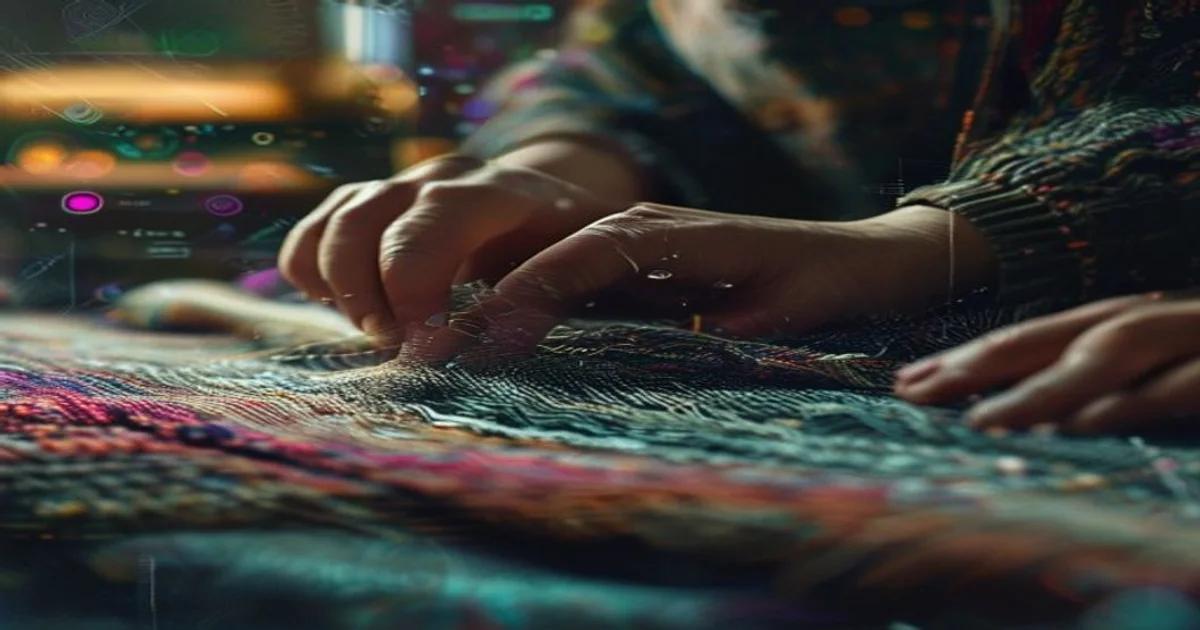
These domains are perhaps most directly impacted by discussions of AI and automation. The skill in operating a loom, shaping clay on a wheel, or carving wood is deeply physical and intuitive. AI can help in pattern design, optimizing material use, or even controlling automated machinery that assists human operators. However, the 'feel' of the yarn, the 'throw' of the clay, the 'grain' of the wood – these are tactile experiences that inform the artisan's decisions. Preserving these crafts will involve documenting techniques meticulously, creating accessible learning resources, and marketing the unique value of human-made imperfections and the story of the maker.
- AI to analyze wood grain for optimal cutting patterns.
- 3D printing to create complex molds for pottery.
- Automated looms guided by AI for intricate textile designs.
Conclusion: A Collaborative Future
The dialogue surrounding AI and human craft is not about whether one will triumph over the other, but how they can coexist and even collaborate. By embracing AI as a tool for documentation, education, and augmentation, while fiercely protecting the core values of human skill, creativity, and narrative, we can ensure that craftsmanship continues to enrich our lives. The future belongs to those who can blend the precision of algorithms with the passion of human spirit, creating a world where innovation and tradition dance hand in hand. The challenge is significant, but the opportunity to redefine and elevate human artistry in the digital age is even greater. We must be proactive, thoughtful, and committed to preserving the irreplaceable essence of human creation.