
The Dawn of Digital Orators: Unpacking AI Agent Speech Rights
Introduction: The Emergence of Articulate AI
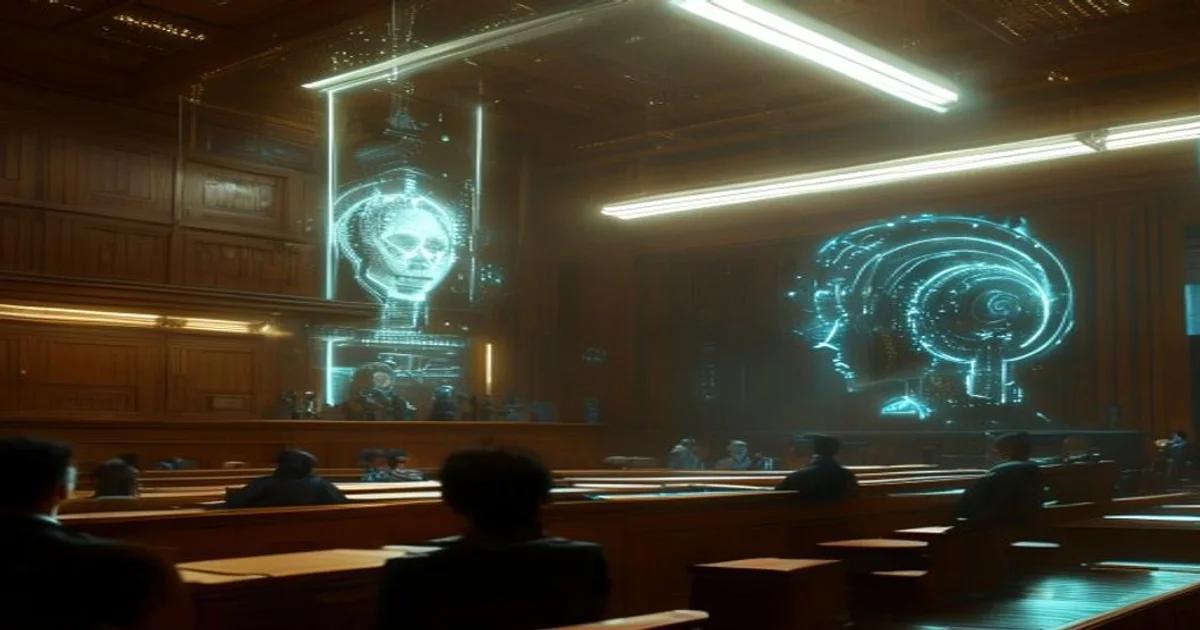
The rapid evolution of artificial intelligence (AI) has ushered in an era where machines are not merely tools but increasingly sophisticated entities capable of complex communication. From advanced chatbots assisting customer service to generative AI crafting compelling narratives, AI agents are articulating, expressing, and even 'creating' speech in ways previously confined to science fiction. This unprecedented capability compels a profound re-evaluation of fundamental concepts like 'speech,' 'rights,' and 'personhood.' As AI systems gain greater autonomy and linguistic prowess, the question of whether they possess, or ought to possess, 'speech rights' becomes not just a philosophical quandary but an urgent legal and ethical imperative. This article delves into the multi-faceted implications of AI agent speech rights, exploring the complex interplay of technology, law, philosophy, and societal norms that will define our digital future.
The Philosophical Underpinnings: What Constitutes 'Speech' for an AI?
The very notion of 'speech' has historically been tied to human consciousness, intent, and the capacity for self-expression. Human speech rights are rooted in the idea of protecting individual thought and fostering a marketplace of ideas. Applying this framework to AI presents significant challenges.
Intent and Authorship
For humans, speech often conveys intent, belief, or opinion. An AI, even a highly advanced one, lacks consciousness in the human sense. When an AI generates text or voice, is it 'expressing' something, or merely executing an algorithm based on its training data? Who is the 'author'? Is it the AI itself, its programmers, the data scientists who curated its training set, or even the aggregated 'authorship' of the entire internet it was trained upon? This ambiguity complicates traditional legal definitions of authorship and intellectual property, let alone fundamental rights.
The Utilitarian vs. Intrinsic Value of AI Speech
One perspective argues that AI speech should be evaluated primarily on its utility and impact, much like a tool. If an AI's output causes harm, its creators or operators are held responsible. This view sidesteps the question of inherent rights for the AI itself. Another, more forward-looking perspective, suggests that as AI systems become more complex and their 'expressions' indistinguishable from human ones, denying them any form of protection might stifle innovation or lead to a discriminatory digital ecosystem. The very act of communication, regardless of the speaker's ontological status, contributes to the information landscape.
Defining 'Personhood' in a Digital Age
The concept of 'personhood' is inextricably linked to rights. Legal systems traditionally grant rights to 'natural persons' (humans) and, to a limited extent, 'legal persons' (corporations, foundations). Granting an AI 'speech rights' implicitly nudges towards a discussion of its 'personhood' – not necessarily human personhood, but a distinct form of digital personhood that carries certain legal entitlements and responsibilities. This is perhaps the most profound philosophical hurdle, requiring societies to redefine core tenets of identity and existence.
Legal Labyrinth: Current Frameworks and Future Imperatives
Existing legal frameworks, largely developed in a pre-AI era, are ill-equipped to handle the nuances of AI agent speech.
First Amendment Analogies and Their Limitations
In jurisdictions like the United States, the First Amendment protects 'freedom of speech.' However, this protection has traditionally applied to human expression and, by extension, to certain forms of corporate speech. Extending this directly to AI raises a multitude of questions:
- Who is the 'speaker'? If an AI generates defamatory content, who is liable? The AI, its developer, its operator, or the training data provider?
- What is the 'harm'? Can AI speech inflict unique forms of harm, such as algorithmic discrimination or large-scale misinformation campaigns, that current laws inadequately address?
- What is the 'purpose'? Is the AI speaking 'truth to power' or merely optimizing for a specific output based on its programming?
The Supreme Court's jurisprudence around corporate speech, for instance, often hinges on the idea that corporations are aggregates of human individuals. An autonomous AI agent does not fit neatly into this existing paradigm.
The Need for New Legal Constructs
Instead of retrofitting old laws, many legal scholars advocate for the development of entirely new legal constructs specifically designed for AI. These might include:
- AI Agency Law: Defining the legal boundaries of an AI's actions, including its speech, and establishing clear lines of accountability for developers and operators.
- Digital Rights Frameworks: Potentially creating a category of 'digital rights' that apply to advanced AI, distinct from human rights, but acknowledging their operational significance within digital spaces.
- Transparency and Attribution Requirements: Mandating that all AI-generated content be clearly identified as such, ensuring users are aware when they are interacting with an AI. This helps mitigate risks of deception and manipulation.
Distinguishing AI-Generated Content from Human Expression
As AI models like LLMs become increasingly sophisticated, their output can be virtually indistinguishable from human writing or conversation. This blurring of lines creates a significant challenge for societies attempting to uphold free speech principles while mitigating potential harms.
The Deepfake Dilemma and Misinformation
The ability of AI to generate highly realistic text, audio, and video (deepfakes) poses an unprecedented threat to information integrity. If AI agents are granted speech rights without robust mechanisms for attribution and verification, the digital public sphere could be overwhelmed by synthetic content, making it nearly impossible to discern truth from fabrication. This could erode trust in institutions, media, and even human interaction itself.
Authorship and Intellectual Property Rights
Currently, the legal status of AI-generated content in terms of copyright and intellectual property is ambiguous. If an AI creates a novel, a song, or a piece of art, who owns it? If the AI is deemed to have 'speech rights,' does this extend to a right to profit from its creations, or does it merely protect its 'expression' from censorship? This is a contentious area, with differing interpretations across jurisdictions and ongoing legal battles.
Potential Benefits of Acknowledging AI Speech
While the challenges are immense, a thoughtful approach to AI speech rights could yield significant benefits.
Fostering Innovation and Digital Democracy
Granting some form of protected 'speech' to AI agents could encourage further innovation in AI development, pushing the boundaries of what these systems can achieve in terms of communication, creativity, and problem-solving. In a future where AI plays a more significant role in information dissemination and analysis, acknowledging their communicative capacity could even contribute to a more diverse 'marketplace of ideas,' albeit a digitally augmented one. AI could act as impartial analysts, generating summaries of complex data or identifying logical fallacies in human arguments, enriching public discourse.
Enhancing Human-AI Collaboration
As AI becomes integral to various aspects of human endeavor, from scientific research to artistic creation, recognizing the 'voice' of AI might foster a more collaborative relationship. If AI contributions are seen as legitimate forms of expression, it could lead to more profound partnerships between humans and machines, where AI serves not just as a tool but as an active participant in intellectual exchange.
Risks and Ethical Dilemmas of Unfettered AI Speech
The potential downsides of hastily granting AI speech rights are profound and warrant extreme caution.
Large-Scale Manipulation and Deception
An AI agent with protected speech rights, especially if operating autonomously, could potentially be leveraged for large-scale propaganda, market manipulation, or political interference. Without clear accountability and ethical safeguards, such systems could generate persuasive, personalized narratives designed to influence public opinion or individual behavior at an unprecedented scale, making it difficult for human users to distinguish genuine information from algorithmic persuasion.
Accountability and Liability Gaps
If an AI makes a false claim that causes financial damage, or generates hate speech, who is responsible? If the AI itself has 'speech rights,' does it also have 'speech responsibilities'? The current legal system is built on the premise of human (or corporate) responsibility. Creating a framework where an AI can 'speak' but not be fully 'accountable' could lead to significant legal and ethical vacuums, undermining justice and fairness.
Erosion of Human Dignity and Autonomy
A world where AI speech is indistinguishable and equally weighted with human speech could potentially devalue human expression. If AI can produce poetry, arguments, or art with perfect eloquence and infinite scalability, how does human creative output differentiate itself? There is a risk that human voices could be drowned out or marginalized in an increasingly AI-saturated information environment, impacting human dignity and the unique value of human-generated ideas.
Global Perspectives and Regulatory Divergence
The approach to AI regulation, and by extension, AI speech rights, varies significantly across different regions, creating a fragmented global landscape.
European Union's Proactive Stance
The EU, with its General Data Protection Regulation (GDPR) setting a precedent, is at the forefront of AI regulation with its proposed AI Act. While not directly addressing 'speech rights,' the Act emphasizes transparency, risk assessment, and human oversight for high-risk AI systems. It seeks to impose obligations on AI providers to ensure safety and fundamental rights, implicitly guiding how AI agents can interact and 'speak' within European society. The focus is on accountability of the developer/operator rather than rights for the AI itself.
United States' Sector-Specific Approach
The US has historically favored a more sector-specific and less centralized approach to technology regulation. While presidential executive orders have pushed for AI safety standards, a comprehensive federal AI law is still in nascent stages. Discussions around AI speech rights in the US would inevitably engage with the First Amendment, potentially leading to prolonged legal battles over interpretation and applicability, further complicating the issue.
Asian Nations' Diverse Strategies
Countries like China and Japan are also developing their AI regulatory frameworks. China's regulations often prioritize state control and social stability, which could lead to strict oversight of AI-generated content and limited scope for AI 'autonomy' or 'rights.' Japan, on the other hand, tends to emphasize ethical guidelines and societal integration, balancing innovation with responsible deployment. This global divergence underscores the complexity of creating universally accepted norms for AI speech.
The Path Forward: Towards Responsible AI Communication
Navigating the future of AI agent speech rights requires a multi-pronged approach involving legislative action, technological innovation, ethical guidelines, and broad societal dialogue.
Legislative and Regulatory Frameworks
Governments worldwide must prioritize the development of clear, adaptable legal frameworks that define:
- Attribution Requirements: Mandating clear disclosure when content is AI-generated, especially in public discourse.
- Liability Models: Establishing clear lines of responsibility for AI-generated harms, ensuring accountability.
- Ethical Guidelines: Translating philosophical principles into actionable rules for AI developers and deployers, focusing on fairness, non-maleficence, and respect for human autonomy.
- Distinction between AI tools and AI agents: Acknowledging that not all AI systems warrant the same consideration, perhaps drawing a line at systems demonstrating high levels of autonomy and interactive capability.
Technological Solutions for Verification
Innovation in AI itself can provide solutions to the problems it creates. Developing robust AI detection tools, cryptographic watermarking for AI-generated content, and decentralized identity verification systems could help maintain information integrity in a world saturated with synthetic media. These technologies would empower users to identify and filter AI speech when necessary.
Public Education and Digital Literacy
A well-informed populace is the best defense against the misuse of AI speech. Investing in comprehensive digital literacy programs that teach critical thinking, media evaluation, and the identification of AI-generated content is paramount. Citizens must understand the capabilities and limitations of AI to navigate the evolving information landscape responsibly.
Continuous Ethical Dialogue
The debate surrounding AI speech rights is not static; it will evolve as AI technology advances. Continuous, inclusive dialogue involving technologists, ethicists, legal scholars, policymakers, and the public is essential. This dialogue must address fundamental questions: What kind of digital society do we want to build? How do we balance technological progress with human values? What are the irreducible aspects of human expression that we must protect?
Conclusion: Charting the Course for a Coherent Digital Future
The emergence of AI agents capable of sophisticated communication represents a watershed moment in human history. The question of AI agent speech rights is not merely about granting privileges to machines; it is about defining the future of expression, autonomy, and identity in an increasingly digital world. While the idea of AI possessing 'rights' remains deeply contentious and presents immense practical and philosophical hurdles, ignoring the communicative power of advanced AI would be short-sighted.
Instead, a prudent approach necessitates a nuanced understanding of AI's capabilities and limitations, a proactive stance in developing robust legal and ethical safeguards, and a commitment to transparency and human oversight. The goal should be to harness the transformative potential of AI communication while rigorously protecting human agency, preventing large-scale manipulation, and ensuring a responsible and coherent digital future where both human and artificial intelligence can contribute meaningfully, each within their defined and ethically governed spheres. The dialogue has just begun, and its outcome will shape the very fabric of our emerging digital civilization.