
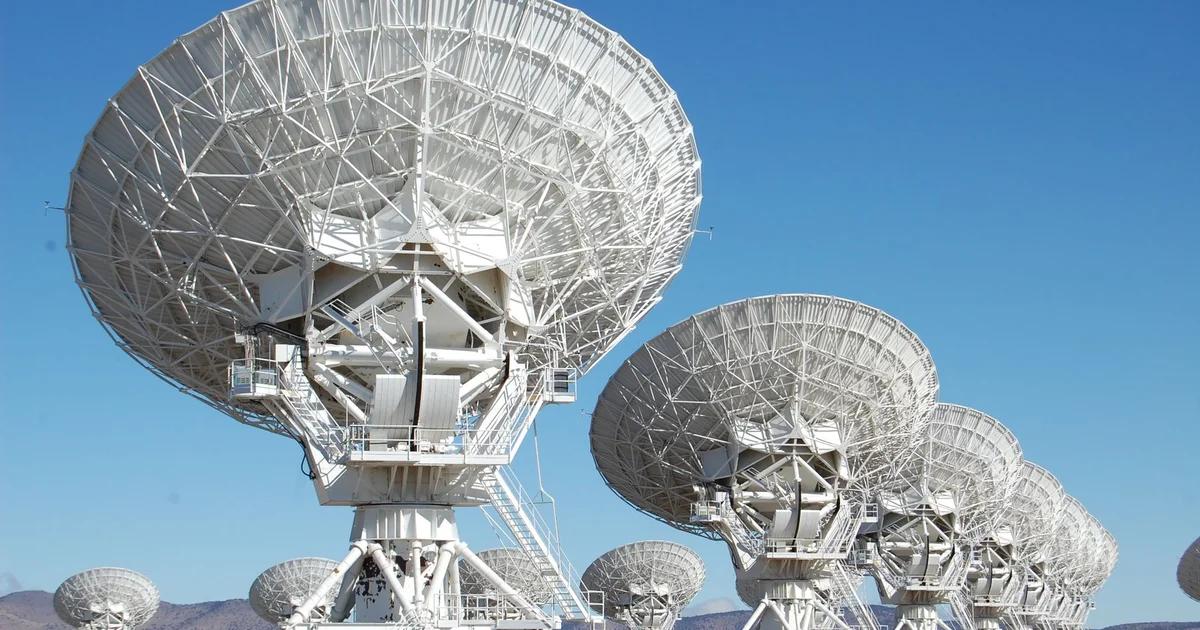
The New Frontier of Cosmic Signal Processing
The search for extraterrestrial intelligence (SETI) has entered a paradigm shift. For decades, researchers relied on manually defined algorithms and static thresholds to parse the overwhelming volume of electromagnetic data streaming from the cosmos. Today, AI-driven adaptive astrobiological signal classification is replacing these archaic methods with fluid, self-learning frameworks capable of detecting signatures that were previously indistinguishable from background noise.
Challenges in Signal Detection
Space is inherently noisy. Between pulsars, quasars, and the 'technosignature' clutter of our own planetary orbit, distinguishing a meaningful signal from a random burst is a challenge of astronomical proportions. Traditional signal processing techniques often fail because:
- They rely on predefined expectations of what a 'signal' looks like
- They lack the capacity to evolve as new interference sources emerge
- They suffer from immense latency between data ingestion and categorization
'The challenge is not finding the needle in the haystack, but teaching the system to recognize that a needle might not be metallic,' notes leading research in neural network architecture.
The Role of Neural Networks in Astrobiology
By leveraging Deep Learning, specifically Convolutional Neural Networks (CNNs) and Transformers, scientists can now train models on millions of 'noise-injected' simulations. These models learn the underlying statistical architecture of cosmic radiation. When an anomaly appears, the AI does not just flag it; it evaluates it against a dynamic library of known physical phenomena.
Adaptive Learning Mechanics
Unlike static software, adaptive systems utilize a feedback loop. When the system encounters a signal that falls into a 'grey area'—high entropy but low correlation with known interference—it automatically triggers a re-calibration of its sensitivity filters. This ensures that the system becomes more nuanced over time, essentially learning from the very universe it monitors.
Data Science and the Future of Biosignatures
As we look toward the next generation of radio telescope arrays, the velocity of incoming data will exceed the capacity of human review. The integration of high-performance AI chips and distributed computing allows for the classification of signals at the edge, meaning the data is processed at the telescope site before being transmitted for deeper study. This minimizes bandwidth bottlenecks and maximizes the efficiency of the search.
Mitigating Human Error and Bias
One of the most significant advantages of machine learning in this field is the elimination of observer bias. Human researchers often tend to 'see' patterns in data that align with their own terrestrial experiences. An algorithm trained on pure physics-based parameters and multi-spectral entropy analysis provides a detached, purely mathematical evaluation, increasing the credibility of any reported discovery.
Ethical Implications and Technical Constraints
While the technology is transformative, it is not without constraints. We must ensure that our classification frameworks remain transparent. A 'black box' AI that flags a signal as 'biological' without providing a verifiable derivation path is scientifically insufficient. Consequently, the industry is moving toward Explainable AI (XAI), where every classification decision must be accompanied by a visual or mathematical proof of the features that triggered the alert.
Moreover, the security of these systems is paramount. As we automate the detection of potential contact, we must ensure these systems are hardened against adversarial attacks—false signals designed to trigger global panic or research waste. By applying cybersecurity principles to astrobiology, we ensure the integrity of our search for life remains uncompromised.
Conclusion: Toward a Synthetic Understanding of the Cosmos
The marriage of artificial intelligence and astrobiology is not merely a convenience; it is a necessity for the survival of the SETI mission. As our capabilities in deep space observation grow, so too must our tools for understanding the signals we receive. By moving to adaptive, self-correcting models, we are finally positioning ourselves to listen to the universe with the clarity it deserves. We are no longer just looking at the stars; we are training our technology to listen to the whisper of the unknown with unprecedented precision.