
The Dawn of Intuitive Mobility
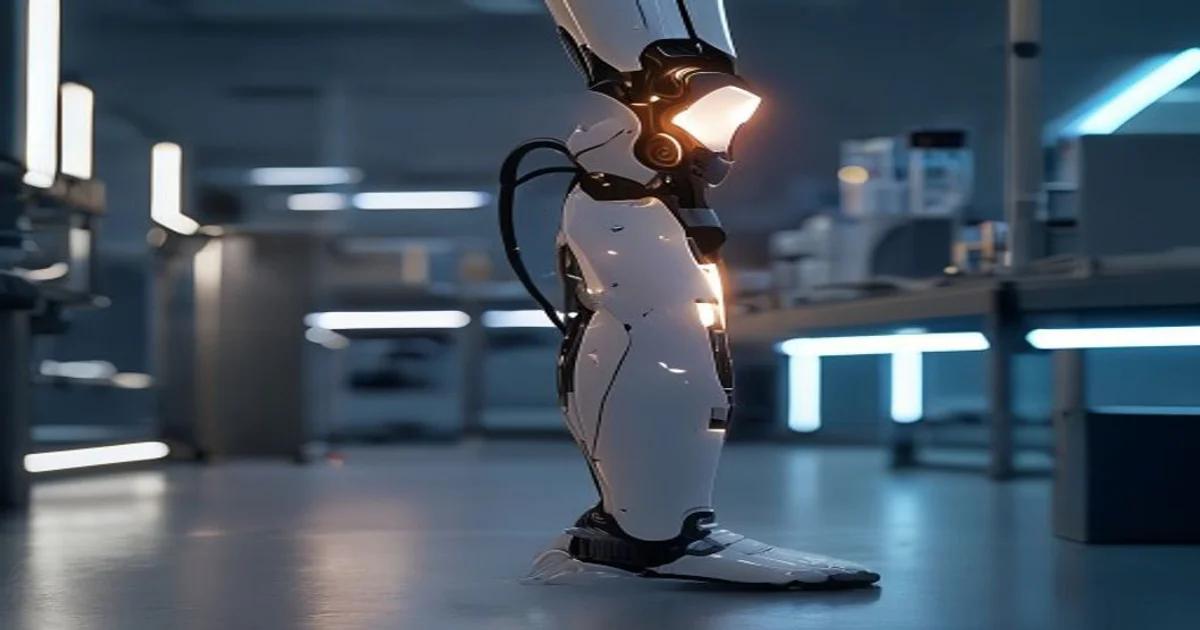
The intersection of robotics and artificial intelligence has reached a transformative milestone with the development of adaptive prosthetic gait systems. For decades, amputees relied on passive mechanical devices that provided structural support but lacked the nuanced fluidity of biological limbs. Today, we are witnessing a paradigm shift where AI-driven prosthetics act as extensions of the human nervous system, transforming how individuals navigate their physical reality.
The Mechanics of Intent Recognition
Modern adaptive prostheses utilize advanced sensor arrays, including gyroscopes, accelerometers, and surface electromyography (sEMG) sensors. These components collect massive amounts of kinetic and physiological data. By employing deep learning models, the prosthetic can distinguish between walking on flat ground, climbing stairs, or navigating rugged outdoor trails. The system does not merely react to motion; it anticipates the user\'s intent by analyzing the activation patterns of residual limb muscles.
'True mobility is not just about the ability to move; it is about the freedom to choose how you move without constant mental intervention.'
The Role of Machine Learning in Real-Time Adaptation
At the core of these systems lies a sophisticated algorithm trained on thousands of gait cycles. When a user traverses a slope, the AI processes the torque requirements and adjusts joint impedance in milliseconds. This adaptive control loop ensures that the prosthetic\'s response is synchronized with the user\'s phantom limb sensations and physical momentum. Through continuous learning, the device refines its model over time, becoming more personalized to the specific biomechanical nuances of the wearer.
Overcoming Cognitive Load
One of the greatest challenges in prosthetic design is the high mental effort required to operate early robotic limbs. Traditional devices often forced users to trigger specific modes manually. AI-driven adaptive gait eliminates this bottleneck. By moving the decision-making process from the user\'s brain to the local on-board processor, the prosthetic becomes autonomous. This reduces fatigue and allows for a more natural, subconscious gait cycle that resembles biological walking.
Challenges and Future Horizons
While the technology is revolutionary, significant hurdles remain. Edge computing capabilities on the prosthetic must be optimized to balance battery life with processing power. Furthermore, the integration of sensory feedback remains an area of active research. Developers are now looking toward neural interfaces that provide haptic feedback, allowing users to 'feel' the texture of the ground through their device. This is the next frontier of human-machine symbiosis.
- Improved balance and fall prevention metrics
- Reduction in secondary joint pain for amputees
- Increased adoption of sophisticated rehabilitation protocols
- Integration with IoT platforms for remote monitoring by clinicians
As we look ahead, the synthesis of AI and biomechanics promises to blur the lines between human and synthetic capabilities. The goal is no longer just restoring function, but achieving a level of performance that empowers users to pursue activities once thought impossible. From long-distance trekking to complex athletic movements, AI-driven adaptive prosthetics are effectively redefining human potential. By leveraging predictive algorithms, we are building a future where mobility constraints are essentially erased by silicon and code.