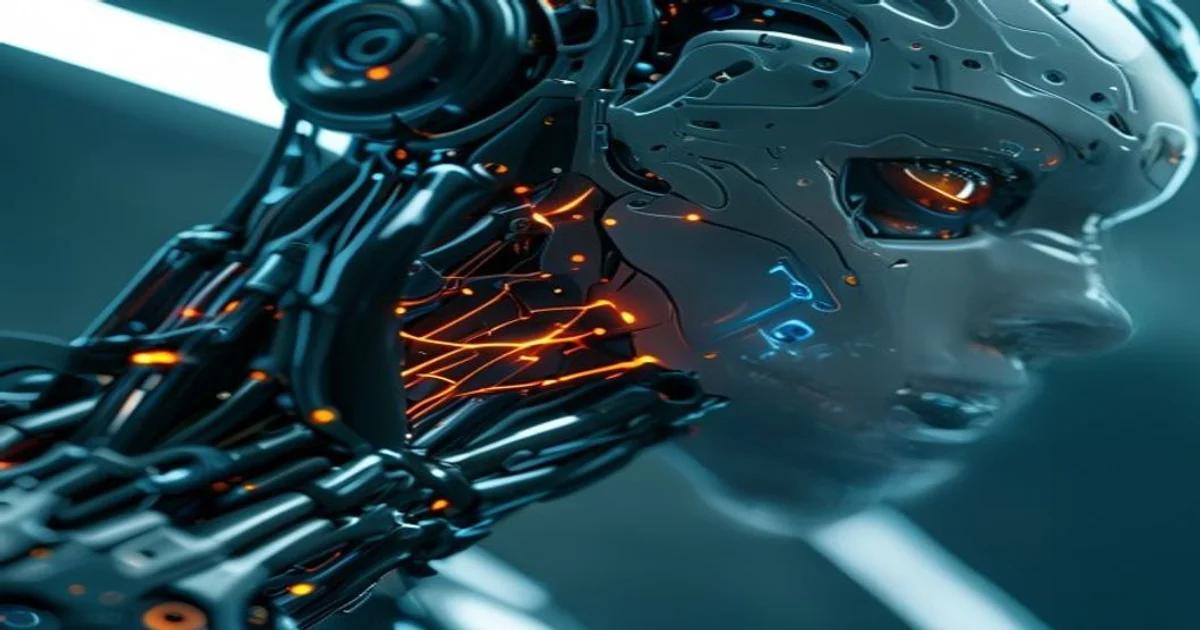
The Convergence of Biology and Silicon
The field of prosthetics has undergone a monumental shift in recent years, moving from simple mechanical devices to sophisticated, intelligent systems. At the heart of this evolution is AI-driven adaptive prosthetic orchestration—a multidisciplinary approach that blends robotics, neuroscience, and advanced machine learning to grant users unprecedented control over their artificial limbs. By interpreting complex biological signals and translating them into fluid, intentional movements, these devices are fundamentally altering the human experience.
Decoding the Neural Blueprint
At the core of adaptive orchestration lies the challenge of signal interpretation. The human brain is a marvel of efficiency, sending millions of electrical impulses to our limbs every second. Traditional prosthetics relied on basic myoelectric sensors, which were often cumbersome and prone to error. Today, AI models are trained on massive datasets of nerve activity, allowing them to decode patterns that were previously unreadable.
'True integration happens when the prosthetic becomes an extension of the user's intent rather than a tool they operate with cognitive effort.'
By leveraging deep learning, these systems learn the unique neural signatures of an individual user, effectively training a 'digital twin' of the limb that resides within the device's control architecture. This allows for 'predictive intent,' where the prosthetic begins the movement before the user has fully completed the muscle contraction.
The Architecture of Adaptation
An AI-driven prosthetic is more than just hardware; it is an ecosystem of sensors, actuators, and software. Adaptive orchestration requires a continuous feedback loop that accounts for environmental factors, such as surface texture, temperature, and grip requirements. If a user reaches for a glass of water, the prosthetic does not just close its grip; it modulates the force based on tactile feedback processed through a neural network, preventing the glass from slipping or shattering.
Multi-Modal Sensor Fusion
- Myoelectric Arrays: High-density sensors capturing muscle fiber activation patterns.
- Haptic Feedback Sensors: Providing sensory data back to the user through nerves.
- Computer Vision Integration: Using small cameras on the wrist to identify object shapes.
- Inertial Measurement Units (IMUs): Tracking limb orientation in three-dimensional space.
By fusing these diverse data streams, the AI orchestrator creates a robust model of the world, allowing the prosthetic to switch between 'modes' of operation automatically. Whether the user is typing on a keyboard, shaking a hand, or lifting a heavy box, the system adjusts its mechanical impedance to suit the task at hand.
Overcoming the Cognitive Burden
One of the most significant barriers to prosthetic adoption is the mental strain required to 'operate' the limb. Early designs demanded intense focus, often leading to fatigue. Adaptive orchestration solves this through automation. Much like the autonomic nervous system handles breathing and heart rate, an AI-enabled prosthetic handles the micro-adjustments of grip and balance.
This shift from conscious control to subconscious orchestration is the 'holy grail' of bionics. It allows users to focus on their life, their work, and their interactions, rather than the mechanical limitations of their limb. The device effectively disappears into the user's identity, becoming a seamless part of their physical presence.
The Future of Embodied AI
Looking forward, we are seeing the emergence of 'embodied AI'—systems that learn and adapt in real-time through physical interaction. This is not static code; it is a living, evolving software stack that updates as the user develops new muscle patterns or encounters new environments. The implications for the disabled community are profound, potentially restoring not just function, but also confidence and social autonomy.
Ethical and Technical Considerations
As these devices become more autonomous, we must grapple with the ethics of neural data. Who owns the data generated by the interface between human nerves and machine sensors? How do we ensure these systems are secure against digital intrusion? These questions are as critical as the hardware engineering itself.
Security in prosthetics is not just a digital concern—it is a physical safety concern. Robust encryption and localized 'edge' processing are required to ensure that the prosthetic responds only to the wearer's intent, preventing unwanted interference. We are moving toward a future where privacy and safety are built into the hardware layer, ensuring that the connection between human and machine remains sacred.
Final Thoughts
AI-driven adaptive prosthetic orchestration represents the zenith of human-machine symbiosis. By prioritizing the user's intent and automating the complexities of physical interaction, we are entering an era where disability is no longer a definition of limitation, but a starting point for augmented human ability. As we continue to refine the neural interfaces and the underlying algorithms, the barrier between the organic and the synthetic will continue to fade, bringing us closer to a future where everyone has the tools to thrive in a high-tech world.