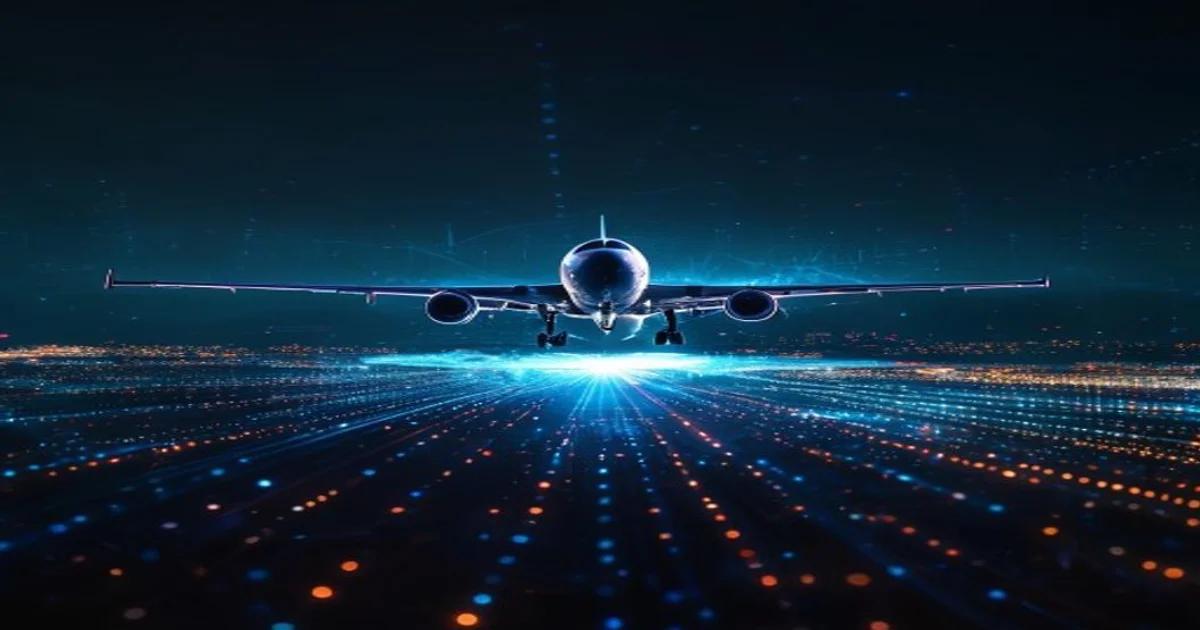
The Silent Revolution in Modern Aerospace
As global air travel continues to expand, the intersection of aerospace engineering and artificial intelligence has become the primary battleground for solving the persistent challenge of airport noise. Noise pollution is no longer an unavoidable byproduct of flight; it is now a manageable parameter through Machine Learning and advanced predictive modeling. By utilizing sophisticated data sets and real-time atmospheric inputs, aviation authorities are redefining what it means to be a 'good neighbor' to airport-adjacent communities.
Optimizing Trajectories via Deep Learning
The traditional approach to flight path management relied on static, pre-defined corridors that failed to account for changing weather patterns, wind speeds, or temporal noise sensitivity. Today, AI-driven platforms can calculate 'Continuous Descent Operations' (CDO) with unprecedented precision. By leveraging complex algorithms, aircraft can maintain idle power during descent, significantly reducing the noise footprint for landing approaches.
'The integration of AI allows us to treat the airspace as a dynamic, living environment rather than a static map, ensuring that noise energy is dispersed away from population centers.'
Real-Time Acoustic Monitoring Networks
The deployment of smart sensor arrays around major international airports creates a feedback loop that feeds into centralized AI hubs. These systems use neural networks to classify specific aircraft types and engine sounds, allowing for immediate corrective actions or adjustments to operational procedures. This data-driven strategy ensures that compliance with noise ordinances is not just reactive, but proactive.
Advancements in Engine Acoustics and Predictive Analytics
Beyond flight paths, the engine itself is undergoing a transformation driven by computational fluid dynamics (CFD) enhanced by AI. Engineers now utilize generative models to simulate thousands of blade geometries, searching for configurations that produce minimal turbulence without sacrificing thrust. This synergy between hardware design and software intelligence is the hallmark of the modern aerospace era.
- Automated Noise Abatement Procedures (ANAP): AI systems now suggest optimal departure vectors based on current humidity, temperature, and population density.
- Dynamic Sequencing: Optimizing the timing of aircraft movements to minimize the 'stacking' effect that contributes to persistent noise.
- Predictive Maintenance: Monitoring engine performance trends to flag parts that may cause abnormal acoustic signatures before they result in noise violations.
The Future of Smart Air Traffic Management
The ultimate goal of current innovation efforts is the 'Autonomous Quiet Airspace.' In this future scenario, a centralized AI controller would manage thousands of flights simultaneously, shifting flight paths by mere meters to align with real-time acoustic sensors. This level of granularity would be impossible for human air traffic controllers to execute without the computational speed of modern AI systems. The potential for reducing community disturbance is immense, provided that the underlying algorithms prioritize safety and efficiency alongside noise mitigation.
Challenges and Ethical Considerations
While the technological progress is undeniable, the implementation of AI-driven noise mitigation faces significant hurdles. Cybersecurity remains a top concern, as flight path manipulation could be a target for malicious actors. Furthermore, there is the issue of fairness; how does an AI prioritize which neighborhoods receive less noise when flight paths must inevitably cross somewhere? These policy questions are currently at the forefront of aviation board discussions. Transparency in how these models are trained is essential to ensure that the benefits of quiet skies are distributed equitably across all demographics.
Strengthening Sustainability Through Automation
Sustainability is the broader context in which noise mitigation operates. By reducing drag through AI-optimized routing, airlines are also burning less fuel. This represents a rare win-win situation where technology simultaneously lowers carbon emissions and noise pollution. The transition to a more automated aviation system will require significant infrastructure upgrades, including 5G-connected telemetry and upgraded cockpit instrumentation. However, the long-term ROI in terms of airport capacity and public support is clear.
The Role of Data Science in Global Standards
As more airports adopt these systems, the aviation industry is beginning to establish global standards for noise mitigation data sharing. By aggregating insights from airports worldwide, researchers can train even more robust models that work under diverse environmental conditions. Whether it is an airport in a mountainous region or one on a flat coastal plain, the adaptability of AI ensures that every flight can be as quiet as the laws of physics allow.
Ultimately, the future of flight is not just about faster or larger planes, but about how gracefully we can integrate our aerospace systems into the daily lives of humans on the ground. Through the rigorous application of AI and constant iteration of algorithmic efficiency, we are entering an era where the roar of the jet engine is increasingly refined by the whispers of intelligent software.