The New Frontier of Oceanic Exploration
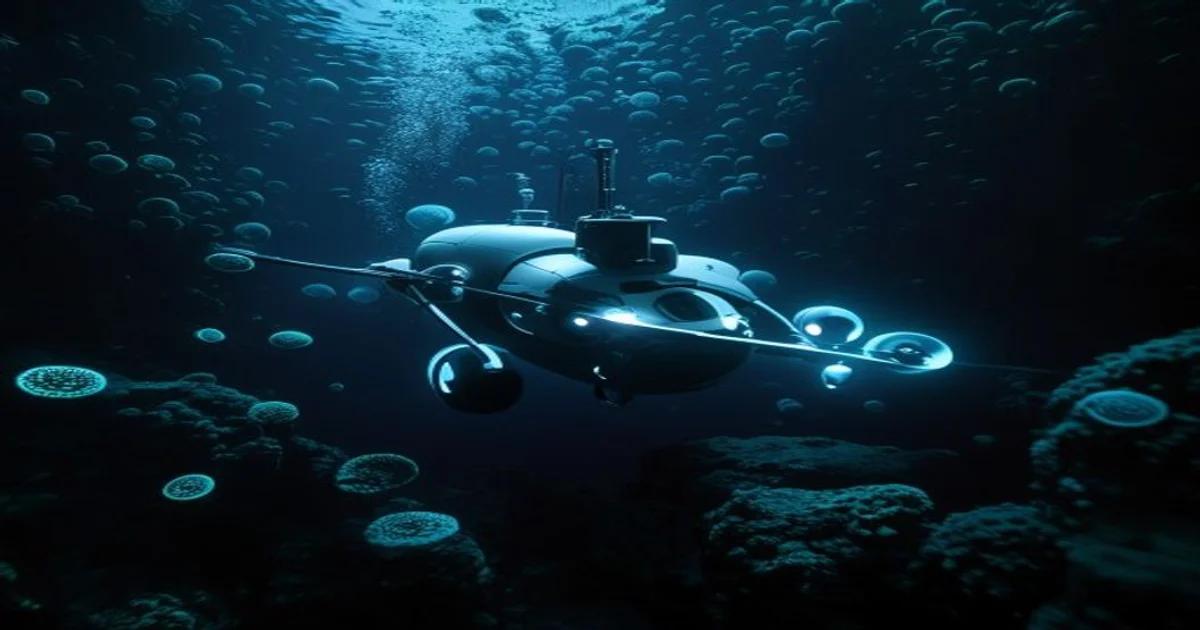
The deep ocean remains one of the least explored environments on Earth, often described as the final terrestrial frontier. Historically, mapping the microbial life within this vast expanse required months of physical sampling and painstaking laboratory analysis. Today, the convergence of Artificial Intelligence and advanced submersibles is catalyzing a shift in how we perceive the deep-sea biome. By deploying sophisticated machine learning algorithms directly into autonomous underwater vehicles (AUVs), scientists are mapping the invisible structures of the ocean's microbial life with unprecedented efficiency.
The Complexity of Deep-Sea Microbiomes
Deep-sea microbiomes are the engines of the ocean's nutrient cycling. These communities, often thriving in extreme conditions such as hydrothermal vents or cold seeps, host bacteria and archaea that have adapted to high pressure and zero light. Understanding these organisms is not just a quest for taxonomic knowledge; it is a search for novel biological compounds that could lead to medical breakthroughs. However, the sheer volume of environmental DNA (eDNA) recovered from these depths creates a "data bottleneck" that traditional manual analysis cannot resolve.
'The integration of AI into deep-sea exploration marks the transition from random sampling to systematic mapping of the ocean's microbial architecture.'
Machine Learning in Genomic Sequencing
Recent advancements in Data Science have allowed researchers to feed raw genomic data into neural networks that can identify taxonomic clusters within hours rather than years. These models are trained on global microbial databases, enabling the AUVs to distinguish between known species and potentially new, extremophilic life forms. This allows researchers to prioritize specific areas of the sea floor for detailed scrutiny, effectively turning the ocean floor into a searchable, high-resolution dataset.
Bridging the Gap Between Hardware and Intelligence
One of the most significant challenges in deep-sea mapping is connectivity. AUVs operate in environments where radio frequencies are nonexistent. Therefore, the intelligence must reside within the machine. By utilizing edge-computing, these robots analyze sensor data locally, discarding redundant information and saving high-value observations for transmission upon surfacing. This is a form of Innovation that changes the economics of oceanic research.
- Automated Feature Extraction: AI models identify patterns in bacterial concentration gradients.
- Real-time Anomaly Detection: Systems flag unusual biological activity at hydrothermal vent sites.
- Predictive Habitat Modeling: Data is used to forecast microbial responses to rising ocean temperatures.
The Role of Neural Networks in Ecosystem Stability
Beyond identification, AI is helping scientists visualize the relationships between microbial groups. By building complex interaction graphs, neural networks illustrate how these organisms influence carbon sequestration in the deep ocean. These insights are critical for global climate policy, as the deep-sea microbiome is a key player in the carbon cycle. When AI models accurately represent these interactions, they provide a clearer picture of how human-induced changes might threaten the stability of the entire oceanic ecosystem.
Ethics and Future Implications
The ability to map these regions comes with the responsibility of preservation. There is a growing movement to ensure that this data is open-access and used primarily for conservation. As we uncover the secrets of the deep, the AI that guides us must remain transparent and robust against bias. The future of this technology lies in swarm-robotics, where a fleet of AUVs acts as a distributed sensory system, constantly feeding data back to global climate models.
Ultimately, the mapping of deep-sea microbiomes is more than a technical achievement; it is a necessary evolution in our understanding of life's resilience on this planet. By combining the power of modern computing with the mysteries of the deep, we are not just observing the abyss, but learning to listen to the silent chemical languages that have kept the ocean alive for billions of years.