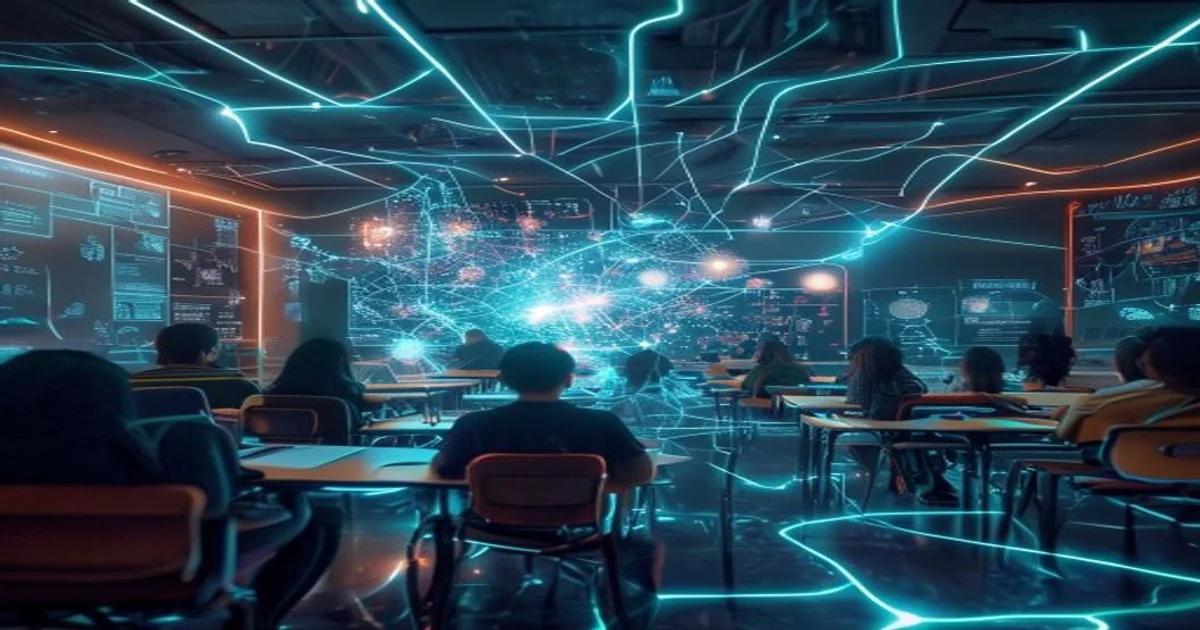
The Shift Toward Intelligent Pedagogical Frameworks
The traditional educational model, characterized by standardized curricula and synchronous progression, is undergoing a profound transformation. As we navigate the complexities of the digital age, the integration of artificial intelligence is no longer a luxury but a necessity. AI-Driven Dynamic Personalized Education Pathways represent the next frontier in pedagogical evolution, moving away from a collective instructional pace to a granular, student-centered experience.
Understanding Dynamic Learning Architectures
At its core, dynamic personalization utilizes sophisticated Algorithms to assess a student's cognitive baseline, learning pace, and emotional engagement. Unlike legacy software that merely presents static text, modern AI systems act as diagnostic agents. They observe how a student interacts with complex concepts—identifying the exact moment a learner encounters friction—and adjust the instructional delivery accordingly.
'Education is not the filling of a pail, but the lighting of a fire.' — The application of AI ensures that every student finds the right spark for their unique intellectual curiosities.
The Mechanics of Cognitive Adaptive Systems
Deep learning models analyze vast datasets of pedagogical interactions. By identifying patterns that correlate with high mastery levels, these systems can reroute a student to alternative explanatory materials if they fail to grasp a subject on the first attempt. Key components include:
- Real-time Diagnostic Assessment: Continuous evaluation that replaces periodic high-stakes testing.
- Generative Content Synthesis: Using LLMs to create tailored exercises that match the student's current proficiency level.
- Predictive Performance Analytics: Identifying at-risk students before they fall behind, allowing for immediate corrective intervention.
Overcoming the Constraints of Traditional Schooling
In a standard classroom, a teacher faces the 'Goldilocks' problem: if they teach at the pace of the top students, the rest get left behind. If they slow down for the struggling students, the high performers become disengaged. Digital Transformation in the classroom eliminates this trade-off. Through AI, each student interacts with a private digital tutor that scales its difficulty and complexity precisely to the student's needs.
Ethical Implications and Human-AI Collaboration
While the prospect of machine-led instruction is promising, it is imperative to address the role of the human educator. AI should not be viewed as a replacement for human mentorship. Instead, it acts as a force multiplier. Teachers are liberated from the administrative burden of grading and general content delivery, allowing them to focus on socio-emotional support, project-based collaboration, and the development of critical thinking skills that algorithms cannot currently replicate.
Future-Proofing the Global Workforce
The workforce of tomorrow will require continuous upskilling. Static education systems cannot keep pace with the rapid innovation cycles of the 21st century. Dynamic pathways ensure that professional training programs can adapt in real-time, providing practitioners with the exact knowledge gaps they need to fill to remain competitive in their respective fields.
Navigating the Technical Challenges
Implementing these systems requires a robust infrastructure for data privacy and algorithmic fairness. Bias in training data can lead to skewed educational outcomes, and thus, developers must ensure that the underlying neural networks are trained on diverse, inclusive datasets. Furthermore, the interoperability of learning management systems is critical for creating a seamless educational ecosystem that spans across primary, secondary, and tertiary education levels.
Designing for Accessibility and Inclusion
One of the most profound benefits of AI-driven education is the democratizing effect it has on accessibility. Students with different learning styles, including those with cognitive or physical disabilities, benefit significantly from flexible interfaces. For instance, voice-activated AI can assist students with dyslexia, while vision-based AI can provide descriptions for students with visual impairments, creating a more inclusive learning environment that was previously impossible to manage at scale.
Sustained Engagement Through Gamified Feedback Loops
AI systems excel at maintaining student motivation by integrating behavioral psychology with data science. By providing immediate rewards and recognizing incremental progress, these platforms maintain high engagement levels. This is not about 'gamifying' for the sake of play; it is about providing a continuous feedback loop that builds self-efficacy and confidence. When a student feels that they are mastering a subject, their intrinsic motivation naturally increases, creating a virtuous cycle of academic growth.
Final Thoughts on a Personalized Future
The trajectory of education is firmly pointed toward hyper-personalization. As the technology matures, we will likely see a decline in the dominance of the singular textbook and a rise in modular, AI-curated knowledge streams. By leveraging the power of advanced data science, we can create an educational system that respects the individuality of every learner, ensuring that the next generation is not merely 'educated' in the conventional sense, but truly equipped to navigate the unknown challenges of the future.