The Silent Frontier
The deep ocean remains one of the final frontiers on Earth, a dark and pressurized expanse that covers more than two-thirds of our planet yet remains largely unmapped. For decades, the primary barrier to exploration was the sheer physical impossibility of sending humans into such hostile environments. Today, that narrative is shifting rapidly as AI-driven robotics take the helm. By integrating sophisticated software with durable hardware, researchers are now capable of conducting missions that were once considered the realm of science fiction.
The Shift to Autonomous Exploration
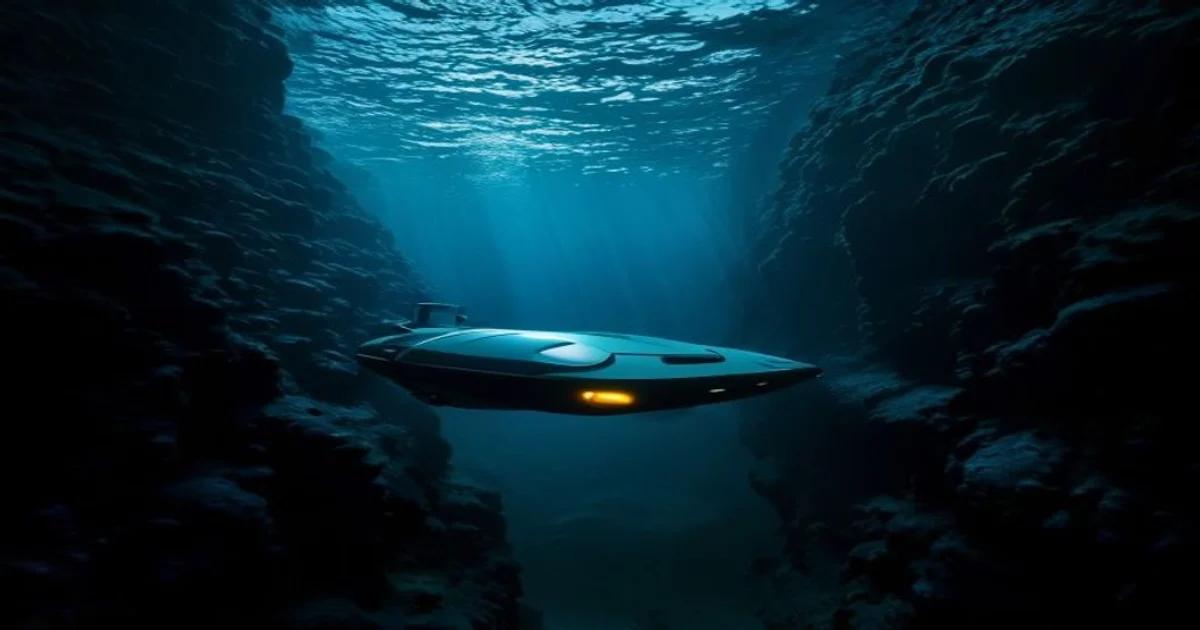
Traditional deep-sea research relied on tethered remotely operated vehicles (ROVs) that required a surface ship and a team of pilots. This process is expensive, slow, and constrained by the ship's operational cycle. The emergence of Autonomous Underwater Vehicles (AUVs) equipped with advanced AI represents a paradigm shift. These vessels no longer require a 'digital leash.' Instead, they are programmed with mission parameters, allowing them to navigate complex underwater topography, avoid hazards, and make independent decisions based on sensor input.
'The integration of edge computing allows these drones to process visual data at the site, effectively turning a simple sensor into a biological expert capable of classifying species in real-time.'
Advancements in Computer Vision
One of the most significant hurdles in marine biology is the vast amount of image data captured during expeditions. Previously, human scientists spent years manually reviewing footage to identify species. Now, deep learning algorithms trained on massive datasets of marine life can label footage with incredible speed and accuracy. This innovation has led to the discovery of hundreds of previously unknown species, accelerating our understanding of biodiversity in the abyss.
Predictive Modeling for Geological Integrity
Beyond biology, the seafloor is a hotbed of tectonic activity. AI models are now utilized to process seismic data to predict the behavior of hydrothermal vents and underwater volcanoes. By analyzing acoustic patterns, these smart systems provide warnings that help protect both underwater infrastructure and coastal human populations from sudden tsunamic shifts.
Overcoming Environmental Constraints
Operating at depths of several kilometers brings unique challenges, primarily the crushing pressure and the complete lack of sunlight. AI has stepped in to solve the navigation problem by utilizing SLAM (Simultaneous Localization and Mapping) technology. These systems allow an AUV to construct a map of its surroundings while keeping track of its own location, ensuring that even in the pitch-black void, the robot never loses its way.
The Future of Oceanic Data Synthesis
We are moving toward a future where a 'mesh network' of underwater drones communicate with one another, effectively covering vast swaths of the ocean simultaneously. This distributed intelligence, or 'swarm robotics,' will eventually allow for the continuous monitoring of the global ocean temperature, acidity, and plastic distribution. The result will be a digital twin of our oceans, updated in near-real-time to assist policymakers in climate change mitigation strategies.
Ethical Implications
As we deploy more autonomous machines into fragile ecosystems, the question of ethics emerges. We must ensure that these robotic systems do not disrupt the delicate balance of life in the deep. Researchers are actively working on 'soft robotics' and low-impact propulsion systems that ensure exploration leaves no footprint behind, maintaining the pristine integrity of the deepest parts of the ocean.
Conclusion
The marriage of high-pressure engineering and advanced artificial intelligence is unlocking the secrets of the deep. As we continue to refine these technologies, the abyss will move from being a mysterious, inaccessible dark zone to a data-rich landscape that provides essential insights into the health of our planet. The exploration of the seafloor is no longer a matter of 'if' or 'when,' but a matter of how effectively we can leverage the silicon intelligence we have created to explore the natural wonders of the water world.