
The New Frontier of Cosmic Security
Planetary defense has long been the subject of science fiction, but today it is a critical scientific endeavor driven by the marriage of observational astronomy and cutting-edge artificial intelligence. As we look to the stars, we recognize that the safety of our biosphere depends on our ability to identify, track, and mitigate the risks posed by near-Earth objects (NEOs). AI is not just a tool in this quest; it is becoming the foundation of our survival strategy.
The Role of Machine Learning in NEO Detection
Traditional detection methods have relied heavily on human-led analysis of telescope imagery. While successful, this approach is limited by the sheer volume of data produced by modern sky surveys. Deep learning architectures now allow us to process petabytes of observational data in near real-time. By utilizing convolutional neural networks (CNNs), researchers can identify 'streaks' in sky survey images that signify moving objects, effectively filtering out noise and static star fields with unprecedented accuracy.
The evolution of AI in planetary defense represents a shift from reactive observation to predictive mastery, ensuring that we no longer fear the unknown but calculate it.
Autonomous Trajectory Analysis
Once a potential impactor is identified, the clock starts ticking. Traditional trajectory analysis often involved weeks of ground-based computation and verification. With AI, we can run millions of orbital simulations in a matter of seconds. By employing Bayesian inference and reinforcement learning, AI systems can weigh varying gravitational perturbations and solar radiation pressure impacts, providing a probabilistic risk assessment that updates dynamically as new data arrives. This shift ensures that decision-makers are provided with a high-fidelity 'impact window' rather than a vague estimate.
Mitigation Strategies: Precision Over Power
When a threat is confirmed, the strategy shifts toward mitigation. Whether utilizing a kinetic impactor or a gravity tractor, precision is paramount. AI-driven robotics and smart systems are essential for deep space navigation. Autonomy is required because the speed of light delay makes real-time human control impossible at millions of kilometers away. AI systems onboard mitigation craft can adjust thrust vectors in milliseconds to compensate for unexpected changes in the asteroid's rotation or mass distribution.
Data Fusion and Global Coordination
Planetary defense is a global challenge that requires the fusion of data from diverse sources, including ground-based observatories, space telescopes, and radar arrays. AI acts as the connective tissue for these disparate systems. Through a unified digital architecture, AI models aggregate data points from around the globe to create a 'gold standard' map of our orbital environment. This collaborative intelligence minimizes human bias and political friction, allowing for a standardized response protocol that is ready to be activated at a moment's notice.
The Future: Neural Networks in Orbit
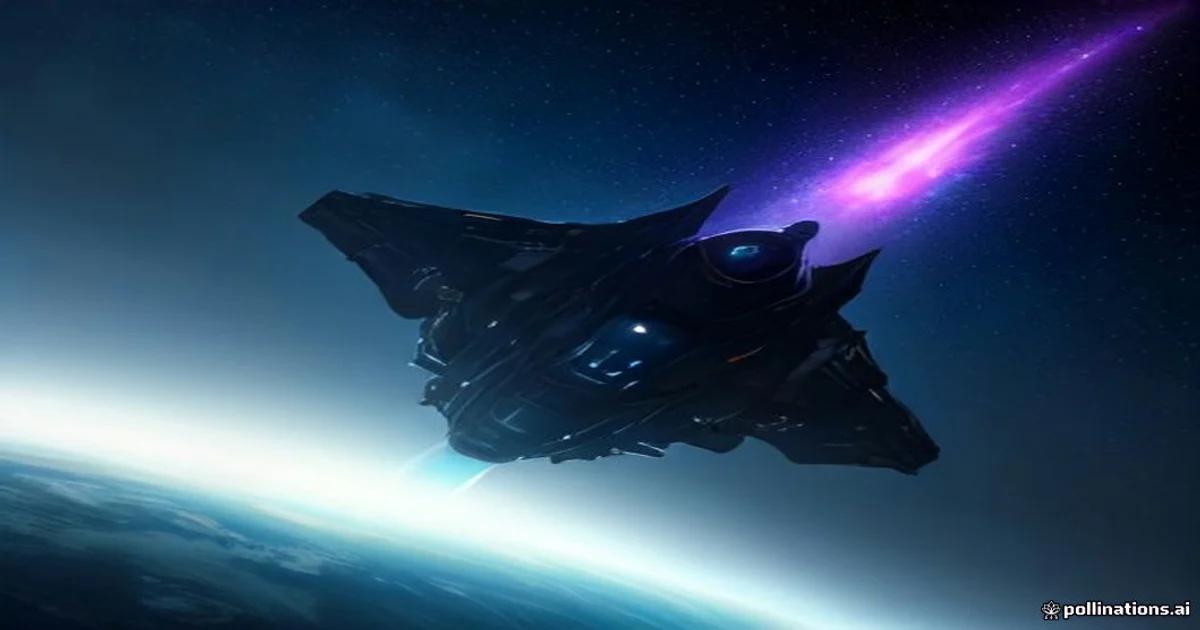
We are approaching a future where autonomous sentinel satellites occupy high-Earth orbits, continuously scanning the ecliptic plane. These platforms will carry onboard edge-computing processors that handle AI inference locally, meaning that the alert latency is reduced to zero. By processing information directly on the sensor, we avoid the bottleneck of data transmission to ground stations. This level of autonomy is the ultimate goal of modern planetary defense.
Overcoming Technical Hurdles
Despite the promise, significant technical challenges remain. Integrating legacy sensor systems with modern AI frameworks requires significant software engineering effort. Furthermore, training these models requires a massive amount of synthetic data, as real-world asteroid impact events are fortunately rare. We must rely on high-fidelity simulations to build the training sets that allow our models to identify the 'needle in the haystack' of deep space.
Ethical and Policy Considerations
As we delegate planetary protection to automated systems, we must also consider the ethics of AI decision-making. Who decides when an asteroid is dangerous enough to warrant an intervention? The framework for this decision-making must be transparent and robust. Policy frameworks must be designed to work in concert with algorithmic output, ensuring that human oversight remains the final fail-safe while AI provides the operational speed required for survival.
Conclusion: A Safer Tomorrow
The integration of artificial intelligence into planetary defense is perhaps the most significant technological leap in the history of space exploration. By leveraging the power of neural networks and autonomous systems, we are transforming our relationship with the cosmos. We are no longer passive inhabitants of a vulnerable planet; we are becoming active guardians of our own destiny. Through continued investment in research, data infrastructure, and international cooperation, we can ensure that Earth remains a safe harbor for generations to come. The era of the automated sentinel has arrived.