The Convergence of Ancient Manuscripts and Modern Intelligence
The preservation of history is a race against time, decay, and the relentless entropy of materials. For centuries, the restoration of rare books was a manual craft passed down through guilds, relying on the steady hands of artisans who understood the nuances of vellum, papyrus, and iron gall ink. Today, that narrative is shifting. AI-driven restoration is no longer a futuristic concept but a burgeoning field that merges high-fidelity imaging with deep learning to save texts that were once thought lost to time.
The Anatomy of Digital Preservation
The process begins with hyperspectral imaging. Unlike standard photography, which captures visible light, hyperspectral sensors record data across the electromagnetic spectrum. This allows restorers to see through layers of grime, soot, or accidental ink spills that have obscured text for centuries. When this massive dataset is fed into a neural network, the AI acts as a sophisticated 'cleaner.'
'Artificial Intelligence is not replacing the conservator; it is providing them with a digital microscope that sees dimensions of history hidden beneath the surface of aging organic matter.'
Training Models on Fragile Histories
Deep learning algorithms are particularly adept at character recognition, even when the underlying structure of a page is degraded. By training models on thousands of historical manuscripts, researchers have created systems capable of 'filling in the blanks' of faded passages. This is not guesswork; the AI analyzes the calligraphic style, historical linguistic context, and physical ink absorption patterns to suggest the most probable interpretation of a damaged character. This process provides scholars with critical insights into texts that would otherwise remain indecipherable.
Robotics and Physical Restoration
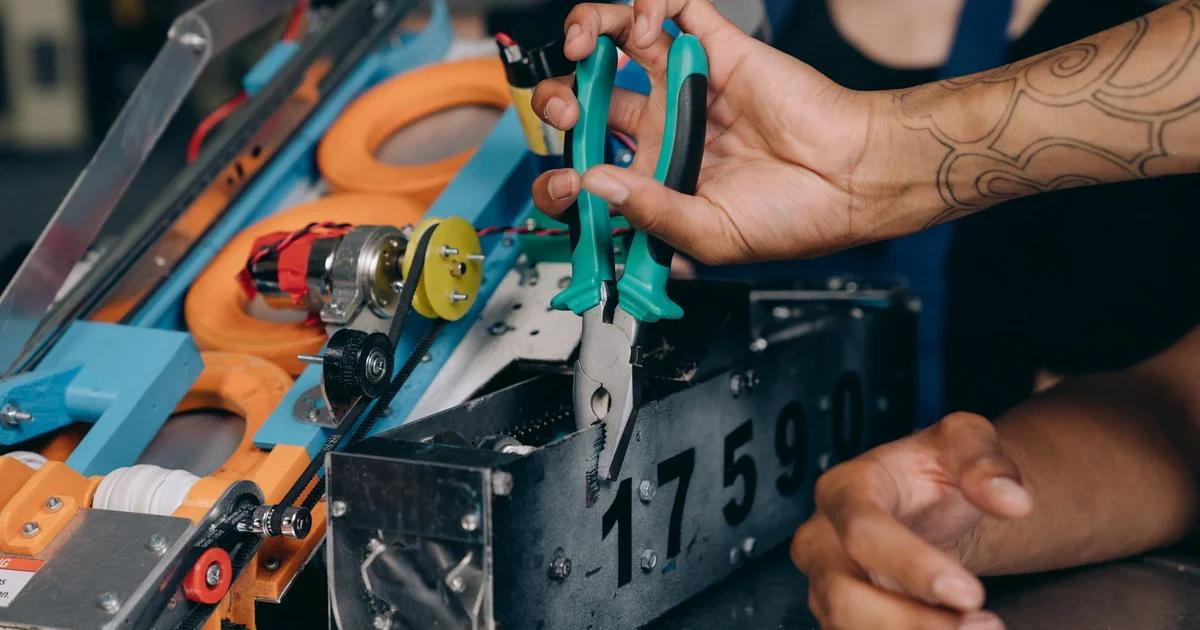
Beyond digital reconstruction, robotics are beginning to play a role in physical repair. Precision robotic arms, governed by algorithms that map the exact topography of a page, can apply adhesive agents to tiny tears with a level of accuracy human hands simply cannot replicate. These systems utilize tactile sensors to measure the structural integrity of a sheet of paper, ensuring that the pressure applied during the binding process does not exacerbate existing damage.
- Micro-Structural Analysis: AI maps fiber degradation at the microscopic level.
- Automated Stitching: Robotic arms perform precision repairs on spine binding.
- Environmental Monitoring: IoT-enabled systems track humidity and temperature in archival vaults to prevent future decay.
Addressing the Ethics of Digital Intervention
One of the most intense debates in the library science community involves the concept of 'digital hallucination.' If an AI reconstructs a missing word in a 14th-century ledger, is the result still authentic? Practitioners argue that as long as the AI-generated data is clearly marked as a digital overlay—a secondary layer of interpretation—it serves the history of the object rather than obscuring it. The core philosophy remains that the physical object is held in stasis, while the digital representation becomes the primary medium for research.
The Future of Archival Science
Looking ahead, we are moving toward a future where entire archives can be scanned and restored in real-time. This democratization of knowledge means that researchers in remote parts of the world can examine a pristine, 'restored' version of a scroll held in a vault in London or Rome. The synergy between machine learning and chemistry is also unlocking new ways to reverse oxidation, potentially turning back the clock on brittle, crumbling pages that have suffered from the ravages of acidic inks.
Ultimately, the marriage of AI and rare book restoration represents a profound shift in how we value our collective past. It is a testament to the fact that while our history may be fragile, our ability to safeguard it is growing stronger, more accurate, and more accessible than ever before. We are moving from an era of passive preservation to active, intelligent stewardship of the human record.