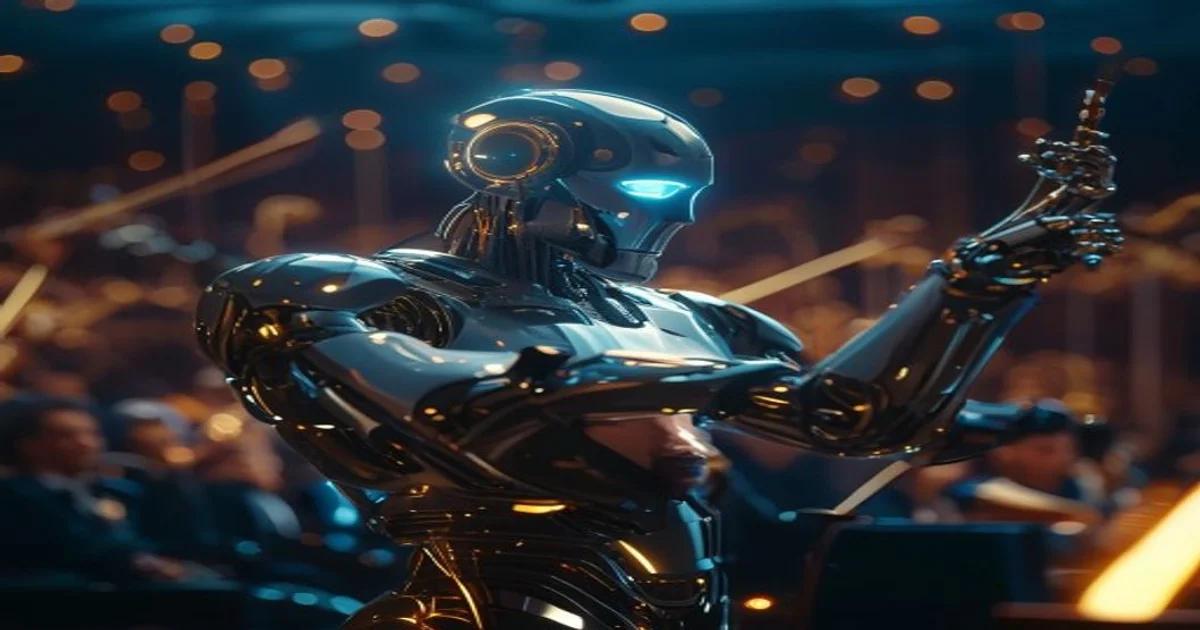
The Dawn of Algorithmic Conducting
The image of the conductor—a solitary figure wielding a baton, shaping the air to command a hundred musicians—has remained largely unchanged for centuries. However, the integration of Artificial Intelligence into the concert hall is challenging this paradigm. Today, we are witnessing the emergence of AI-driven systems capable of interpreting complex scores, synchronizing vast ensembles, and managing the delicate balance of acoustic dynamics in real-time. This technological shift is not merely about automation; it is about expanding the expressive capabilities of the orchestra through high-precision data synthesis.
How AI Orchestrates Sound
At its core, AI conducting involves a multi-layered approach to signal processing and machine learning. Systems like the YuMi robot or more advanced proprietary software platforms utilize high-speed optical sensors to track tempo and dynamic cues. These systems are trained on massive datasets comprising recordings of legendary conductors—from Herbert von Karajan to Leonard Bernstein. By analyzing how these maestros handled transitions, accelerandos, and ritardandos, the AI develops a foundational 'style' that it can adapt to the live acoustic response of an ensemble.
Key components of an AI conductor include:
- Optical Tracking Arrays: Capturing musician movements to adjust tempo based on live ensemble drift.
- Neural Network Score Interpretation: Analyzing phrasing and harmonic structure to predict emotive peaks.
- Real-time Haptic Feedback: Communicating precise timing data to musicians via wearable smart devices.
The baton has always been an extension of the human soul, but now it is becoming an extension of the silicon brain, capable of processing more variables per second than any mortal could dream of.
The Technical Architecture of Digital Maestros
To understand the magnitude of this innovation, we must look at the underlying algorithms. These systems do not simply read MIDI files; they perform 'interpretive listening.' Using deep learning, the AI monitors the 'ensemble drift'—the microscopic discrepancies in timing that occur when fifty musicians play together. By processing these acoustic feedback loops through low-latency AI chips, the system makes split-second adjustments to maintain cohesion. This is a level of synchronization that rivals the most disciplined ensembles in the world, yet it maintains a degree of flexibility that allows for expressive variation.
Furthermore, the integration of Cloud Computing allows these AI conductors to share data globally. A performance in Tokyo can 'learn' from a performance in Berlin instantly, updating the model’s weightings on specific stylistic nuances. This creates a collective, evolving digital legacy of what constitutes a 'perfect' performance of a Beethoven or Mahler symphony.
Challenges and Ethical Considerations
Despite the technical brilliance, the introduction of AI to the podium has sparked intense debate among musicologists and performers. Critics argue that music is fundamentally a human-to-human communication process. If a machine controls the tempo, does the 'soul' of the performance evaporate?
- The Loss of Human Intuition: Can a machine truly feel the 'longing' in a Rachmaninoff piano concerto?
- Artistic Authorship: Who is the artist? The composer, the developer, or the algorithm itself?
- The Future of Human Conductors: Will the role shift from a performer to a programmer?
However, supporters suggest that AI serves as a powerful pedagogical tool. In rehearsals, an AI conductor can focus on technical precision, allowing the human conductor to spend more time on artistic vision and phrasing. It acts as an objective, tireless assistant that never tires and never falters in its rhythmic integrity.
Advancing the Symphony Experience
We are currently in a transition period where the AI conductor is an augmentation rather than a replacement. We see systems that provide visual cues for the orchestra while managing complex electronic soundscapes, which are becoming increasingly common in modern compositions. As the technology matures, we may see AI conductors that can 'improvise' in response to the audience's reaction, monitoring biometric data from listeners to adjust the intensity of the performance.
This is the next evolution of Digital Transformation in the arts. It moves beyond the recording studio and into the sacred space of the live concert. As we continue to refine these systems, the boundary between the programmed sequence and the spontaneous performance will continue to blur, creating entirely new genres of musical expression that were previously impossible to coordinate.
The Future Landscape
Looking ahead, we can anticipate a world where the 'Maestro' is a hybrid entity. AI systems will manage the heavy lifting of synchronization, while human conductors will provide the 'moral' and 'emotional' framework for the performance. This synthesis of human experience and machine accuracy will likely lead to a renaissance in classical music, making it more accessible to tech-savvy younger audiences and pushing the boundaries of what large-scale orchestras can achieve in terms of technical complexity and sonic depth.
Whether one views this as a threat or a marvel, the reality remains: the AI-driven symphony orchestra is no longer science fiction. It is the new frontier of performance art, demanding a re-evaluation of what we define as creativity, skill, and the very essence of musical genius. As we integrate these tools, we must ensure that the human element remains at the heart of the craft, using technology not to replace the artist, but to amplify their vision to unprecedented levels of perfection.