The Dawn of Intelligent Art Conservation
The world of art restoration, a field steeped in tradition and meticulous craftsmanship, is undergoing a profound transformation. For centuries, conservators have relied on a delicate blend of scientific analysis, historical knowledge, and steady hands to mend the ravages of time, environmental factors, and past interventions on priceless artworks. However, the advent of Artificial Intelligence (AI) is ushering in a new era, equipping these guardians of our cultural heritage with unprecedented tools for analysis, prediction, and execution. This isn't about replacing human expertise; it's about augmenting it, enabling conservators to work with greater precision, deeper understanding, and more effective outcomes than ever before.
Understanding the Canvas of Complexity
Artworks are far more than just pigments on a surface; they are complex composites of organic and inorganic materials, each with its own unique chemical and physical properties. Over time, these materials degrade due to factors like light exposure, humidity fluctuations, temperature changes, and the inherent instability of certain pigments and binders. Identifying the precise nature of this degradation and its extent is the critical first step in any restoration project. This is where AI begins to shine.
AI-Powered Material Analysis
Traditionally, analyzing the materials present in an artwork involved painstaking sample-taking and laboratory analysis. While still essential, AI can now process vast amounts of data from non-invasive imaging techniques like infrared reflectography, UV fluorescence, and X-ray fluorescence (XRF). Machine learning algorithms can be trained to recognize subtle patterns and anomalies within these images that might indicate underlying structural weaknesses, hidden damages, or the presence of specific chemical compounds indicative of degradation. For instance, AI can analyze hyperspectral imaging data to differentiate between original paint layers and later retouching, or to identify the specific type of binder used in a particular period.
- Pattern Recognition: AI excels at identifying recurring patterns of degradation that might be invisible to the human eye, such as micro-cracks or subtle color shifts indicating pigment instability.
- Data Integration: Algorithms can synthesize data from multiple imaging modalities, creating a more comprehensive and layered understanding of the artwork's condition.
- Predictive Diagnostics: By learning from databases of degraded materials, AI can help predict how a particular component is likely to behave in the future under various environmental conditions.
The Algorithm as an Expert Consultant
Once damage is identified, the next challenge is to determine the best course of action. Restoration is not a one-size-fits-all process. The choice of solvents, consolidants, or filling materials depends heavily on the original materials, the type of damage, and the desired outcome. This is where AI's predictive capabilities become invaluable.
Simulating Restoration Outcomes
Machine learning models can be trained on historical restoration data, including successful and unsuccessful treatments. By inputting the specific characteristics of a damaged artwork, these models can simulate various restoration scenarios and predict their potential impact. This allows conservators to explore different treatment options virtually before committing to a physical intervention. For example, an AI could predict which cleaning agent is least likely to cause swelling in a particular type of aged varnish or which consolidation method will best preserve the texture of a fragile paint layer.
- Treatment Optimization: AI can suggest the most appropriate cleaning solvents, consolidation agents, or retouching techniques based on material compatibility and conservation goals.
- Risk Assessment: By analyzing past treatment outcomes, AI can help identify potential risks associated with certain restoration approaches, guiding conservators towards safer alternatives.
- Efficiency Gains: Virtual simulations reduce the need for extensive physical testing, saving time and resources.
Reconstructing the Lost Palette
Color is a fundamental aspect of an artwork's aesthetic and historical value. Over time, pigments can fade, darken, or change hue due to chemical reactions or environmental exposure. Recreating the original colors accurately during retouching is one of the most challenging aspects of restoration.
AI-Driven Color Matching and Reconstruction
AI algorithms, particularly deep learning models, can analyze high-resolution images of an artwork to understand the original color palette. By comparing areas that are well-preserved with areas that have suffered color loss, AI can intelligently infer the original hues. This is achieved by analyzing the spectral properties of existing pigments and understanding how they have aged. Furthermore, AI can analyze the stylistic nuances of an artist's brushwork and color application to ensure that any retouching seamlessly integrates with the original composition.
- Color Analysis: AI can identify original pigment compositions and predict their original appearance even when faded.
- Stylistic Integration: Algorithms can learn an artist's unique color combinations and application techniques to guide retouching.
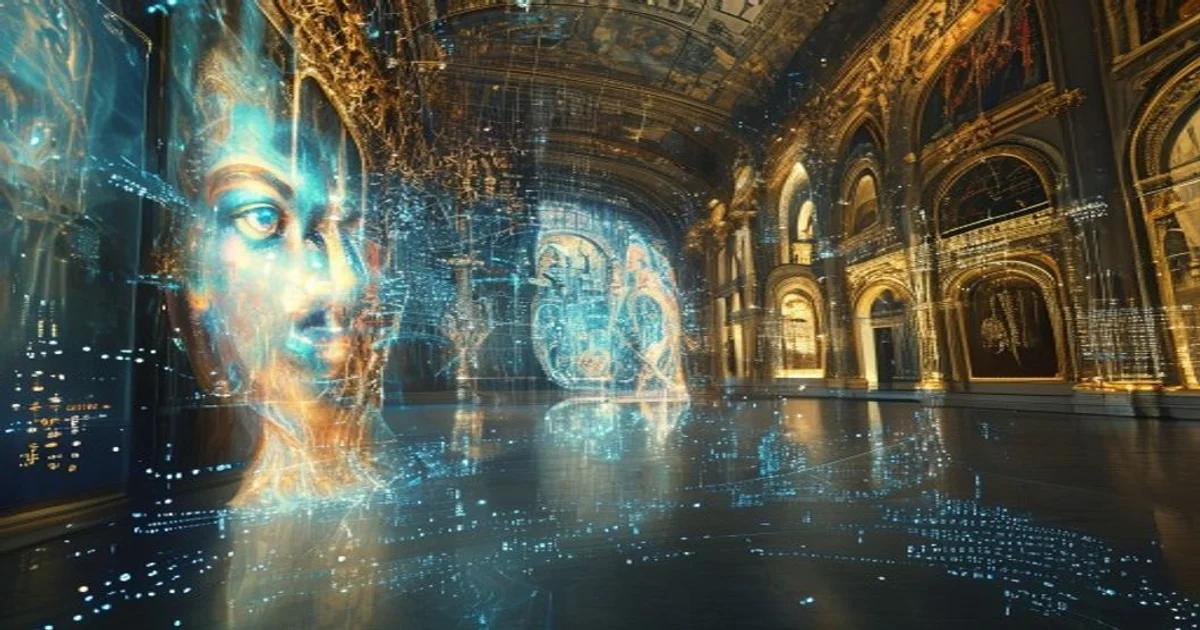
- Digital Restoration: AI facilitates the creation of digital twins of artworks, allowing for virtual repainting and color adjustments before physical intervention.
The Power of Digital Twins and Predictive Maintenance
Beyond immediate restoration needs, AI is enabling a proactive approach to art conservation through the creation of digital twins and predictive maintenance strategies.
Creating Digital Archives for Preservation
A digital twin is a high-fidelity virtual replica of an artwork, capturing its current state in minute detail. This digital archive serves multiple purposes:
- Baseline Documentation: It provides an unparalleled record of the artwork's condition at a specific point in time, crucial for monitoring future changes.
- Virtual Restoration: Conservators can experiment with different restoration techniques on the digital twin without any risk to the physical object. This allows for the exploration of complex scenarios and the training of new conservators.
- Damage Simulation: Digital twins can be used to simulate how an artwork might react to hypothetical environmental stressors, aiding in the development of optimal display and storage conditions.
Predictive Maintenance for Cultural Heritage
By continuously monitoring environmental data (temperature, humidity, light levels) in museums and storage facilities, AI can predict when an artwork might be at risk. For example, if a climate control system malfunctions, AI could alert conservators to potential threats to humidity-sensitive paintings long before visible damage occurs. This shifts the paradigm from reactive repair to proactive preservation, safeguarding cultural heritage for the long term.
- Environmental Monitoring: AI analyzes sensor data to detect deviations from ideal conditions.
- Early Warning Systems: Predictive models alert conservators to potential risks before irreversible damage occurs.
- Preventive Conservation: This approach minimizes the need for invasive interventions and preserves the artwork's original integrity.
Ethical Considerations and the Human Touch
While AI offers remarkable capabilities, it is crucial to acknowledge its limitations and ethical implications. AI systems are only as good as the data they are trained on. Biases in historical data or the underrepresentation of certain artistic traditions could lead to skewed analyses or flawed recommendations. Furthermore, the interpretation and decision-making process in art restoration must remain firmly in the hands of human experts.
AI as a Tool, Not a Replacement
AI should be viewed as a sophisticated tool that empowers conservators, not as a substitute for their knowledge, intuition, and ethical judgment. The ultimate responsibility for an artwork's preservation lies with the human conservator, who must understand the cultural, historical, and aesthetic context of the piece. AI can provide data-driven insights, but it cannot replicate the nuanced understanding of an object's history, provenance, and artistic intent that a seasoned conservator possesses.
- Human Oversight: All AI-generated recommendations must be critically evaluated by qualified conservators.
- Data Integrity: Ensuring the quality, diversity, and ethical sourcing of training data is paramount.
- Contextual Understanding: AI lacks the deep contextual knowledge that human experts bring to restoration projects.
The Future of Art Restoration: A Collaborative Endeavor
The integration of AI into art restoration represents a significant leap forward. It promises to make the complex process of preservation more precise, efficient, and accessible. As AI technology continues to evolve, we can expect even more sophisticated applications, from automated damage mapping to AI-assisted reconstruction of missing fragments. The future of art restoration is a collaborative one, where the analytical power of intelligent machines works in concert with the irreplaceable expertise and passion of human conservators to ensure that our shared cultural legacy endures for generations to come. This synergy ensures that the stories embedded within these masterpieces are not lost to time, but are instead meticulously preserved and thoughtfully presented, allowing future audiences to connect with the past in ever more profound ways.
Democratizing Conservation Expertise
One of the most exciting prospects is how AI can democratize access to conservation knowledge. Smaller museums or institutions with limited resources may not have full-time conservators on staff. AI-powered diagnostic tools and databases could provide them with expert-level insights, helping them to better care for their collections. Online platforms could leverage AI to offer preliminary condition assessments or guidance on best practices, extending the reach of conservation expertise far beyond traditional centers.
- Accessibility: AI lowers the barrier to entry for conservation advice.
- Empowerment: Smaller institutions gain access to advanced analytical capabilities.
- Knowledge Sharing: AI facilitates the dissemination of best practices across the global heritage sector.
Conclusion: A Synthesis of Art and Intelligence
In essence, AI in art restoration is not about creating artificial conservators, but about building intelligent assistants. These systems process complex data, identify subtle issues, predict outcomes, and offer insights at a scale and speed previously unimaginable. They handle the data-intensive, pattern-recognition aspects of the job, freeing up human conservators to focus on the more qualitative, intuitive, and ethical considerations. The ongoing dialogue between art, science, and artificial intelligence is ensuring that masterpieces, from ancient frescoes to modern canvases, are not just preserved, but are understood and appreciated with a depth that honors their creators and enriches our collective human experience. The intricate dance between the artist's original vision and the conservator's meticulous skill is now harmonized with the computational prowess of AI, forging a robust path for the enduring legacy of art.