
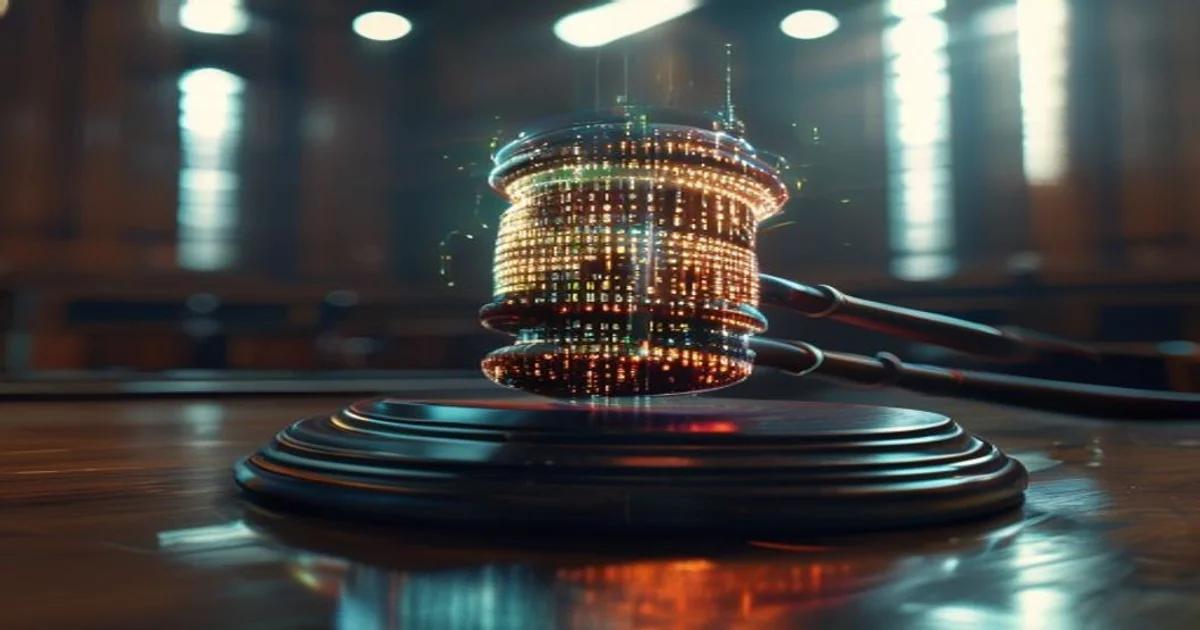
The Shift Toward Automated Jurisprudence
Jurisprudence, the philosophical study of law, is undergoing a seismic shift driven by the advent of artificial intelligence. Traditionally, legal systems have relied on human interpretation, precedent, and the subjective evaluation of complex moral dilemmas. However, the introduction of Machine Learning (ML) and Large Language Models (LLMs) into the legal sphere is challenging these core tenets, pushing the boundaries of how justice is dispensed.
The Mechanization of Precedent
The backbone of common law is the principle of stare decisis, which mandates that courts adhere to precedent. AI excels at processing vast historical datasets that would take human attorneys lifetimes to synthesize. By identifying patterns in centuries of judicial decisions, algorithms can now predict outcomes with staggering accuracy. This capability does not merely assist lawyers; it begins to redefine what we consider 'legal truth' by quantifying the probability of success in litigation.
'The law is not a static list of rules but a living organism that evolves with society; AI is now the digital catalyst for that evolution,' notes leading legal tech experts.
Algorithmic Discretion vs Human Judgment
One of the most heated debates in current legal theory concerns the role of human discretion in sentencing and bail recommendations. Tools currently used in various jurisdictions provide risk assessment scores that influence judicial decisions. While these tools aim to reduce human bias, they often mirror the systemic prejudices inherent in the training data. The jurisprudence of the future must resolve the tension between objective mathematical precision and the nuanced fairness expected of a human judge.
Challenges to Due Process
The adoption of proprietary AI systems in courts creates a 'black box' problem. If a defendant is denied parole based on an algorithmic score, how can that individual challenge the evidence if the software code is a trade secret? Jurisprudence is currently struggling to reconcile the rights of the accused with the intellectual property rights of tech developers. Legal systems are being forced to demand a new level of interpretability, ensuring that AI serves as an augmentative tool rather than an opaque final arbiter.
The Evolution of Liability and Ethics
As AI agents take on more roles, from legal research to automated contract drafting, the definition of legal personhood and liability is under scrutiny. If an AI makes a catastrophic error in a contract review, who is held responsible? The lawyer? The software provider? The training data curators? We are entering an era where AI-specific jurisprudence must establish new frameworks for professional negligence and corporate duty of care.
- AI-powered research reduces billable hours significantly
- Predictive analytics change settlement strategies in litigation
- Automated document review minimizes human clerical error
- Judicial analytics provide insights into specific judge tendencies
Toward a Hybrid Legal Future
The goal for the next decade is not to replace the human judge with a robot, but to create a 'Human-in-the-Loop' architecture. Jurisprudence must evolve to treat AI as a partner in legal reasoning rather than a passive tool. This requires a rigorous academic overhaul of law school curricula, emphasizing not just statute and history, but also data literacy and algorithmic ethics.
Ultimately, the influence of AI on jurisprudence is a reflection of society's willingness to accept digital logic into the chambers of moral judgment. If we prioritize transparency and fairness, the digital transformation of law could lead to a more accessible, consistent, and cost-effective justice system for all citizens. The path forward demands vigilance, skepticism, and a steadfast commitment to the principles of justice that predate the silicon chip.