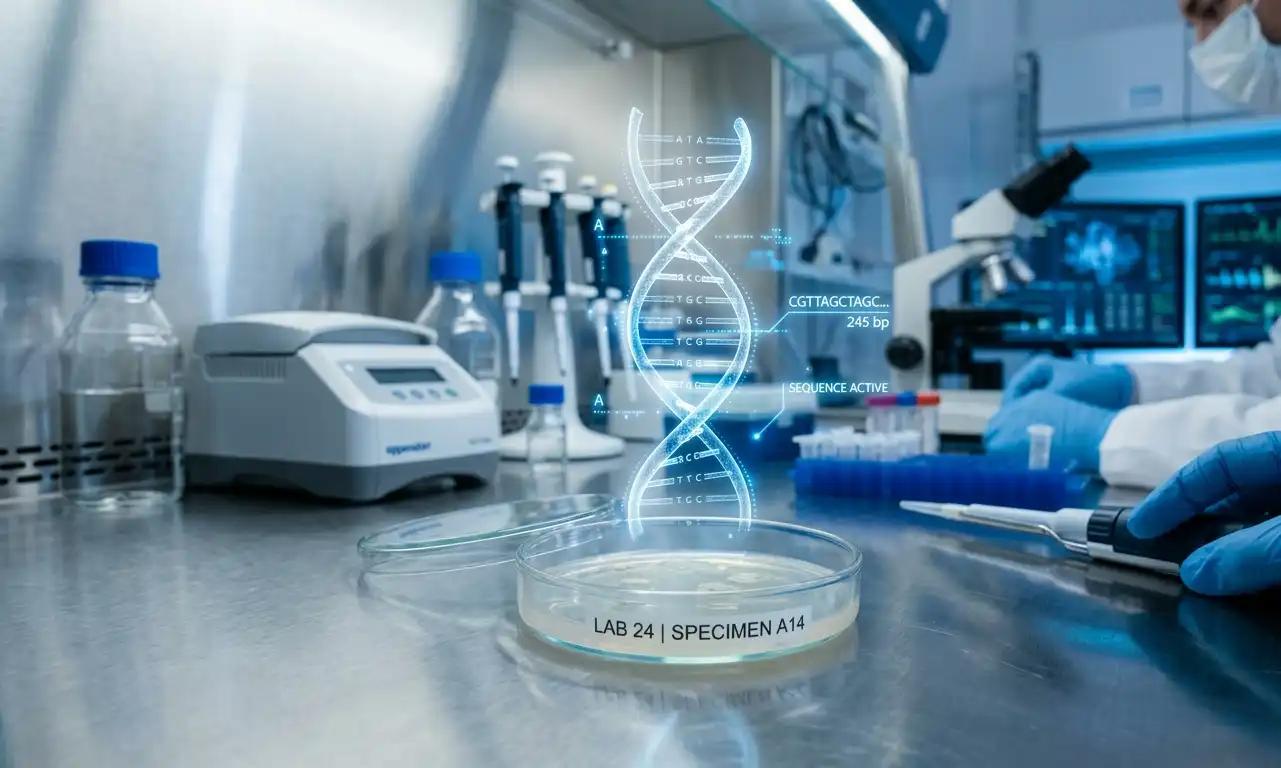
Beyond Text and Images: The Era of Generative Biology
When the general public thinks of artificial intelligence, they typically envision conversational chatbots writing marketing copy, generating hyper-realistic images, or perhaps autonomous vehicles navigating city streets. However, the most profound, lucrative, and life-altering applications of artificial intelligence are currently unfolding away from the public eye, hidden within sterile laboratories and high-performance computing clusters. We have officially entered the era of generative biology, where deep learning models are not just automating administrative healthcare tasks—they are fundamentally decoding the raw language of human life.
For over a century, medical research has been a notoriously slow, expensive, and serendipitous process. Developing a single new pharmaceutical drug typically takes between ten to fifteen years and costs upwards of two billion dollars. Even with these massive investments, the clinical failure rate hovers at a staggering 90%. Artificial intelligence is poised to shatter this historical bottleneck, transforming drug discovery from a process of blind trial-and-error into a precise, highly predictable, data-driven engineering discipline.
Cracking the Code: The Protein Folding Revolution
To understand the magnitude of AI's impact on medicine, we must first look at the foundational building blocks of our bodies: proteins. Proteins are the complex molecular machines that drive nearly every biological and chemical process within human cells, from digesting food to fighting off viral infections. The specific function of a protein is dictated entirely by its incredibly complex, three-dimensional folded shape.
For fifty years, predicting exactly how a linear chain of amino acids would fold into a 3D protein structure was considered one of the grand challenges of biology. Determining the shape of a single protein required months, sometimes years, of grueling laboratory work using X-ray crystallography or cryo-electron microscopy. Then, systems like DeepMind's AlphaFold entered the arena.
Today, advanced deep learning models can predict the 3D structures of hundreds of millions of proteins—essentially every protein known to science—in a matter of seconds. This breakthrough is akin to humanity suddenly being handed the architectural blueprints for every microscopic machine inside the human cell. By understanding exactly how these proteins fold and interact with one another, medical researchers can pinpoint the precise molecular mechanisms of diseases, from Alzheimer's to rare genetic disorders, and design targeted chemical keys to fix them.
De Novo Drug Design: Hallucinating Cures
If predicting protein structures is equivalent to reading the biological blueprint, generative AI is the master architect drawing entirely new ones. Machine learning models are now being utilized for "de novo" molecular design—inventing entirely novel chemical compounds that do not exist anywhere in nature.
These generative models are trained on vast, proprietary databases of known molecular structures, chemical properties, and their subsequent biological effects. Once trained, scientists can prompt the AI in a manner strikingly similar to how one might prompt an image generator. A researcher might ask the AI to "generate a molecule that strongly binds to a specific mutated cancer protein, is highly soluble in water, and avoids interacting with healthy liver enzymes."
- Targeted Efficacy: The AI can sift through a virtually infinite chemical space—often estimated at 10^60 possible molecular combinations—to find the exact mathematical shape that fits into a disease's receptor site perfectly.
- ADMET Prediction: Before a physical chemical is ever synthesized in a wet lab, AI models simulate its ADMET properties (Absorption, Distribution, Metabolism, Excretion, and Toxicity). This in-silico testing digitally filters out toxic or ineffective compounds instantly.
- Speed to Clinical Trials: This computational screening process drastically reduces the time needed for the pre-clinical phase of drug development. What used to take four to five years of chemical synthesis and animal testing can now be compressed into a few months, allowing life-saving treatments to reach human trials exponentially faster.
"Artificial intelligence is systematically transitioning biology from a slow, observational science into a rapid, programmable engineering discipline. We are slowly learning to write molecular code with the same precision and intent that we use to write software code."
Precision Medicine and Digital Twins
The applications of AI in healthcare extend far beyond pharmaceutical laboratories. In the clinical setting, we are moving rapidly toward the reality of true precision medicine. Historically, medical treatments have been based on population averages—the "one-size-fits-all" approach. However, because every patient's genetic makeup is unique, drugs that save one person might cause severe adverse reactions in another.
AI models are uniquely suited to ingest and analyze multi-modal patient data, including genomic sequences, electronic health records (EHR), wearable device telemetry, and lifestyle factors. By processing this immense volume of personalized data, AI can predict exactly which specific therapeutic intervention will be most effective for an individual patient.
Furthermore, researchers are exploring the concept of "Digital Twins" in medicine. By creating a highly accurate, data-driven virtual replica of a patient's biological systems, doctors could simulate the progression of a disease and test multiple treatment plans digitally, observing the simulated outcomes before ever administering a physical drug to the human patient.
The Regulatory and Ethical Prescription
Despite the immense promise and recent breakthroughs, integrating autonomous AI systems into mainstream healthcare brings severe regulatory and ethical challenges. The most prominent issue is the "black box" nature of deep neural networks. AI models can arrive at highly accurate medical diagnoses or generate brilliant chemical structures, but they often cannot explain the deductive reasoning behind their conclusions.
This lack of interpretability poses a massive hurdle for medical regulatory bodies like the FDA or the EMA. How do you legally approve a new drug or a diagnostic software tool if the human scientists and engineers cannot fully audit the algorithm's internal logic? Furthermore, AI models trained on historical medical data can inadvertently absorb and amplify systemic healthcare biases, potentially leading to misdiagnoses or suboptimal care recommendations for underrepresented demographic groups.
Conclusion: The Future of Human Longevity
The path forward requires a delicate, highly regulated symbiosis between human medical expertise and algorithmic computational power. Artificial intelligence will not replace doctors, pharmacists, or biological researchers. Rather, medical professionals equipped with AI will inevitably replace those who refuse to adapt to these new tools.