
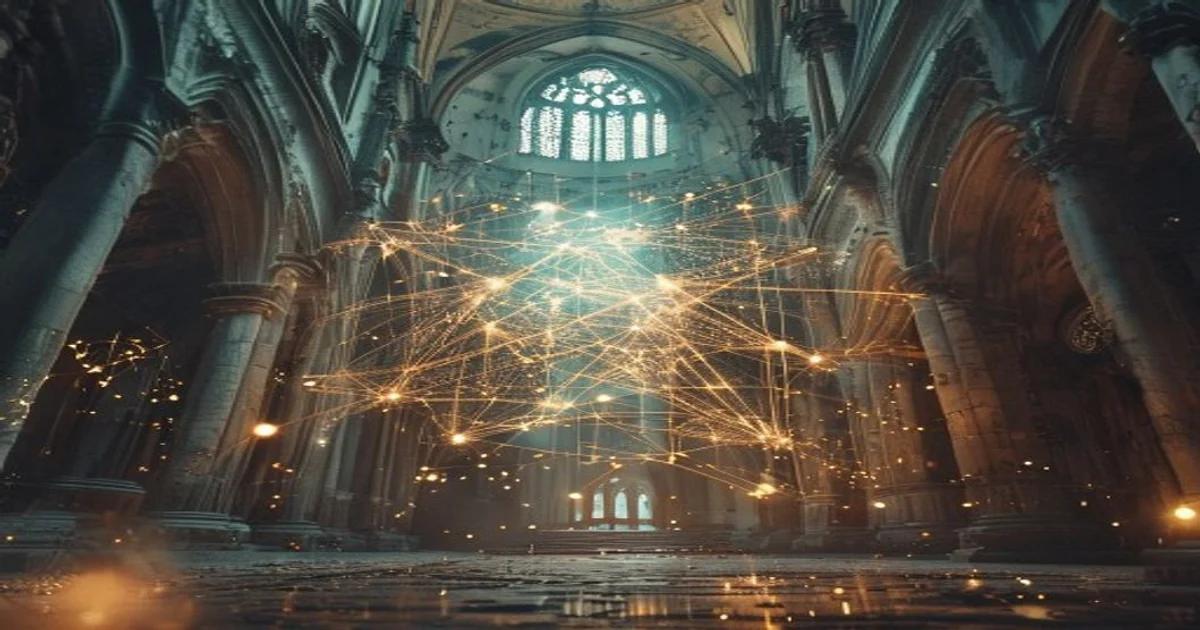
The Digital Shift in Human Belief Systems
The intersection of artificial intelligence and secularization represents one of the most profound sociological shifts in the twenty-first century. As machine learning algorithms become the primary architects of our digital experience, the traditional foundations of religious and institutional authority are undergoing rapid erosion. This transition, often described as a shift toward a 'Silicon Secularism,' suggests that our reliance on data-driven insights is gradually replacing metaphysical explanations for the human condition.
The Algorithm as the New Arbiter of Truth
For centuries, individuals turned to established institutions or sacred texts to navigate moral dilemmas. Today, the role of the 'arbiter of truth' is increasingly held by Large Language Models (LLMs) and recommendation engines. When users query an AI about ethics, life purpose, or social history, they are presented with a consensus-driven output derived from vast datasets, rather than the specific tenets of a singular faith. This process effectively flattens the distinction between various belief systems, treating spiritual concepts as mere metadata points within a broader information landscape.
'The reliance on algorithmic outputs fundamentally changes how we construct our reality, moving society further away from traditional frameworks toward a universal, data-centric worldview.'
Fragmentation and the Erosion of Collective Narratives
Religious institutions traditionally derived their power from the maintenance of a unified, collective narrative. However, AI-driven platforms prioritize hyper-personalization. By curating unique digital echo chambers, AI technology disrupts the ability of religious organizations to maintain a cohesive worldview among their followers. This fragmentation accelerates secularization because it prevents the cross-generational transmission of faith-based traditions, replacing them with fluid, transient digital interests.
- Data over dogma: AI prioritizes empirical outcomes.
- Asynchronous learning: Digital interaction removes the need for physical congregation.
- Authority decentralization: Knowledge is no longer gatekept by institutions.
The Technological Substitution of Transcendence
Many thinkers argue that the desire for the 'transcendent' is now being fulfilled by technology itself. Concepts like the 'Singularity' or 'Digital Immortality' act as secularized versions of eschatological hope. People are increasingly looking toward innovation to solve fundamental human problems—such as death, limitation, and purpose—that were previously reserved for religious domains. This is not merely a rejection of religion but a wholesale migration of the 'sacred' into the 'digital'.
Automation and the Diminishment of Human Mystery
As AI continues to automate tasks that were once considered unique to the human experience—such as artistic creation, moral reasoning, and complex problem-solving—the 'mystery' of human nature begins to dim. In a world where every action can be simulated or predicted by an algorithm, the perception of a soul or a divinely inspired purpose becomes harder to justify. We are entering an era of radical reductionism, where the human experience is measured in efficiency and output rather than virtue or spiritual attainment.
The Future of Secularization in the Age of Robotics
Looking ahead, the integration of robotics into daily life will likely deepen this secularization. As machines enter our homes and serve as companions, educators, and caretakers, the human-machine relationship will evolve. If a robot provides consistent emotional support, the psychological need for religious community will likely continue to decline. This does not mean society will become 'nihilistic,' but rather that it will define its own meaning outside of historical religious boundaries.
Addressing the Ethics of the Secular Shift
It is imperative to ask what happens when the moral compass of society is exclusively powered by corporate algorithms. If AI reflects the biases of its training data, then we are essentially codifying the secular, often Western-centric biases of our current digital landscape into the future fabric of human thought. We must remain critical of how these tools influence our perception of morality, ensuring that we do not trade spiritual guidance for algorithmic manipulation.